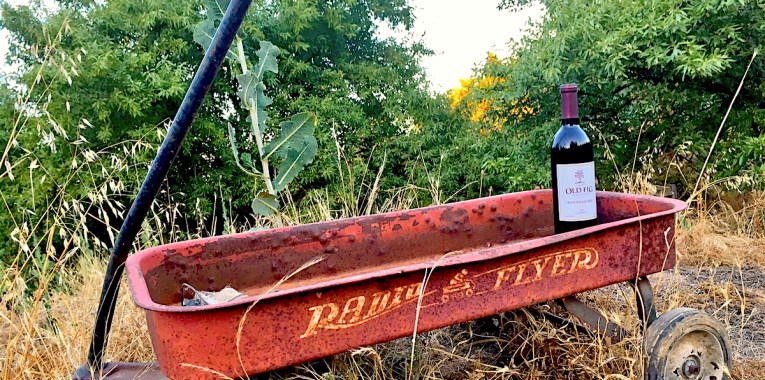
Old Fig Wine Cellars: A Central Valley urban dream

Backyard winemaker Dave Carlson grows Fresno winery
oldfigdaveinfield800
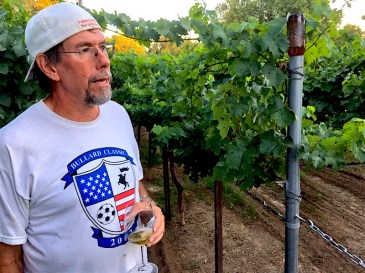
While owning Sports Point Photography for 30 years, backyard winemaker and Fig Garden resident Dave Carlson began making commercial wine from his one-acre plot in the heart of Fresno since 2010.

While local Fresno area residents often travel to Napa, Sonoma and Paso Robles to wine taste, many do not know a local resident has a boutique winery within the city limits.

Clovis resident and FresYes writer Kendra Gilbert called Old Fig Wine Cellars a Field of Dreams which accurately incorporates both the youth of the winery and the winemaker himself.

Nestled in the Westerlies of Fresno’s Old Fig Garden, this urban winery produces grapes on a county island on Dave Carlson’s one-acre plot in the center of the city.

“I was looking for a plot of open land in late 1999 in order to build a bigger house for my wife, Susan, who was about to have a second set of twins,” Carlson said. “I bought the property and its almond trees from a former Fresno State professor’s estate.”

Carlson actually grew up about six blocks from his new property but had no clue that there was 15 acres of open land just sitting here, ready to be developed.

“So I built the house, bought a new, bigger van, and became the first person in Fresno County with solar electric in May 2000,” Carlson said. “But after I was sitting in the backyard with a new mortgage, a new pool being dug, new mouths to feed, I thought, ‘I can’t afford a $25 bottle of wine.'”
oldfigclean4
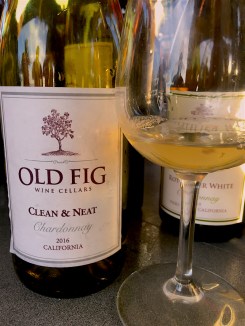
When a local wine shop would not carry Old Fig Wine Cellars because he did not have a white wine, winemaker Dave Carlson sourced fruit from Lemoore to create his Clean & Neat Chardonnay.

After a couple of months with his feet in the backyard dirt, enjoying a glass of cheap red wine, Carlson mussed how big his backyard really was. And the longer he sat with his feet in the sandy soil, the more he believed he could “best Two-Buck Chuck and give Silver Oak a run for their money.”

By 2002 Carlson had planted Zinfandel and Petit Syrah. Two years later Cabernet Sauvignon, Petit Verdot and Cab Franc rows were added.

He created his first vintage as an amateur winemaker in 2004. And from that point on, according to Carlson himself, “it’s been a rollercoaster ride of the highest highs and the lowest lows.”

Today Carlson, while not an enologist or viticulturist, creates wines not only from his backyard vineyard, but sources grapes from other central Valley locations.

“I decided that at the outset, that if I was going to make wine from my limited studies,” Carlson said, “I wasn’t going to buy grapes or juice just from anybody. I wanted to go the whole nine yards because I figured to really understand the entire experience, I needed to have a feel of what goes on in vineyards close to home. So why not start on my one-acre plot?”

Old Fig Wine Cellars field of dreams really began as a way for Carlson to grow his personal wine journey, but today it has become his passion: Create a premium wine and build a brand name. Today his Chardonnays, Petit Syrah, Merlot, Zinfandel and Cabernet are all sold locally in Fresno.

Growing grapes is by far much more difficult than making wine

oldfigdavemakeswine
Dave Carlton stands in his cellar ready to bottle his 2016 Rose blend of Pinot Gris, Merlot and Petit Syrah.

Carlson said the first couple years were like a honeymoon. Trying to get the perfect combination of sugar, PH, and acidity in a wine seemed next to impossible in the opening few years. Living and growing grapes in Fresno also has its challenges, including the heat, bugs and city water bills.

On a whim he planted two rows of Zinfandel and another Petit Syrah in 2006 and by 2009 earned a Double Gold at the California State Home Winemakers competition at Cal-Expo. His 2008 Petit Syrah earned the top prize but he only had 12 cases to share with his followers.

“Of course I was dumbfounded–no dumbstruck,” Carlson said. “However, that was either going to be great news or the kiss of death because now all my friends and followers said, ‘Hey Dave, you now need to be in the wine business. You are no longer an amateur.’ And, at that time, I really didn’t know whether I was really ready for all this. I most certainly don’t have the formal education.”

Carlson, who is a professional photographer by trade, knew the next level would be a big challenge.

“I’ve owned Sports Point Photography for almost 30 years,” Carlson said. “I started the business in 1990 when I moved back to Fresno from Sacramento and photographed team and individuals in baseball and soccer for a living. I started doing the grape thing with a ‘let’s see what happens’ attitude and now it could easily become a full-time gig.
oldfigrototillerdrinkable
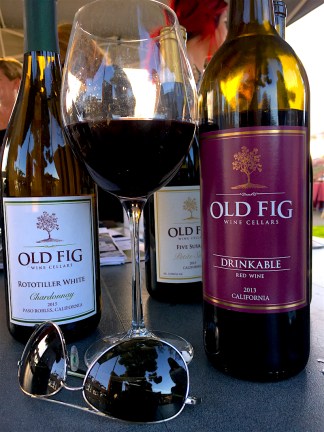
Old Fig Wine Cellars creates approachable, dry wines that are great alone or with food. Carlson’s Drinkable is a Merlot blend, combining his fruit with grapes sourced from Lemoore.

“It was then that I bought grape stock cloned to root stock which was suitable for the types of soil on my property,” Carlson said. “Soils range from concrete in some places other areas that have the most white sandy beach you’ve ever seen. And when I planted more Petit Verdot and Cab Franc, I used VSP trellising. This proved to help me get to the fruit zone easier where I wasn’t crawling in between canes.”

Farming has pretty much been trial by fire for Carlson. He’s had some help by a couple of viticulturists and a little advice from a couple winemakers, but this urban winery owner has learned via his mistakes since he first planted in 2002. And, of course a lot of that has to do with transitioning from an amateur winemaker to a commercial winemaker.

Carlson recalled a couple of rookie mistakes early in his winemaking career that nearly ended it before he gave away or sold a bottle.

“As a newbie with one of my first batches, I stuck my face in the tank to check if fermentation was taking place,” Carlson said. “After trying to take a deep breath to see or smell if the juice was rotting or doing anything, all I got was CO2. I pulled my head out of the vat even as I already was turning blue. My young daughters screamed and freaked out as they were watching dad do his  work. But I learned. Oh, I learned that the process was working. It was working even if I could not see it.”

But this was not the first time the novice learned a lesson the hard way.

“I nearly lost my little finger one year in the beginning when I was trying to do my own barrel shaving with a router,” Carlson mused. “Community Medical Center staff reattached part of my finger with over 30 stitches. The doc said I was lucky to still have it.”

oldfigcrowd1200
With a growing local following, Dave Carlson, seated right, often provides tastings at venues across Fresno County. Tim Ferris, above right, an MBA graduate student from Fresno Pacific University, has helped market the Old Fig Wine Cellars brand at events, including the Fresno County Wine Journey in November 2016.

The sports photographer and winemaker says he looks at winemaking today as being light years ahead of what winemaking was 50 years ago. Carlson also says he can’t even keep up with all the technology involved in making wine.

“People can get into the weeds on micro oxigenation of wines and oak alternatives,” he said. “While years ago you would put wine in barrels, now it can be made 50 different ways.

“The winemaking aspect has radically changed and coming from a place without formal experience, left me to sort out by trial and error,” Carlson continued. “The hard part is waiting six to nine months and up to two years before I understand what happened. And now I have to try and figure out why did that turn out so good.”

Carlson likes to be somewhat of a purist at heart. While he may sometimes use oak chips to flavor wine, he would rather the grapes speak for themselves.
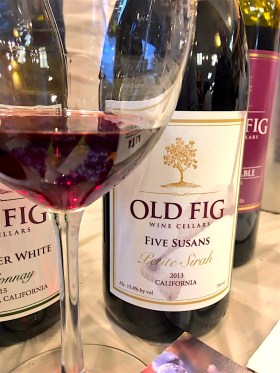
oldfigfivesusans2
There are five reds in the Old Fig Wine Cellars portfolio, including the Five Susans Petit Syrah.

“One of my biggest mistakes in winemaking as a new commercial winemaker was making wine that I wanted to drink instead of what people were willing to buy,” he said. “I had a rude awakening a couple years back when it really just came to a head.

Carlson was pouring wine at a local event three years ago and everyone walking up to his table said ‘give me your sweetest wine.’ All he had was dry red wine. And when the next person who came up asked the same question, and seven people after that asked the same question, reality set in.

“I can’t do that,” Carlson said. “So there was a shift in my thinking about how I had to approach the market. And when local wine shops initially did not want to sell my reds because I didn’t have white wines, that also changed how I approach winemaking.”

Old Fig Wine Cellars now sells five reds, two whites, a Rose that is poised to be released in time for the FC Wine Journey’s Wine & Chocolate Lovers Weekend, Feb. 13-14, and, for the first time, will have a Petit Verdot and a Cab Franc by March 2017. Currently Old Fig Wine Cellars wines can be purchased locally at the Sierra Nut House, Fig Tree Liquors,  The Meat Market in Fresno and Clovis, ApCal, Monet’s in Exeter, Cafe 225 in Visalia and at Harris Ranch. The Grape Tray also places orders.

Tim Ferris, an young apprentice winemaker and Fresno Pacific University MBA student has been proactive in the Fresno area helping Carlson create the Old Fig Wine Cellars brand since January 2016. In the podcast to follow, Young Fig (Tim) shares how the original Fig (Dave) has influenced him and the Old Fig Wine Cellars brand.

Ferris also shared part of the Old Fig Wine Cellars story on Central Valley TV.

Carlson is poised to create a premium local wines on a limited basis all from a plot of land within the confines of a 100 year-old neighborhood. While he makes all his wine in the vineyard he will continue to put them together Old Fig Wine Cellars in the garage.

Be sure to read TalesoftheCork’s previous blog post, “Garlic Parmesan chicken in cream sauce.” And if winemakers, wineries or restaurants are interested in a TalesoftheCork wine and/or food review on the blog, Instagram, Twitter and/or Facebook, please send us a request via email: talesofthecork@gmail.com or use DM on social media. TalesoftheCork also offers social media seminars for businesses.

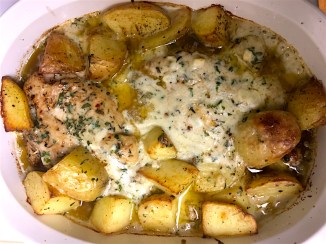
Garlic Parmesan chicken in cream sauce

As social media wine and food pairing posts continue to be successful, we increasingly field requests to share recipes and/or how to adapted the ones we are using. So that said, TalesoftheCork will occasionally post behind the scene looks, sharing mistakes, messes, and triumphs as we plate and pair food.

bakedchicken
With the potatoes roasted separately and the garlic cream sauce made, I combined them to the herbed seared chicken breasts in a baking pan.

As with most, meal preparation and execution takes some planning before placing any ingredients on the counter. While many serve garlic chicken and may be a household classic, we thought to share a base recipe from DamnDelicious.net, tweaked to fit our taste profile.

This brings me to my wife’s first suggestion to any budding home chef: Try a recipe as listed before you engage with recipe creation. We included an altered Damn Delicious.net ingredient list at the bottom of the article for a lovely, yummy, easy to create one-dish dinner.

Enjoy a single-pan Parmesan garlic cream chicken dinner with roasted potatoes and spinach this week. The key to any meal is prepare a grocery list over the weekend make sure your staples are stocked.

Directions for Parmesan garlic cream chicken: 50-60 minutes

1. Coat both sides of the skinless chicken breasts with olive oil. Rub cracked pepper, Italian and rotisserie seasonings on the chicken then sprinkle Kosher salt to taste. However, our preferences are WalterSalt.comTangerine Wheat salt because of their subtle citrus and umami, savory flavors. We think the key to delicious meat preparation is bringing it to room temperature and seasoning at least 30 minutes before cooking. Let set.

2. Preheat oven to 400 degrees F. If you have the ability to use a convection oven, this will spend up the process, reducing cooking times.

3. Pour a couple of ounces of olive oil in and heat in a large skillet. Then melt a couple of tablespoons of butter over medium heat. Be careful not to burn the butter.

madonado2800
You might choose to taste your wine or beverage during dinner preparation. This week we tried a Sonoma County Maldonado Chardonnay.

4. Sear the meat on both sides until flesh is golden brown. Do not over cook, about 2-3 minutes. Set aside on separate dish.

5. I like to roast my Yukon gold potatoes before cooking them with the chicken mixture. Chop them into quarters (or smaller chunks) and mixed them in olive oil and cracked pepper. Put in a open roaring dish and place in the 400 degree F oven while preparing rest of meal (15-20 minutes). This will ensure they will bake all the way through but also have that roasted aroma and flavor we love.

6. In a sauce pan, melt a couple of tablespoons of butter and a splash of olive oil then add chopped garlic over medium heat. Continuously stir to avoid burning garlic for 1-2 minutes until fragrant. Overcooked garlic will become bitter tasting. Whisk 2-3 tablespoons of flour into the butter and garlic, staring until lightly brown, about a minute.

7. We like adding a splash of dry white wine at this point (our preference is a light oaked Chardonnay) at this point to further infuse the mixture with flavor. Slowly add the chicken broth, fresh thyme and a basil leaf. Cook and whisk the mixture thoroughly until consistent–another minute or two.

8. Slowly incorporate the half and half and sprinkle in the grated Parmesan cheese a small handful at a time. Keep stirring. The heat should remain medium yet hot enough to melt the cheese to create a creamy consistency. This will take a couple of minutes. Adjust Parmesan to thicken or adjust density. Add more salt and pepper as per personal taste.

TIP: Add some extra half and half if mixture is too thick. If cream sauce is too thin, add a teaspoon of flour to a splash of cool milk and shake in a separate container to dissolve. Add to hot cheesy cream.

9. Place seared chicken breast on bottom of greased/prepared baking pan. Remove roasting potatoes from oven and place on and around seasoned chicken breasts. Pour prepared garlic and Parmesan creme sauce over the ingredients.

garlicchicken1
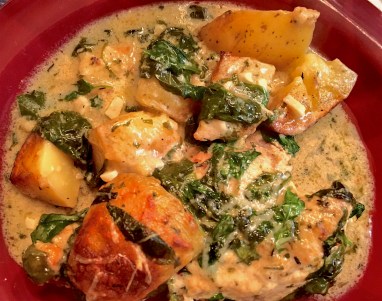
As a one-dish meal, the garlic Parmesan sauce carries the dish. Add the spinach and parsley in the last minute of baking just to wilt the greens.

10. Place in middle of hot oven and roast until chicken is completely cooked through, reaching internal temperature of 165 F. Use a thermometer to check temp. This should take about 25-30 minutes or quicker depending on whether you are using a conventional or convection oven.

11. During bake time, chop the spinach and parsley to add near the end of the cooking time. As temperatures in the chicken reach the safe zone, pull dish from oven and use a large serving dish to spoon the spinach into the hot dish and garlic sauce to cook for the last five minutes. Most vegetables break down and lose their nutrients if they are overcooked. Remember, after washing spinach, it can be eaten raw so just cook it enough to wilt it in the garlic sauce.

12. Garnish dish with parsley and serve immediately.

We paired our Parmesan garlic cream chicken with a Maldonado Vineyards 2010 Parr Vineyard Chardonnay. The Sonoma County wine was fabulous with the dish. This  cool Chardonnay has green apple and citrus notes but amazing depth. It also has ripe stone fruit, vanilla and toasty nuts but its minerality comes through with a light creamy texture. This is a big wine and is rich and can handle a wide variety of foods.

Look for their 2012 vintage online. Maldonado Vineyards also has other Napa Valley Chardonnay examples.

maldonado800
Chardonnays are a good choice for creamy, mild and buttery foods and pair well with this roasted herbed chicken in a garlic cream sauce.

However a wide variety of Chardonnays are a good choice for this one-dish meal. Look for Chardonnays that are lightly oaked, with ripe fruit, and hearty. They pair well with simple dishes that are mild, creamy, silky and buttery. Foods that are grilled or roasted do well as risottos and cream-enhanced soups or pastas. Also meaty fish like halibut, cod and rich tasting shellfish.

INGREDIENTS:

4 skinless organic chicken breasts

Italian seasoning (to taste)

Kosher salt and fresh cracked pepper (to taste)

4 tablespoons of unsalted butter

2 cups of washed baby spinach, roughly chopped

4 Yukon gold potatoes, cut and quartered

2 tablespoons chopped fresh parsley leaves for garnish

2-3 tablespoons of extra virgin olive oil

CREAM SAUCE FROM SCRATCH:

1/4 cup unsalted butter

garlicchicken1dish1200
In 50-60 minutes, you can serve a hot and healthy one-dish meal.

6 cloves of chopped garlic

2-3 tablespoons of all-purpose flour

a splash of dry white wine

1 tablespoon of olive oil

1/4 cup chopped fresh basil

1 teaspoon dried or 2 teaspoons fresh thyme

1/2 cup half and half

1/2 cup fresh grated Parmesan

Kosher salt and fresh cracked black pepper to taste

Thanks again to the original chicken and potatoes recipe on Damn Delicious.

Be sure to read TalesoftheCork’s previous blog post, “Lodi Wine Country: Boutique winery innovation.” And if winemakers, wineries or restaurants are interested in a TalesoftheCork wine and/or food review on the blog, InstagramTwitter and/or Facebook, please send us a request via email: talesofthecork@gmail.com or use DM on social media. TalesoftheCork also offers social media seminars for businesses.

Lodi Wine Country: Boutique winery innovation

Lodi Wine & Visitor Center offers in-depth winery information

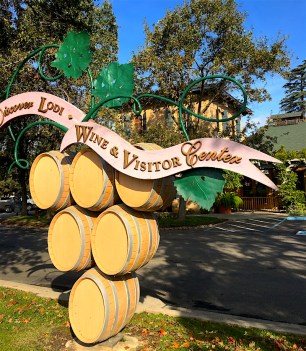
locavisitorsign
While Lodi is the self-proclaimed Zinfandel capital of the world, over 85 boutique wineries offer a broad range of varieties, including 200-300 wines in the Lodi Wine & Visitor’s Center.

While I did not grow up in the San Joaquin Valley, I have lived close to its vineyards, crops, orchards and beneath the shadows of the Sierra Nevada Mountains for over 35 years. However, for the first time since I began sipping, then collecting wine, I visited Lodi Wine Country in mid November.

Sheepish. Or maybe a little red-faced. That’s how I felt when both Lodi Wine & Visitor Center (LoCA) and Snooth reached out to me during the past summer. I have to admit my knowledge of Lodi wines was pretty much  limited to a few boutique wineries and the historic, well-known wine houses like Sutter Home, Gallo, Louis Martini and Robert Mondavi.

But I could only name a couple of boutique wineries who had already made a name for themselves.

I’d hear of Lodi’s wine history, even after it was named the 2015 Wine Region of the Year Star Award by Wine Enthusiast; however, the lure of Paso Robles, Sonoma and Napa distracted me from exploring the rural landscape of farms and wineries, even those run by its 4th and 5th generation families.

With wine tasting trips to their big brothers to the West and wineries in France and Italy, I totally misjudged the growth and subsequent evolution of Lodi’s 85 plus boutique wineries and now established premium wine grape varieties.

Well, I’m not claiming ignorance now. Bring on LoCA and the wines of Lodi, California.

One visit to the Lodi Wine & Visitor Center and chat with Stuart Spencer, Program Director of the Lodi Winegrape Commission, last week changed everything. I had to check out for myself why people from all over the world visit the Lodi wine region.

locaspencerstobbe3
I spent a couple of hours chatting with Stuart Spencer, (right), Lodi Winegrape Commission, program manager, at the Lodi Wine & Visitor Center in mid November.

From the repeal of prohibition in 1933, Lodi has seen its planted acreage change from a source of fruit for blends of “red” and “Chablis” to premium varietals. The 1940s-1960s produced sought-after Lodi dessert wines and a source of Zinfandel. The Lodi American Viticultural Area has transitioned to premium grape varietals and also has its own AVA since 1986 as well as adding seven smaller AVAs in 2005.

That same year the “Lodi Rules” certified sustainable wine growing program was formed, demonstrating leadership in sustainable agriculture, energy management, soil conservation, water quality and disease management and is a model for many other wine regions. Today over 20 wineries farm bearing “Lodi Rules” on the label.

Spencer attributed the growth of the wine region to the establishment of the Lodi Winegrape Commission in 1991. Today over 750 growers in the Lodi area belong to and tax themselves much like a milk board might. This forms the base source of money to support the organization. In fact, the Lodi Winegrape Commission just celebrated its 25th year! The primary goals of the Winegrape Commission are to educate the region’s winegrowers, conduct grape-growing research, and raise awareness of the quality of Lodi grapes and wines through innovative marketing and public relations campaigns.

“Many of the winegrowers and wineries wanted someone to tell their story,” Spencer said. “A lot of our guys wanted someone to share the Lodi story. They also created an extensive grower education, which became the sustainable viticultural program in 1992. This provides day-to-day promotional and educational opportunities to improve famers.”

locavisitorbldg
The Lodi Appellation is about 100 miles directly east of San Francisco at the north end of the San Joaquin Valley. The Mediterranean climate allows Lodi winegrowers to craft a diverse set of full-flavored varietals.

I love it that so much leading research has been done to improve farming in Lodi. Deficit irrigation and management to mechanization, canopy management, rootstock and trellising, and a host of other innovations have given famers the tools to excel and craft world-class wines in vineyard specific sites.

“Our commission provides information in real time to help farmers,” Spencer said. “We then shared the research story along with our growers’ story. This research not only helps our famers improve but it also gets more buyers to the area, marketing Lodi grapes to the North Coast and the big players and buyers in the industry.”

Spencer went on to say that Lodi has created a real culture of sustainable wine growing program. From the growers to the winemakers to the consumers, Lodi on the label now brings prestige. The farmers are innovative, respond to consumer needs for diversity (they lead the state in alternative or experimental plantings) with over 75 varieties in commercial production and 25-30 experimental varieties.

But I guess what impressed me the most about my visit was listening to Spencer talk about the collaboration of winegrowers who have struck a balance between creating wine of place, tradition, independence, balancing modern science with traditional methods and support of each other. They place a high value on Lodi as a region–a destination–a favored place; they value its history, heritage and pioneering spirit. Most growers are working together, in many cases as fourth and fifth generation winegrowers, to provide leadership in education and research for those in their AVA and beyond.

As I walked around the Lodi Wine & Visitor Center and tasting room, I marveled at over 200 different selections of Lodi’s wines beautifully displayed from over 60 wineries. While it opened in 2000 with far fewer selections, Spencer said today there are between 200-300 selections are available over the course of the year, depending on the calendar and recent releases.

For those who still have doubts, the Lodi Wine & Visitors Centers now has over 700 wine club members, further solidifying its status. Four times a year, 3-4 local Lodi wines are sent to members for about $80.  I for one, will be looking to find my favorites amongst the wineries represented.

And as Claudia Angelillo wrote in her Oct. 13, 2016, article, “Lodi is changing the way we think about wine,” I too have become convinced Lodi wines need and will be a part of my wine cellar and table wine pairing.

Take the time to return and/or bookmark TalesoftheCork for future posts on Lodi area wineries on my subsequent visits to the AVA. While my time was short on this day, I plan on returning to visit and taste some of Lodi’s favored wines.

Pencil in Lodi Wine’s next event on your calendar as they gear up for spring. The 20th annual Lodi Wine & Chocolate Weekend is slated for Feb. 11-12, 2017. Over 50 wineries will provides tastes and a chocolate snack for visitors. Tickets are $55 advance and $65 after Feb. 10. They will go on sale the first week of December 2016.

The Lodi Wine & Visitors Center is conveniently located just two miles from Highway 99 on 2545 Turner Rd., Lodi, CA 95242. LoCA is open daily from 10 a.m. – 5 p.m. They can be reached at 209.365.0621 or via their website: lodiwine.com. They are also on social media as well.

Be sure to read TalesoftheCork’s previous blog post, “Five Thanksgiving sparkling wines.” And if winemakers, wineries or restaurants are interested in a TalesoftheCork wine and/or food review on the blog, InstagramTwitter and/or Facebook, please send us a request via email: talesofthecork@gmail.com or use DM on social media. TalesoftheCork also offers social media seminars for businesses.
Five Thanksgiving sparkling wines

With the holiday season just a few days away, its time to put your Thanksgiving dinner menu together and put some thought to sparkling wine choices for the table.

Whether your holiday meal includes turkey, stuffing, cranberries and candied yams/sweet potatoes or beef brisket, roast/mashed potatoes, orange duck or goose, there are many choices and price points to consider.

Whether the following five choices fit your taste profile or pocketbook, sparkling wine can be a great way to open a gathering or holiday meal. The most important aspect to remember when trying something new is to take note of your preferences, and drink what you like.

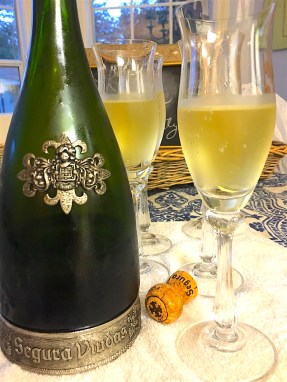
champagne
Segura Viudas Cava Reserva Heredad makes a nice opening beverage for your Thanksgiving table.

There may be non or occasional wine drinkers at the holiday table who would rather have a glass of bubbly, Beaujolais or a light white wine with appetizers and, in some cases, with dinner. There may also be others who’d prefer a craft beer.

Sparking wine and/or Champagne are great choices for Thanksgiving and holiday meal times as their bubbles go so well with cheese, nuts and fruit to spicy foods as well as potato chips and popcorn. Whether your sparkling is only for the opening toast or with shellfish or cheese pasta, egg rolls and Japanese food or quiche, crispy French fries and mussels, it is bound to bring smiles and get the holiday atmosphere rolling.

While a Blanc bubbly is often a celebration starter, an aperitif or paired with a starter, sparkling Rosè, with its heavier fruit, will go very well with your turkey dinner as it can help tone down garlic and savory tastes in the meat and can handle sweets like candied yams and cranberry sauce.

Five Thanksgiving sparkling wines:

While I like the Best Cheap Champagne choices the WineTurtle suggests, I also want to add a couple of sparkling bottles I’ve come across.

1) Segura Viudas Cava Reserva Heredad Brut ($20): The sparkling Spanish Cava winemaker’s notes include yeasty and smoky aromas with hints of brioche, honey, fruit and flower petals. This is a full flavor dry Cava with dried fruits and a touch of honey and apple on the finish. I love its elegance, luxurious and tart mouth feel. Heck the bottle gives the table a stately look.

The Segura bubbly pairs well with pasta in cream, butter or truffle oil along with most shrimp and shellfish dishes. I know biased meats can even be served with this Cava. We toasted our daughter’s acceptance into her diabetics internship program and we will serve this Champagne at the start of our Thanksgiving meal.

campagne3
The Ferrari Brut Rosé can be a wonderful celebration sparkling or used at the holiday table as a versatile bubbly with most dishes.

As I posed earlier, a Champagne Rosé can go so well with a turkey or other meat Thanksgiving dinner. With so many competing flavors on the table, you might add a a pink version as well depending on your meal choices.

Sparkling Rosés have deeper depth, more acidity. Many have more body and fruit. Champagne is so versatile. Take the time to research whether the bottle is sweet, semi-sweet or dry and how much or the variety of fruit flavors burst on the palate.

2) We enjoyed a bottle of Ferrari Brut Rosé Trentodoc ($30) earlier this year. It is a classic Italian sparkling with gorgeous aromas of wild strawberry, flowers, red currants and fresh baked bread with an old copper hue. Whether its sipped alone or with dinner, the wine is fresh, fruity and has a sweet almond elegant aftertaste with its dried fruit.

The Ferrari Rosé is made with Pinot Nero (60%) and Chardonnay (40%) created under the metodo classico style that is delicate with a gorgeous mouth feel and light citrus notes, finishing with a hint of musk.

Additionally, I like what Fiona Beckett posted in her Best food pairing for Rose article last year. Rosé wine and sparkling are no longer just spring and summer wines. Depending on your choices, you could move from one style of Rosé to another as the appetizers move to entrees and beyond the holiday meal.

3) Roederer Estate Brut Rosé is one of California’s most consistent, well received sparking year after year from the Anderson Valley ($29). This is a food-friendly, medium bodied bubbly which can easily move from the family or living room toast to the table. The Brut is 55% Pinot Noir and 45% Chardonnay. Oak-aged wines make up 10-20% of each cuvée, adding consistency year after year.

three-bubbly
All three of the Varichon & Clerc, Rogederer Estate and Lucien Albrecht sparkling wines have their appropriate places for Thanksgiving and/or holiday celebrations.

While an elegant wine, its gentle Pinot Noir nuances of gentle cherry, raspberry, light pear, red apple, graham cracker and hints of spice and almonds with pineapple aromas create the illusion of a more expensive wine. There is a touch of ginger and vanilla on the finish to cleanse the palate. Bring on the holiday dinner!

4) Lucien Albrecht Cremant d’ Alsace Brut Blanc de Blancs ($18) is one of the most versatile sparking wines on the market. Whether its Easter Sunday, birthday celebrations, a popcorn party or a toast on Thanksgiving, this French Brut is inexpensive for a toast or with a variety of foods. It also comes in a Rosé version that is bound to please. The Brut Blanc is 80% Pinot Auxerrois, 10% Pinot Blanc and 10% Chardonnay, delicate and crisp, straw color with grapefruit and citrus flavors along with a yeasty finish. 

With a beautiful brilliant golden colour, it exhibits a predominantly floral nose, has fine and persistent bubbles and is both elegant and balanced on the palate. As an aperitif, at cocktail parties or receptions, it is the classic drink for all festive occasions.

5) Lastly a bottle of Varichon & Clerc Brut Privilège Blanc de Blancs might fit the budget minded host(ess) who is looking for more than a grocery store bottle of bubbly and needs to find one around $11. Created near the mountains of Lake Geneva and Lake Bourget near the Alpine Savoy region of France, this sparkling producer has continually produced classic “Methode Champenoise” wines since 1901.

The bubbly is smooth, creamy with gentle pear, apple, vanilla a hint of exotic fruit notes along with a toast and nice minerality. While this bubbly may not be for the entire Thanksgiving meal, it would make a nice toast and apertif. Serve with light appetizers, cheeses such as Brie and Camembert.

All five Thanksgiving or holiday sparkling wine choices can be ordered online via their websites and through most local wine shops in your area. As I live in Central California, most of these and many other choices are available via The Grape Tray in Fresno.

All five Thanksgiving or holiday sparkling wine choices can be ordered online via their websites and through most local wine shops in your area. As I live in Central California, most of these and many other choices are available via The Grape Tray in Fresno.

For more information, read The Grape Tray reopens in Fresno’s Opus I Center. Call owner Stan Kato at 559.226.6828 for these and other suggestions. Be sure to visit his shop at 6023 N. Palm Ave., Fresno, CA 93704. The Grape Tray can also be reached via email: stan@grapetray.com and on Instagram: @GrapeTray.

Be sure to read TalesoftheCork’s previous blog post, “Sipping a Cambria Moonstone Cellars Tempranillo.” And if winemakers, wineries or restaurants are interested in a TalesoftheCork wine and/or food review on the blog, InstagramTwitter and/or Facebook, please send us a request via email: talesofthecork@gmail.com or use DM on social media. TalesoftheCork also offers social media seminars for businesses.

Sipping a Cambria Moonstone Cellars Tempranillo

TalesoftheCork wine reviews

moonstone1Visitors planning a trip to Cambria, California, often stroll along the wooden boardwalk, go whale and elephant seal watching, visit Hearst Castle and dine at one of Moonstone’s beach-side restaurants.

But in downtown Cambria, a small boutique winery and wine shop should be on your list, besides window shopping. Pencil in Moonstone Cellars.

While we don’t get over to Cambria very often, a leisurely walk in the picturesque town and nearby ocean boardwalk, visitors will find boutique and antique shops, mom and pop cafes and restaurants and the local wine shop and winery: Moonstone Cellars.

Located in West Village on the corner of Main and Sheffield streets, Todd Clift and his dad, Muril, opened the family-owned winery and began producing wines since 1998. Todd proudly creates his wines made from Central Coast grapes.  Moonstone Cellars offers a wide variety of varietals. From a lighter style Grenache to a full bodied Zinfandel and Cabernet Sauvignon, or a crisp Sauvignon Blanc to a dry Riesling, there is bound to be something for everyone.

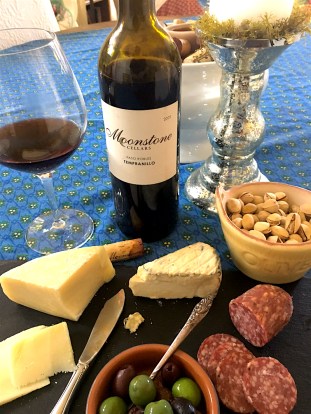
While I did not travel this week, I sat down to post with a glass of Moonstone Cellars 2009 Paso Robles Tempranillo beside me. The Spanish varietal and Central Coast grown was splendid. With notes of cherry, ripe plum, cracked pepper, spice and a rivulet of vanilla flowing through it, the medium bodied wine and tannins lingered.

moonstonetempranilloWhile I sipping the wine, purposely on #TempranilloDay, I soon wanted an afternoon snack to pair it with. The point of this is I did not plan this particular pairing or ‘event’ but rather just quickly looked what we had in the fridge. We had some Asiago, Manchego and a blue Camembert, olives, salami, grapes and pistachios in the pantry. I quickly put them on a black serving dish beside me and I continued writing.

While most of these appetizers went well with the Tempranillo, I hold and share a common wine lovers phase often: “Drink what you like.” For me these cheeses pair well with the terroir and flavors of the wine.

My point is simple: Take the time to explore the wineries in the places you visit and taste the wines they are pouring in the tasting rooms. And while you may not like all you try, purchase a bottle or three of the variety you like to take home. Then later at home, if you’ve kept the notes you were given or wrote down your own, open the bottle and imagine what food will go well with it. And if you need help, follow a blogger, Instagramer or Twitter feed of someone you trust and ask or email them. You might even follow this feed or keep TalesoftheCork a favorite on your device.

The Moonstone Cellars Tempranillo will also go very well with beef stew or a backyard BBQ. The wine will go very well with tacos, burritos, pizza, polenta dishes. Heck, I could have even served it with our lasagna the other night. Take the time to try wine with the foods you like. Some will go better than others.

It’s your table. You create the food. Own the right to serve what you like.

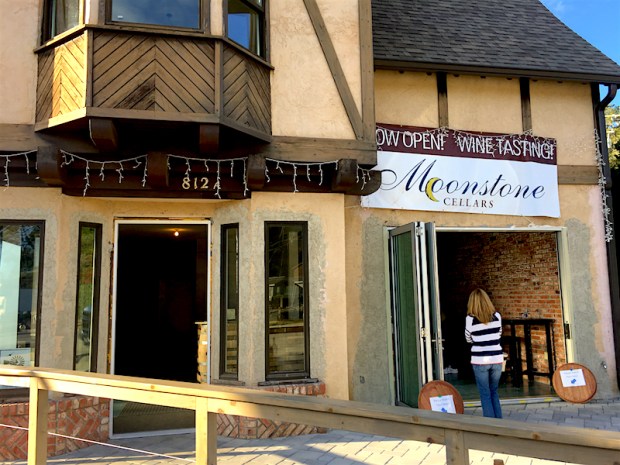
moonstonenew2bldg800
Moonstone Cellars is moving from its location on Main Street. Go around their former location to a building just behind them on 812 Cornwall Street in Cambria (as pictured).

Moonstone Cellars can be found at 812 Cornwall Street in Cambria’s West Village. The staff welcomes walk-ins daily between 11 a.m. and 5 p.m. Walk right up to their U-shaped bar and ask Todd for a tasting, which cost $8 for 6 wine pours of varying varietals. Moonstone Cellars wines are also available online or call them at 805.927.9466 or 877.517.9463. Or just send them a note via their contact page. Moonstone Cellars also belongs to the Pacific Coast Wine Trail whose organization stretches from Morro Bay up to San Simeon.

Be sure to read the previous TalesoftheCork blog post: “Rigatoni à la Bordelaise with Bordeaux.” And if winemakers, wineries or restaurants are interested in a TalesoftheCork wine and/or food review on the blog, InstagramTwitter and/or Facebook, please send us a request via email: talesofthecork@gmail.com or use DM on social media. TalesoftheCork also offers social media seminars for businesses.