Caliza Winery: Templeton Gap nets Rhone Ranger

After moving from San Francisco and retiring from the trade show business, Carl and Pam Bowker had settled in the windy Templeton Gap area west of Paso Robles on the Central California coast. The couple’s newly purchased vineyard was producing a mix of Cabernet Sauvignon, Chardonnay and Pinot Noir, but Carl was not convinced his vineyards would develop world class wines at Caliza Winery.

For Part I on the Caliza Winery story, please read the Nov. 12, 2012, post, Caliza Winery: Bowker turns horticultural focus into viticulture dream. In Part II of the Caliza Winery story, Carl shares how his 2004 trip to the Rhône Valley convinced him to make the hardest decision he’s ever had to make in his life.

Carl and Pam Bowker had traveled to Italy in 2001 and their eyes were opened to utilizing old world wines in a new world venue. They farmed the vineyards on both of the Caliza Winery properties, but Carl longed for a stronger connection to the limestone soils he named his winery after. He began spending more and more time with winemakers in Paso Robles and became more familiar with the emerging interest in Syrah and other Rhône varietals. During a party for a real estate agent, Bowker met winemakers Erich and Joanne Russell of Rabbit Ridge Winery and Russell Family .
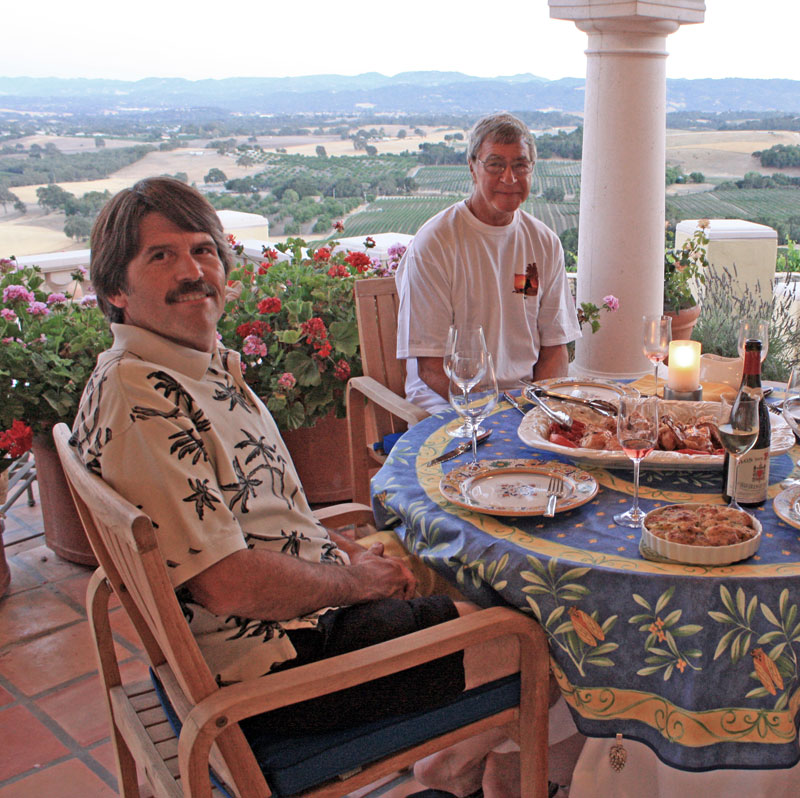
Carl Bowker’s, left, passionate interest in winemaking caught the attention of Erich Russell of Rabbit Ridge Winery. The two forged a friendship and have shared many social times together, including this 2009 Provence-inspired dinner at the Russell home with their wives, Pam and Joanne.

“I had been making wine for over 20 years,” Erich said, “and Carl seemed genuinely interested in being a winemaker. He first came around while I was building my winery in 2001 and decided to join us for crush in 2002. We got together often to talk about wine and in the process he learned to put on a wine clip and join two hoses together. At first it was obvious he was new to the process and I offered to do his jobs I gave him to do. It  would go faster if I did it. But he learned how to use hoses, clamps and steel fittings from our time together in the early days at Rabbit Ridge.”

While Bowker was a green horn in 2002, it didn’t take him long to become an integral part of the harvest for Rabbit Ridge and Russell Family wines in 2004.

“While we were mostly too tired to have fun even though we worked together, I could see Carl was going to be good at winemaking,” Russell said. “Carl was not like many of the other new winemakers. He was neat, clean, hard working, anal about the process. The man wouldn’t leave each night until everything was just right in the winery.”

But it was during their time together that the Bowkers and Russells became friends. They shared dinners together and began talking about an ever-growing excitement for Syrah and especially Rhône varietals. Both couples signed up for a trip to France led by a small group of wine writers.

Erich and Joanne Russell, left, chose to vacation in France with Pam (right center) and Carl Bowker for a two-week trip to the Rhône region in 2004, visiting over 15 wineries.

“We had enjoyed them [Rhône varietals] in restaurants and felt we needed to see for ourselves what the French were doing,” Bowker said. “So the Rhône Valley trip was a great next step for us. We learned a lot on that trip. I got to taste first-hand the distinctly difference wine-style in the North Rhône, which is all Syrah. And I love the robust, rich and powerful wines from the North such as the  Hermitage, Saint Joseph and Cronas areas. I also learned so much more about the blended wines in the South, where they incorporate Grenache, Mourvedre and numerous other varieties, and picked up the tools of blending their depth and character. I was inspired to make a California version of these Châteauneuf du Pape or Côte du Rhône style blends.”

Russell fondly remembers the Rhône trip with Bowker as it not only solidified their friendship but also helped keep him focused on Rabbit Ridge value-based wines.
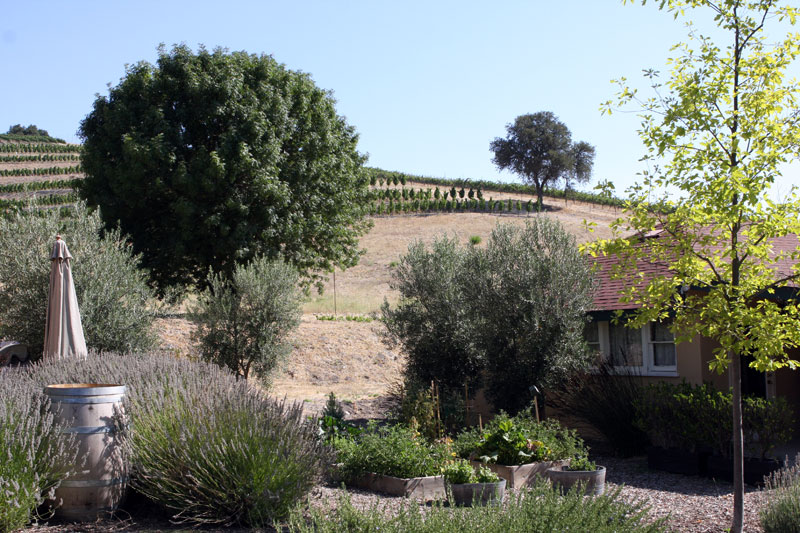
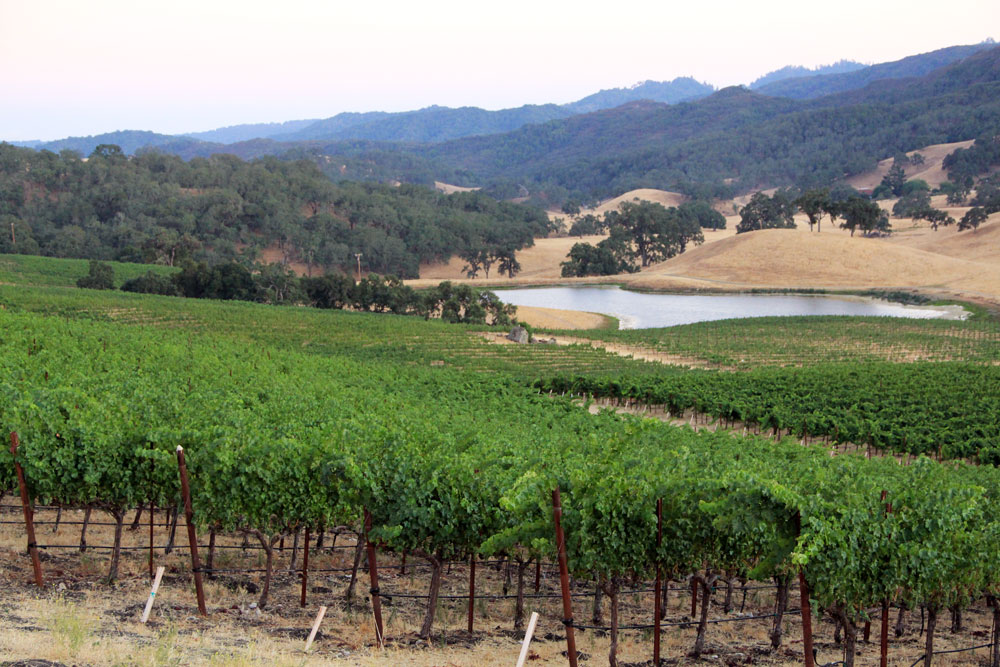
After his 2004 trip to the Rhône Valley, Bowker made the decision to rip out all of the existing vines on his Anderson Road property and plant Syrah clones. He also planted other varietals, including Grenache on this hill behind the tasting room.

“Carl, our wives and I have similar interests and personalities,” Russell said. “While we enjoy creating or eating fancy dinners out, we decided to do dinner like the locals. We had free night to get dinner on our own one night. Instead of paying for another expensive dinner in Avignon, in southern France, all four of us decided to buy cheap Rhone wine from a local wine store and get some cheese and salami from a market. After following a couple people carrying baguettes, we eventually found a bakery, bought a fresh baguette of our own. Our dinner that night was as good as any gourmet dinners on the trip. And we loved and drank inexpensive local Rhône wines.”

Not only did Bowker tour and taste while in France but he asked numerous questions about the vineyard planting methods, irrigation, soil-types, root stock varieties and clones, so that he could use this knowledge in his new Paso Robles vineyard. Together, with the two-year  Napa Valley College viticulture and enology program, Bowker had the confidence to forge forward.

The Spanish word, “Caliza,” means a thin band of limestone. The catchy word describes the layers of soil under Bowker’s Syrah and Rhône varietals.

Bowker says that the 2004 French tour inspired him to make a “killer Syrah” and believes he “is now making that quality Syrah from fruit off his Anderson Road vineyard. The trip cemented the style of my Rhône varieties.”

His new-found inspiration morphed into a determination to join the growing movement of Paso Robles wineries planting Rhône varietals, creating for the Central Coast a Syrah-based regional identity parallel to Napa’s Cabernet focus. The trip to France solidified his Rhône focus. He then chose to have his soil tested by a soil scientist, hiring consultants by the end of the year.

Wine Spectator’s James Laube believes the Paso Robles area focus on Syrah and Grenache has strengthened the region. The epicenter of this blending has created a term used by California winemakers with many referring to the winemakers as Rhône Rangers.

After harvest in 2004, Bowker made a critical decision that would alter the direction of Caliza Winery for the following year.

“I made an incredibly hard financial decision, and in the spring of 2005,” Carl said, “we decided to remove the existing vineyard. The vines were ripped out, the land was tilled and a brand new irrigation system was installed. It was a hard decision because we spent most of our retirement funds, but we knew it was the right thing to do. We replanted Syrah and many other Rhône varieties, changed the location of the vines, installed the most current soil monitoring equipment, state of the art irrigation system, and incorporated sustainability farming practices.”

Bowker says the 2004 French tour inspired him to make a “killer Syrah” and believes he is now making that quality Syrah from fruit off his Anderson Road vineyard.

While other vineyard owners were beginning to consider changing out their vineyards in the Paso Robles region, Bowker’s decision was not without risk.

“I believe Carl works 10 times harder than he ever thought he’d have to work,” Russell said; “everyone has to in this business. He took a huge gamble in 2005 to tear out the vineyards. He had to go to a lot of extra work and remove the vines and irrigation. I’ll bet there were times he wished he was on the beaches of Maui.”

Hawley is a California State University, Fresno, with a degree in viticulture and enology. The Bowkers met him in Paso Robles on several occasions while he was a winemaker at Summerwood Winery and became huge fans of his winemaking style and ability.

“In one encounter we talked to him about helping guide us as we developed the Caliza brand,” Bowker said. “We were one of the first to sign him as a consultant. He worked with us for three years, helping with numerous important decisions: harvest timing, fermentation protocol and all aspects of the wine production. All the way, Scott was more of a trainer and mentor doing all that was necessary to help me completely understand the process than a paid consultant. In the end, he kind of worked himself out of a job as he mentored me so well.”

A very successful winemaker in his own right, Scott Hawley, now of Torrin Vineyard, became Bowker’s mentor and consultant in the early days of winemaking for the new Caliza brand. The first Caliza wines were made in 2006 from mostly purchased fruit as Bowker’s new vineyard was not yet producing. Grapes from that first vintage were sourced from neighboring Torrin Vineyard as well as the Russell Family Vineyard, just a short distance away. Bowker became confident Caliza Winery was going to be a major part of the Rhône movement like his Anderson Road area neighbors such as Booker Vineyard, Brian Benson Cellars, L’Aventure Winery and Torrin Vineyard.

As his skills mature, Bowker continues to focus on the details of winemaking but has learned to balance analytic chemistry in the lab and the creative ‘gut feelings’ of the best vintners.

“I was first introduced to Carl through a vineyard manager when he was buying his property,” Hawley said. “When I was in my consulting phase, I would look at property rather than being concerned with the people side of the business. I became familiar with the now Caliza property through someone else at first. I knew I wanted to work with that property and could see its potential.”

Shortly after meeting Bowker, Hawley said he knew this winemaking greenhorn was different than most Paso wine folks he had come into contact with.

“Carl was mild-mannered and super easy to get along with,” Hawley said. “He knew exactly what he wanted to achieve but was honest in that he didn’t know how to get there.”

While Bowker was inexperienced, without a track record in the wine business, Hawley said the newest Templeton Gap resident had the motivation, ambition, and focus to create something special.

Caliza Winery is one of many wineries on Anderson Road making Rhône-style varietals. Co-owner Pam Bowker, left, can often be found in the tasting room and will also become the president of the local Rhône Rangers chapter in 2013
Caliza Winery is one of many wineries on Anderson Road making Rhône-style varietals. While co-owner Pam Bowker, left, can often be found in the tasting room she will also become president of the local Rhône Rangers chapter in 2013.

“I could tell right away Carl was different,” Hawley said. “As soon as I agreed to work with him, he became absorbed in winemaking. Carl was, and still is, a sponge. He incorporated and assimilated everything I could show or teach him. He was meticulous, writing down and taking in everything I said. In fact, I had to watch my steps with Carl. He would go back to his notes and more than once I needed to be careful with what I did or said. I had to watch my Ps and Qs.”

As far as Hawley could remember, Bowker had a penchant for details. Carl was so focused on the process, he took everything literal and often became the punchline of winemakers’ jokes.
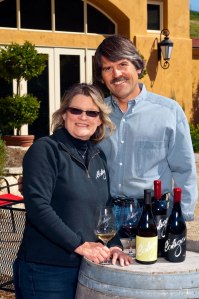
Carl and Pam Bowker produce 6-8 Rhône varietals on the Caliza property, including the Tanzer International 91-point rated Azimuth
Carl and Pam Bowker produce 6-8 Rhône varietals on the Caliza property, including the Tanzer International 91-point rated 2010 Azimuth.

“I wanted to be sure Carl understood a little about the importance of a clean environment in the winery,” Hawley said while chuckling. “But when I returned later, I found Carl, in classic fashion, decked out in a tie-back blue suit like he was working in a sterile lab complete with goggles on. I guess he was under the impression he needed zero contamination. But to his credit, he took the learning curve seriously and his attention to detail has paid off.”

The major strength of the Caliza Winery is that it’s almost completely self created. Most of Bowker’s wines are estate grown; he planted the vines himself and each year he helps pick, crush, create and bottles the wine. He is the whole picture. He knows what he wants when the year starts and is focused on gaining the unique characteristics of the vineyards.

Carl’s winery has a fine collection of six different Rhône-style clones, allowing him to handcraft his estate wines. Many are award-winning, including the 100 percent Rhône-style 2010 Syrah as well as the 2010 Azimuth which blends 40 percent Mourvedre, 30 percent Syrah and 30 percent Grenache.

“Carl is successful today–his wine sells,” Russell said. “He doesn’t need to pay a distributor to sell his wines; word of mouth shows how good Carl is.”

Caliza’s Syrahs and Rhône-style blends are award-wining, unique, big and intense. Bowker knows and experiences and lives out the whole picture, block, vineyard, and year with the final product. He is hands-on from beginning to end and there is a story behind each bottle of wine.

“Wine is made from the ground up,” Bowker says, “hand in hand, put together, made beautiful.”

Caliza Winery is located on 2570 Anderson Road, Paso Robles, CA 93446. The winery tasting room is open Thursday through Sunday, 11 a.m.- 4:40 p.m. or by appointment by calling 805.237.1480.

Bowker and his wife, Pam, are members of the Paso Robles Rhône Rangers regional chapter: a term used to describe those who produce Rhône-style wines in the United States. They also belong to the national Rhône Rangers: America’s leading non-profit organization dedicated to promoting American Rhône varietal wines. Caliza is a very active participant in the organization, both nationally and in the local Paso Robles chapter. In fact Pam will lead the Paso Robles chapter in 2013 as president.
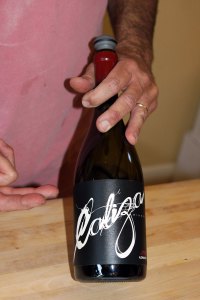
The 2010 Caliza Azimuth

Carl has been on the Rhône Ranger panel for several seminars discussing Rhône wines at the national event held each year in San Francisco. Be sure to check out the 16th Annual Rhône Rangers San Francisco Tasting, March 22-23, 2013, at Fort Mason. Over 500 of the best American Rhône wines from more than 100 Rhône Rangers member wineries will be poured.

The Paso Robles regional chapter of the Rhône Rangers will next host the 2013 Paso Robles Rhône Rangers Experience at the Broken Earth Winery, Feb. 17, 2013. Over 40 wineries will explore with the public what makes Paso Robles so ideal for Rhône varietals. Tickets for the seminar and lunch are $85.

For more information on the Rhône Rangers, read the March 31, 2011, Wine Spectator article, “Talent Show”; it briefly outlines the Paso Robles’ new wave of wines from this growing network of California Rhône go-getters.

Be sure to read past winemaker’s stories, including Get to know 2012 Coast winemaker of the year: Mike Sinor .

Caliza Winery: Bowker turns horticultural focus into viticulture dream

Carl Bowker passionately pursued entrepreneurial opportunities in the trade show and convention business for 26 years while living and working in the San Francisco area. But in 2001, a Wine Spectator/Mondavi-sponsored, tour of Tuscany, convinced him to transform his horticultural focus into a viticulture dream. Who knew nine years later the same magazine would honor the rookie winemaker with their Pick of the Month.

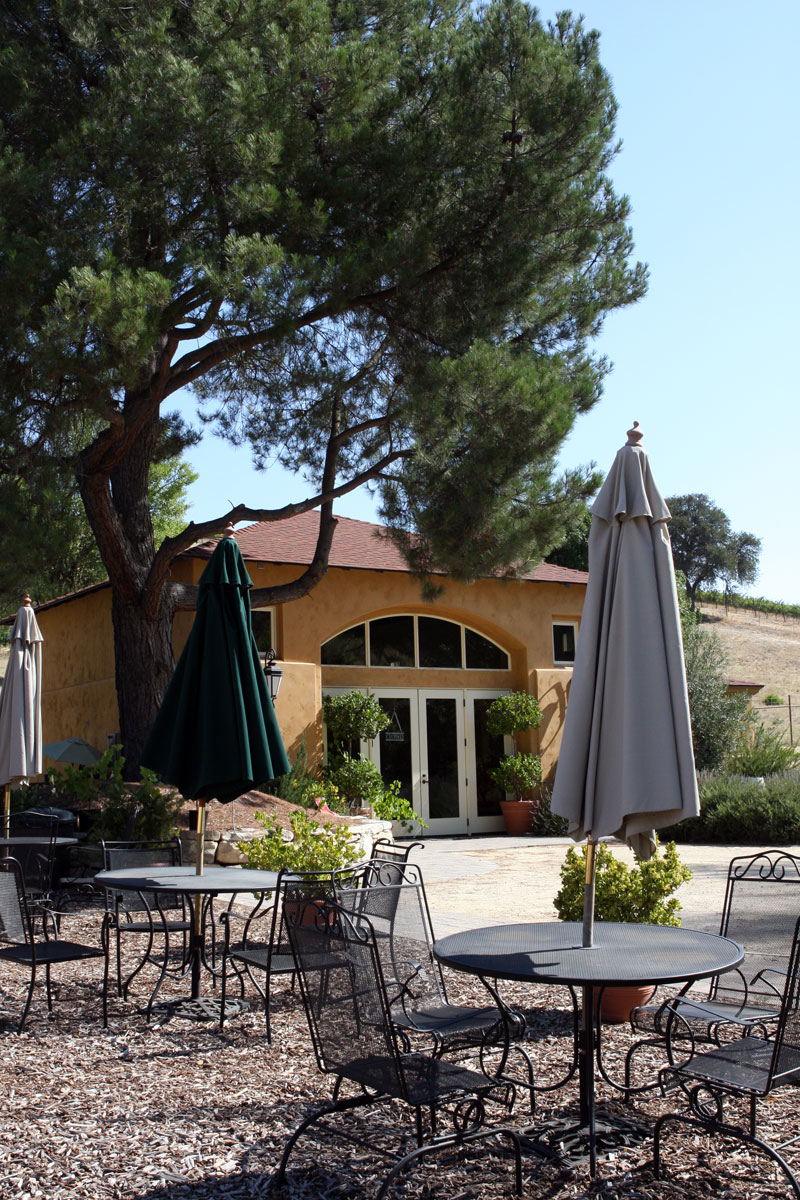
Just before the 2012 harvest, I visited with Carl for nearly three hours on the outdoor patio at Caliza Winery. We sat underneath a couple of umbrellas, overlooking the Syrah vineyards, while he shared his journey with me.

Bowker was born and raised in Kailua, Oahu, Hawaii, and began his farming experiences tagging along with his father, an irrigation specialist on the Island. According to the Caliza web site, the time spent time on Island farms, working the soils beside his father, shaped young Carl’s career aspirations.

After decorating conventions and trade shows with plants and flowers for 26 years, Carl Bowker switched careers from horticulture to viniculture after two European wine tours.

After graduating from the University of Hawaii in 1980, Bowker left the islands at 23. He landed in California, and put his business degree into practice, working in the convention services industry.

The former Hawaii resident then decided he was willing to strike out on his own after three years. He literally decided to grow his own plant rental trade show business.

“I began my business renting plants and flowers for each convention, coordinating the setup and removal of decorations only to repeat the process time after time,” Bowker said. “I loved the process of creating memorable esthetics. However, it didn’t take long before I realized that there really wasn’t someone who was dedicated to trade shows. So I created my own business: Exhibit Plant and Floral. Instead of renting plants and flowers, I provided my own plants and flowers for conventions across the country.”

Bowker traversed the country for 23 years, moving freight as he coordinated the installation of plant and food decorations for trade shows. After each convention and post show clean up, he moved his gear to another destination. This endeavor later became ‘top shelf.’ He ensured a first-rate presentation by owning all the live green and cut floral arrangements in the displays.

“I loved the creative part of the business,” Bowker said. “It was fun. My wife, Pam, and I met a lot of great people and we loved to travel. We liked to put things together so our business thrived. We had horticultural green houses and plants all around the U.S. so it kept us pretty busy.”

Despite the success of Exhibit Plant and Floral, Carl Bowker and Pam’s food and wine trips to Napa and Sonoma began to transform their interests from plant rental to winemaking.

Despite the success, Bowker was not convinced he would retire as a trade show businessman. While the couple loved to cook, Pam and Carl had been introduced to wine and food pairings on dinner trips to wine country. Conveniently for them, the Bowker’s business was headquartered just outside of San Francisco, So the couple made frequent trips to Napa and Sonoma for weekends to wine and dine.

“While we hadn’t previously been interested in wine and foodies,” Bowker said, “Pam and I loved to entertain and cook. And we found there were great restaurants in the Napa/Sonoma area, so we made time to get over there, even if it was just for dinner.”

However, the event which changed the course of his life was the 2001 trip to Italy’s Tuscany region.

It was during a Italian wine tour that the couple expanded their appreciation for world class wines and for what the land could produce. While in Tuscany, Carl and Pam spent time with many of the region’s finest wine-producing families. The couple attentively listened to the details of wine production and noticed the special connection the families had with their land. From this experience, Carl vowed that he would make this the way of life for himself and his family. He wanted to become a part of the groundswell of excitement of Central Coast winemaking.

With the Tuscan hillsides in the back ground, Carl and Pam Bowker hang out along side a vineyard on a foggy morning during their 2001 trip to Italy.

“We almost did not get to go on the Tuscany trip,” Bowker said. “After the 9/11 attack, the trip was moved back two weeks. We decided to go but with a lot of concern. Now it is amazing to think how one event provided direction and changed the course of our lives.”

Even as he was interested in moving to a wine region like Paso Robles, it didn’t take long before Carl knew he needed to go back to school. He knew his horticultural focus in the trade show and convention business would not help him create acclaimed wines. After he returned from Italy in the fall of 2001, he began attending Napa Valley College to learn about viticulture and enology, completing an associate program in 2004. He believed these went hand in hand; grapes and wine are created from the ground up.

“I loved what I was doing with the plant business and I thought, ‘wouldn’t it be neat to do this with the wine business?'” Carl mused. “I already had a green thumb so why not get the education I needed work to with grapes? So I took wine science and the chemistry of wine classes.”

Lowell Zelinski, left, of Precision Ag Consulting, consults with Carl Bowker each week at Caliza Winery. He provides vineyard management and technical services and has done so since 2008.

Our time was briefly interrupted by Lowell Zelinski of Precision Ag Consulting who has been working with Caliza Winery since 2008. They briefly spoke about the irrigation plans for the day. Zelinski often checks in with Carl and provides vineyard management and technical services to Caliza and many other wineries in the Paso area.

Later I caught up with Zelinski who enthusiastically endorsed Bowker as someone who was quick to offer winemaking suggestions to all who asked in the region. In fact, Zelinski shared that Carl had often been a resource for his own small winery: First Crush Cellars.

“Carl is the real deal,” Zelinski said. “He is generous and generally interested in my recommendations concerning the Caliza vineyards and he is a hands-on guy. He is a consummate professional who seems to care and is passionate about winemaking.”

While their interchange lasted less than five minutes, Carl and Lowell’s banter was upbeat, to the point and ended with a chuckle.

Already on a quest to start a new life in fall of 2001, the Bowkers decided to travel to San Diego County where his mother and father lived. They drove down California Highway 101 and initially planned to stop in the Carmel Valley, near San Luis Obispo. It was a late November night and the drive was cut short by fog.

Carl and Pam Bowker found the Paso Robles wine region quite by accident after a foggy evening drive to SoCal prevented them from going any further south. Today Caliza Winery in the Templeton Gap west of Paso Robles creates award-winning wines.

“As the weather was deteriorating, we hoped to go as far as San Miguel,” Carl said. “In fact, as we drove near the town any further travel proved to be unsafe. Once we decided to stop, we hoped the town would have a motel. In fact, it was the first glow we saw–the only motel in town. It was a simple place and gladly stayed there that night–the evening before Thanksgiving.”

Early the next morning, the couple left, looking for great cup of coffee. They took the first exit: Paso Robles.

“We got off the Highway 101, looking for Starbucks, but Paso didn’t have one at the time,” Carl said. “We drove down Spring Street to the Paso Robles Inn. We had breakfast at the counter but no espresso. I remember Pam saying, ‘this is a cute little town–a little like downtown Sonoma. A cool town.’ We liked it so much and felt it was a wine town and deserved an extra night.”

After Thanksgiving, the Bowkers stopped in Paso Robles on way back to San Francisco and stayed another night. Ingtrigued by the country and the people, the couple made frequent trips to the area, checking around Templeton and eating at McPhee’s Grill.

“Next door to McPhee’s is a real estate office where we would check the listings,” Carl said. “Pam saw our winery property listed in the office and it got us interested. But at the time we both agreed to look at something else. In fact, I began spending a lot of my time–a week at a time–looking at property in the Paso Robles area. It became my … it became our focus. And it took us about a year to settle on our property here in the Templeton Gap. I love the country feel of Paso.”

Carl actually found the first property without Pam. He made an offer on the 50-acre Peachy Canyon site in late 2002. The Bowkers bought the first parcel and continued farming its 23 rows of Cabernet and bottling a Cabernet/Syrah blend called Companion.

Carl Bowker creates 200 cases of Caliza Companion as a blend of estate grapes, using 50% Cabernet Sauvignon from the Peachy Canyon property. The rest of the blend comes from the Anderson Road vineyards: 30% Syrah, 10% Mourvedre and 10% Tannat.

“Pam had faith in me,” Carl said. “I originally came to look at the Peachy Canyon site on my own.” Later Pam came down and it didn’t take long and she charmed the sellers, sealing the deal. “We were city people, out of the area and the previous owner was a little nervous about selling to outsiders. But we approached this opportunity as our land, our home. It was after Pam arrived and we all talked that the deal was completed. Pam helped the previous owner be comfortable with us taking over.”

Her faith in her husband’s ability continues to pay off and, while Caliza Winery is not necessarily known for Companion, the 2006 vintage received a 90+ points from Robert Parker’s Wine Advocate (June 2008) in Issue #177: California’s Rhone Rangers.

Carl says he feels fortunate to have “discovered” Paso Robles, and at the time, believed it to be a new frontier in winemaking. They kept looking for superior vineyard property and added a second land purchase on Anderson Road in 2003. This 60-acre piece of land had an old declining 25-acre vineyard planted mostly to Chardonnay and Pinot Noir, but the Bowkers felt strongly that this land could become the cornerstone of the new Caliza Winery and vineyards with some major modifications.

“We bought for location as we wanted to be in the Templeton Gap area west of Paso Robles,” Carl said. “We chose this location to be a part of this amazing land, region and culture. We also wanted to be a part of the Paso wine movement and  its huge upside. However, I knew I needed a special place to grow Rhone varieties and there is no better place than here.”

While a first trip to Italy help create an obsession for winemaking, a tour of France’s Rhone Valley solidified Carl Bowker’s vision for old world wine in the new world. In 2005 he planted 20 acres on their hillside property on Anderson Road, joining cutting edge winemakers in the famed Templeton Gap.

While their newly purchased Templeton Gap winery was producing Chardonnay and Pinot Noir, Carl Bowker was not convinced his vineyards would develop world class wines. A fall 2004 trip to the Rhône Valley convinced Carl to make the hardest decision he’s ever had to make in his life. Please return in a couple of weeks to TalesoftheCork for “Caliza Winery: Templeton Gap nets a Rhone Ranger” and Carl Bowker’s tale of “making wine that will grab your attention!”

For other stories from TalesoftheCork, read the October 12, 2012, blog post, Guinness confirms Napa Valley owns wine relay record (VIDEO).

Frontier ranching in Paso: Rangeland Wines and Laird Foshay, Part II

Read the Aug. 5, 2012, Part I of Rangeland Wines and Angus beef: Get to know Laird Foshay. After two decades living in the Silicon Valley, media entrepreneur Laird Foshay ignored the nay-sayers and criticism and moved his three children to the hills west of Paso Robles in 2000. In a bold career shift, he transferred from cutting edge Internet-based businesses to farming.

“I was starved for a natural life–a connection with the physical world,” Paso Robles rancher Laird Foshay said. “I had put in 20 years in the business world with all its perks, and I thought I was involved in changing the world through software. However I was starved for things I didn’t understand but recognized.”

After ten years in computer magazine publishing and ten years as the founder of an investment news service, Laird Foshay needed a change. So in the late ’90s, Laird and his wife, Lisa, started doing something to create a new vision for their family. But curiously, the change didn’t seem to be that difficult for him to make.

After 20 years in the Silicon Valley, media entrepreneur Laird Foshay moved his family to the hills west of Paso Robles, establishing Rangeland Wines and Adelaida Springs Ranch.

“Lisa and I drove through Paso ‘window shopping’ rural properties for a destination, looking at working ranches,” Foshay said. The land near the old Dodd Ranch and adjacent to the historic Klau and Buena Vista Mines was available. This place was the commercial hub of the area as early as 1870. The ranch was a part of the old frontier. So we bought it and now are a part of that history.”

Foshay was careful to emphasize he would never put himself in the same rancher category like a Doug Filipponi (Santa Margarita Ranch and Ancient Peaks fame); yet he wanted to get back to nature and ranching just the same. So when the Adelaida Springs Ranch was for sale, the Foshays, jumped at the chance and became hands-on ranchers, despite their initial tag as “raw beginners.”

Laird Foshay runs a 1,500-acre ranch with 80 Angus beef cattle and 40 acres of vineyards.

The Adelaida Springs Ranch (ASR) needed a lot of updating and Foshay had the time to drive in posts and redo the water lines. He built his “dream house”: a sprawling two-story ranch house complete with outbuildings and pool nestled into the hillside 12 miles west of Paso Robles, overlooking the Santa Lucia Range (VIDEO). And he planted most of his vineyard stock by 2002: a 40-acre ASR estate vineyard. It is surrounded by over 1,500 acres of oak woodlands on a pristine mountain valley.

“Now, this wasn’t without sleepless nights,” Foshay said, “but then marriage, business, career and children aren’t without them either. But these are all worth while.”

The winemaking community made fun of them early on, but Foshay and Lisa did almost all of the work themselves. They investigated the process, read, asked a lot of questions plus worked for others in the industry. The made mistakes along the way but gained valuable experience. In fact, the ranch “became the center of his life.” Instead of socializing with the business crowd of the Bay Area, Foshay and Lisa became involved with Paso Robles social events, including the Farm Bureau, meeting area growers, farmers and ranchers.

With his Polo shirts retired to the closet, Foshay now often wears a plaid shirt, fleece or down vest and a straw cowboy hat. The risk-taker can be found in the vineyards, fixing fences, splitting wood or in the grasslands, riding horses and moving cattle with Silver, his crossbred 10-year-old Australian cattle dog. Silver whines when not working and helps keeps Foshay’s herd in check. Foshay will drink a Coors or Sam Adams beer because, when cold, are refreshing and consistent. He favors L’Aventure Estate Cuvee when he wants another wine on his table.

Foshay hired Fresno State grad, Shannon Gustafson, as his Rangeland winemaker in 2009. She studied in Bordeaux, France, in 2001 for four months at Château du Grand Mouëys and has worked for other local wineries, including Talley Vineyards and Zoller Wine Styling.

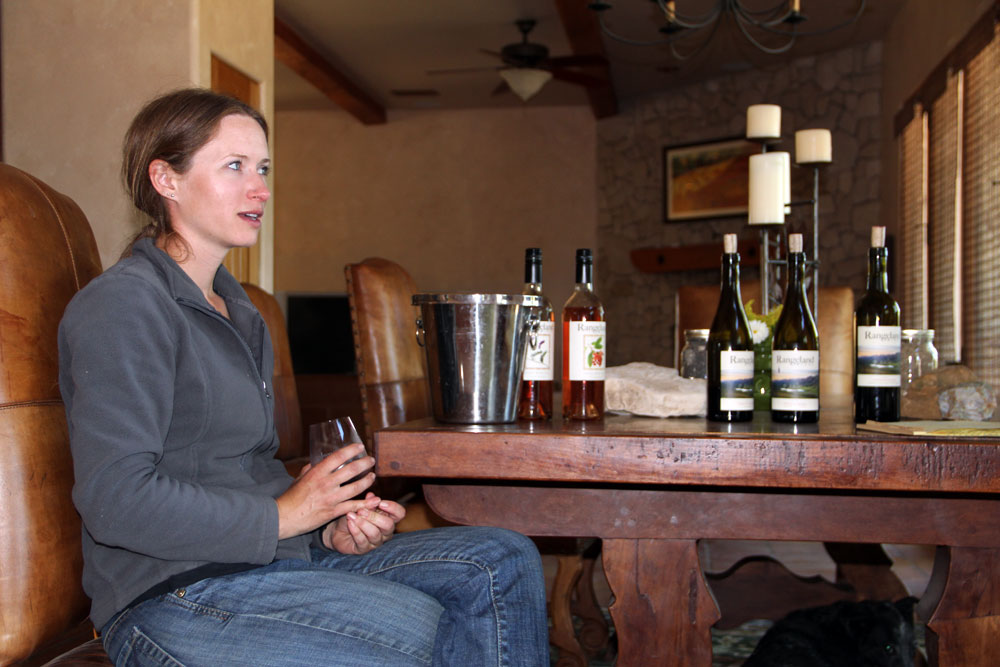
Foshay hired Shaver Lake, California-born, Shannon Gustafson as his Rangeland winemaker in 2009. She graduated from Fresno State and received her Enology degree in 2003. Gustafson studied in Bordeaux, France, in 2001 for four months at Château du Grand Mouëys and made a trip to Burgundy, France, to study in 2007. She formally worked at Zoller Wine Styling (2008-09) and Talley Vineyards (2006-08). Together, they guide the fruit from the ground up: planting, irrigating, training vines, fruit drop to harvest. They make fine wines in the vineyard as a team. They do not add enzymes or acid and only allow native yeast fermentation. Rangeland Wines are unique, soft with more acidity from the limestone soils. These are sound, refined wines, European in style but not over-the-top. They are approachable that have longevity and do not fall apart in the glass.

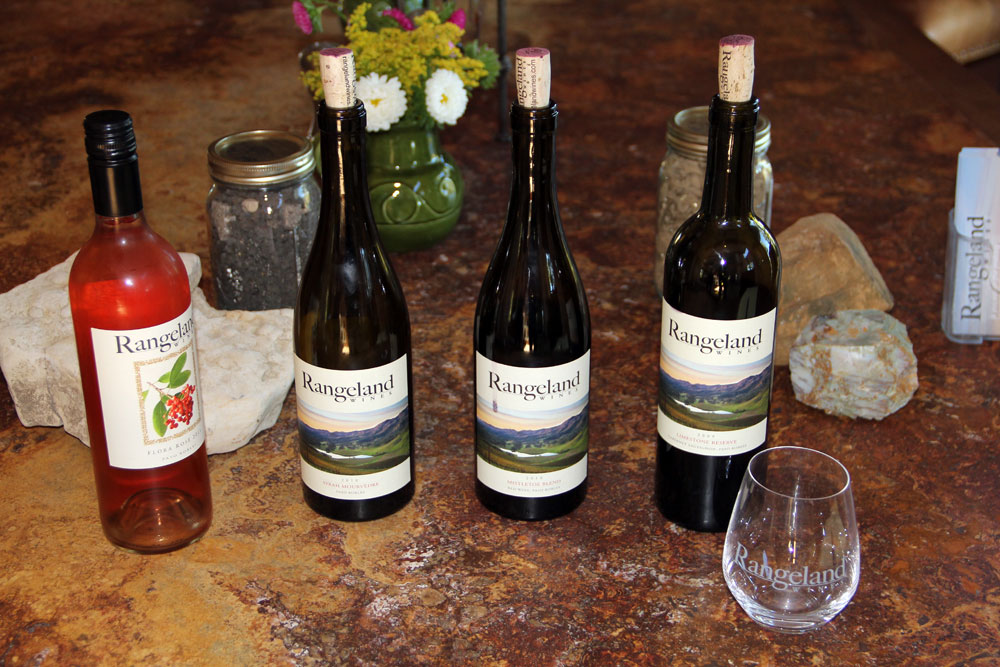
Personally I tasted 11 different Rangeland Wines. I loved the 2010 Mistletoe Blend. This is a non-traditional blend of Cabernet, Cabernet Franc, Syrah and Merlot grown in vineyards at the 1,700 ft. level. The wine already had a softness about it that surprised me. While it will be better in a year or two, the Mistletoe is a great pizza wine or it can be drunk by itself. It is easy going but hedonistic, rustic and has earthy notes. The Cab Franc gave off a subtle ‘green’ hint of coffee and dark cherry.

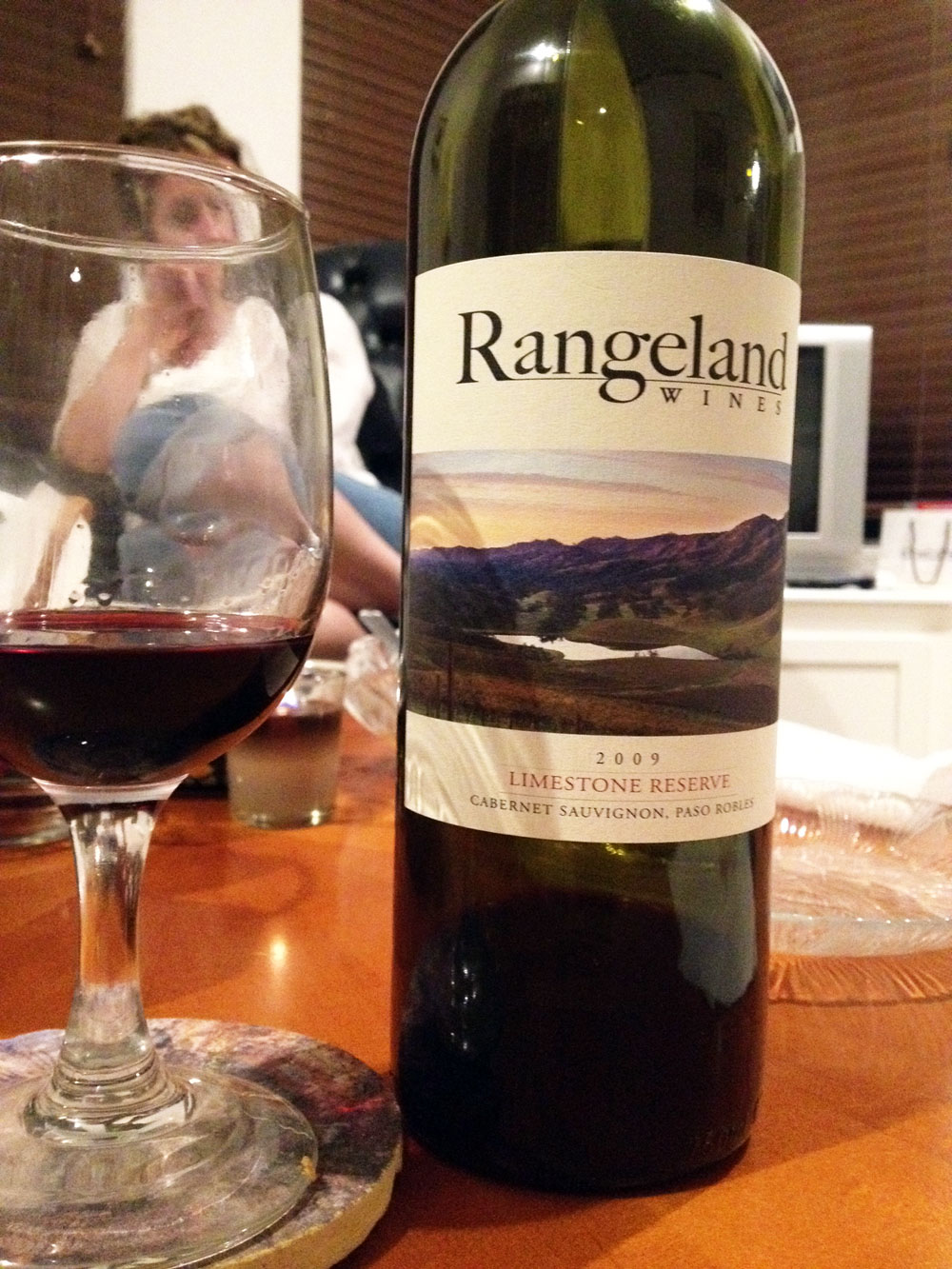
My favorite was the 2009 Rangeland Limestone Reserve. This Cabernet is age-worthy and wowed me with its floral aromatics, immediately upon opening.

Yet my favorite was the 2009 Rangeland Limestone Reserve. This Cabernet is age-worthy and wowed me with its floral aromatics, immediately upon opening. With two years in 75% new oak barrels, this fruit-forward mountain Cab is not racked until blending. It’s tart acidity and stiff tannins were nicely hid amongst the black cherry. And while the wine was not chewy, the Limestone Reserve had a lovely finish. This is a good food pairing wine than should age well.

These two, and all of Rangeland Wines, can be purchased through their website and club list. Additionally, the wines can be tasted at the ranch by appointment or purchased through a select few local retail outlets.

However, Foshay wanted to create more than just critically acclaimed fine estate wines; over time his vision morphed to include the natural meat business.

“While we weren’t initially interested in taking on cattle, our family seasonally raised heifers for our kids who became involved in the local 4H program,” Foshay said. “In fact, we would buy them back at auction and they became the seed stock of our land.”

Foshay manages his Rangeland Wines and beef from their inception until a customer buys them for their table. The meats, estate wines and honey products are unique where they are grown and express their environment.

Foshay’s ranch experience came through the local 4-H program, but also included helping neighbors with branding and working with the vet, administering medicines to animals. He also has a strong opinion of overcoming modern practices of grain-fed beef and has built a USDA approved natural and sustainable pasture-feed beef program. His rangeland consists of high-mineral soils of limestone and calcium that are perfect for his 80 head of Angus beef. Foshay regularly rotates his animals through standing thick yellow grasslands and forbs, like wild rye, clover, vetch and filaree. These conditions fatten up the beef to be smaller, but healthier and more muscular than their grain-feed counterparts. The beef are not feed supplements that are the staple of commercial feedlots, never receiving hormone supplements or antibiotics.

Foshay regularly rotates his animals through standing thick yellow grasslands and forbs, like wild rye, clover, vetch and filaree. These conditions fatten up the beef to be smaller, but healthier and more muscular than their grain-feed counterparts.

“I am in the meat and wine business and have complete control of both,” Foshay said. “I learned a lot about estate branding and the food business from Art Mondavi, relying on common sense in the vineyard and in the pasture and do not rely on chemicals.” He went on to say Rangelands Wines and the Adelaida Springs Ranch’s reputation are built on sustainable farming that are natural and healthy for the environment and human consumption.

Today Laird Foshay is making a name for himself as a winegrower and rancher. Yet he also manages a custom meat processing facility: J&R Natural Meat and Sausage in Paso Robles and Templeton.

“I have hands-on boutique control of Rangeland Wines and the animals from birth to your meat counter,” Foshay said. “The products I manage are unique where they are grown and all express their environment. I am happy with the curve of our development. The beef and the wines are authentic, natural and simple. I like our progress but not yet satisfied. I continue to talk to the consumer directly and react to their feedback and improvement ideas.”

From their dry farmed (no irrigation) Petite Sirah, to the Limestone Reserve Cabernet Sauvignon, Zinfandel and estate blends, Rangeland Wines are available through club purchase, local retail outlets and tastings at the Adelaida Springs Ranch.

Laird Foshay can be reached at the Adelaida Springs Ranch via the web site. Visitors are also encouraged to Ranch Stay and tour the vineyards, ranch and historic homestead.

For previous TalesoftheCork stories, please use the menu bar at the TOP of the page or check out my personal essay celebrating my daughter’s first wedding anniversary: Her Mother and I.

A time for change: Mike Sinor winemaker of the year, Part II

This blog continues to follow Mike Sinor’s transformation from Assistant winemaker to Byron and Domaine Alfred wineries in California’s Central Coast, to the director of winemaking at Ancient Peaks Winery. Please look for the first post in the series: Get to know 2012 Coast winemaker of the year: Mike Sinor

Sinor LaValle owner directs Ancient Peak Winery

“It was the lowest point in my life,” winemaker Mike Sinor said, after dealing with the deaths of family members in January 2006. “My head was all messed up. Yet even before my loss, I had already begun contemplating a change in work for both me and my family. I knew six months before [family deaths] a new challenge was needed. I believed my time with Terry Speizer [Domaine Alfred] was coming to an end, I just didn’t know it would happen so soon after my parents died. But despite what we were going through, I now knew it was time for me to explore another level of winemaking.”

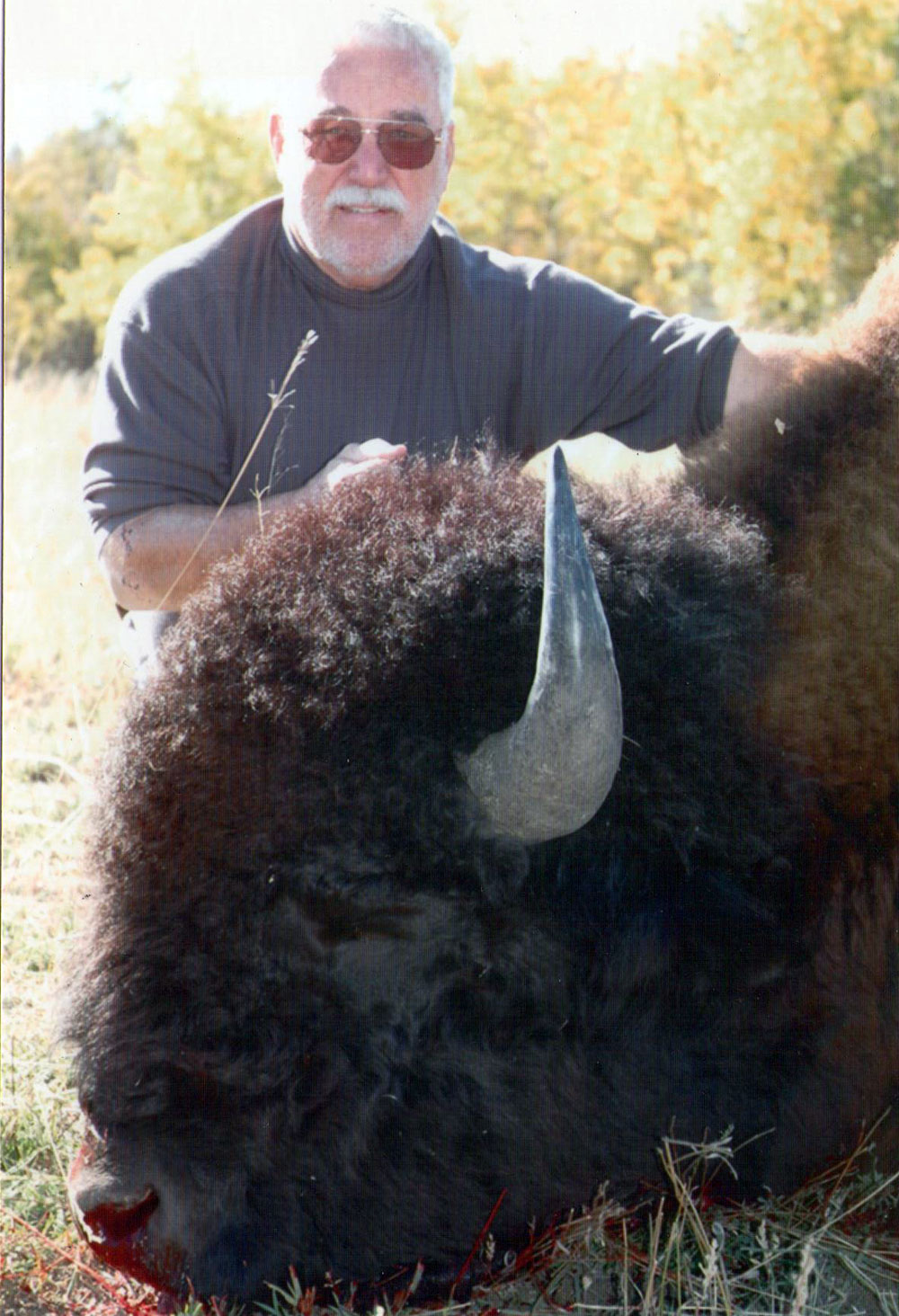
Bernie Sinor on one of his hunting trips to Wyoming where he hunted big game (bison) in 2004.

Little did Sinor know at the time, but the 2012 Central Coast winemaker of the year, would have a 2006 spring to remember, even while mourning the loss of his father, Bernie Sinor and stepmother, Betty Ann.

“I needed to change positions because I could see Domaine Alfred was growing as we became successful, much the same way Byron Wines grew,” Sinor said. “Even before the 96-point score Wine Spectator gave the 2004 Domaine Alfred Pinot Noir [Califa Chamisal Vineyard], I needed a business opportunity. I was saying ‘no’ to a lot of jobs and wanted to do something right for my family. Yeah, it was crushing when my parents were killed and we endured a high level of personal pain. So Wine Spectator’s honor came at the lowest point in my life but I already had decided to leave. I knew there would never be a perfect time to change. And I know growth often comes through uncomfortableness. Terry understood I needed to leave. He’s a good friend and an entrepreneur himself.”

During the spring of 2006, when local proprietors and long-time wine growing families of Rob Rossi, Doug Filipponi and Karl Wittstrom approached Mike with a opportunity to be the director of winemaking at Ancient Peaks Winery, Sinor jumped at the chance to join them in May.

“I had never met these guys from the Santa Margarita Ranch, but from the start, it was a convergence of energies and focus,” Sinor said. “They had been reorganizing the operation at Santa Margarita starting in 2005 and it seemed a good fit. We became business partners rather than an employer/employee relationship. I wanted to have control over the winemaking process and they were comfortable with that. So, I said, ‘let’s start dating’ and we’ve been together ever since.”

Santa Margarita Ranch July 2012

Mike Sinor and I spent the day together at the historic Santa Margarita Ranch, just minutes north of San Luis Obispo, July 26. I wanted to find out why he had left promising positions at Domaine Alfred and Byron Wineries. The man who thrived on creating lasting relationships through his infectious attitude and positive, passionate energy, left sure-fire success for a restart winery. I wanted to find out why he had stayed on at Ancient Peaks Winery in Santa Margarita.

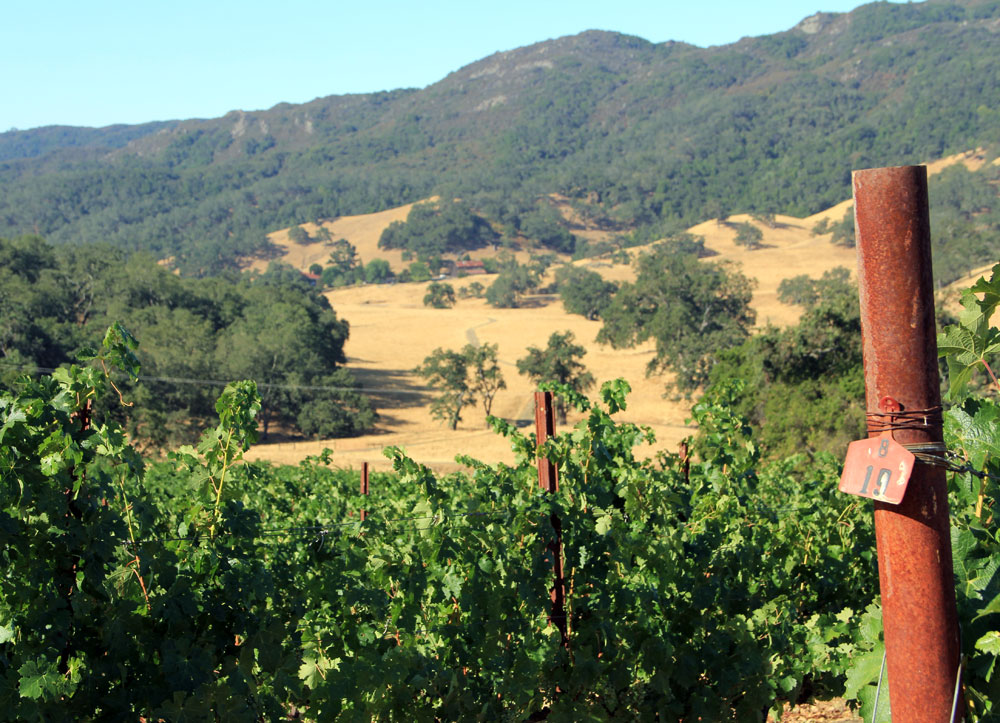
Mike Sinor left Domaine Alfred Winery after receiving an offer to be the director of winemaking at Ancient Peaks Winery in Santa Margarita. The Oyster Ridge Vineyard is in the foreground with the Santa Lucia Mountains providing the backdrop.

While we met briefly at the Ancient Peaks’ tasting room, Mike pulled out a large coffee table book, offering a pictorial and historical background of the ranch and Santa Margarita. I was moved by his attention to names, places, land formations and background of the region. His perspective was so impassioned, it was as if he had been born there. Mike then offered to take me up to the working winery and vineyards. I agreed and looked forward to the 17-mile drive up into the heart of the Santa Margarita Ranch, through pastures of Slender Wheatgrass, Purple Needlegrass and Danthonia Oatgrass.

Mike’s 20-minute version of Ancient Peaks Winery and its history included how Napa Valley’s Robert Mondavi Winery leased a section of the ranch in 1999 for six years. They developed and planted what has become known as Margarita Vineyard. Remarkably, it was the Mondavi family who saw immense potential in the land, and accurately predicted that its diverse soils and marine-influenced climate would deliver remarkable wines.

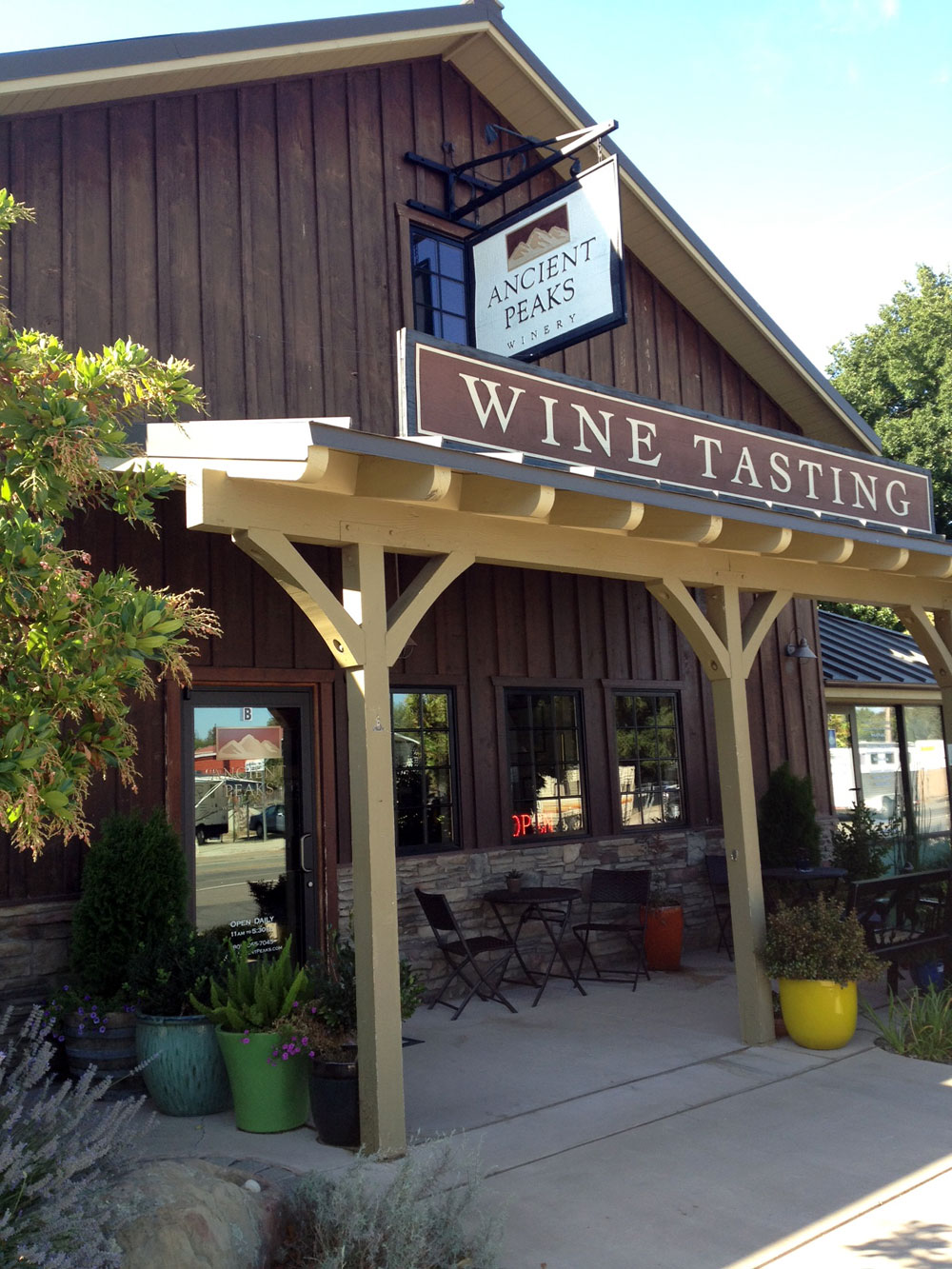
While the vineyards and winery are 17 miles away near the Margarita Vineyard, the Ancient Peaks tasting room is in Santa Margarita, one mile east of Highway 101.

Our conversation digressed to include how the Franciscan missionaries planted grapes on the ranch as early as 1780. In fact the ranch became part of Father Junipero Serra’s famed Mission Trail, culminating with the establishment of Santa Margarita de Cortona, a sub-mission of Mission San Luis Obispo de Tolosa, in 1787. This historic structure, known as the Asistencia, was converted to a barn but remains a centerpiece of the ranch.

Santa Margarita Ranch has survived since the 1840s; however, in 1889, then owner Patrick Murphy sold much of the town’s land to Southern Pacific Railroad in hopes of getting a rail stop. He hoped to move cattle from this sprawling ranch that surrounded Santa Margarita.

Mike Sinor: Super charged, relational winemaker

Mike started humming the tune to Smokey and the Bandit as we neared the winery, located near Creston. When I asked why, he smiled and said this project is just like the song indicated. “We are just old-time entrepreneurs working on a project by the seat of our pants.” I didn’t ask him if he fit the Burt Reynolds persona or Jerry Reed’s truck driver character. But I did get the gist of the metaphor: Sinor delivers–no, Sinor over delivers wine quality for the price point. I can still see the gleam in his eyes as he gripped the steering wheel and sang, “We gonna do what they say can’t be done.”

However, while we walked around the Ancient Peaks Winery, I remembered what Ken “Byron” Brown told me about Sinor: Mike was a good-humored, energetic, young winemaker while he worked at Byron Winery years earlier.

“Mike Sinor stands out as a super-charged, friend of all; every one likes him,” Brown said. “He takes time for relationships but not at the expense of his work. Mike is extra double energy. He brought excitement to the team and ignited everyone at Byron each day.”

During his winemaking career, Mike Sinor, right, worked with Tim Mondavi, left, and Ken “Byron” Brown while creating wines with Byron Winery.

As we walked by the 2011-filled barrels safely tucked away in the aging room, we got to talking about wine, Mike’s preferences and who he enjoys working with besides his partners at Ancients Peaks.

“Actually, I don’t drink a lot of Ancient Peaks wine at home,” Sinor said. “It’s a little like only eating your mom’s spaghetti. If I drink the wines I help create everyday, I won’t get better. Like Burgundy’s winemakers, I want to make wines as good as their grandparents. We don’t have a rich, long history and culture of winemaking like they do in France. So if I’m not improving my pallet, I’m losing.”

Sinor went on to say he chooses to enjoy friend’s wines and finds it refreshing to try different wines from around the world.

Since 2007, Mike Sinor has been the director of winemaking at Ancient Peaks Winery in Santa Margarita.

“For instance, I really like Broadside Wines Cabernet. It is made by winemakers Chris Brockway [Broc Cellars] and Brian Terrizzi [Giornata wines] who are very passionate about wine that is done well; their wines transmit place. In other words, their wines exhibit my mantra: ‘The message is the place; the messenger is the wine.'”

As we continued to walk the grounds of the winery, Mike showed me how Ancient Peaks has added buildings and updated the old Creston Manor and Vineyards that Jeopardy! game show host Alex Trebek used to farm. The latest addition was in spring of this year when extensions were added to the Margarita Vineyards.

Story is unfolding, evolving in vineyards

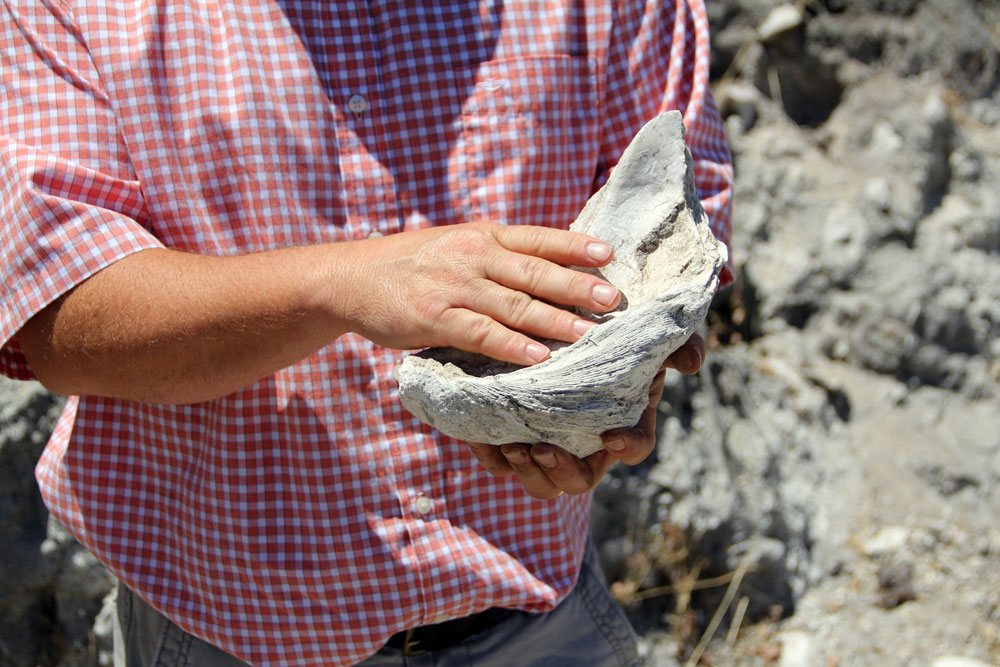
Our trip across the ranch ended when we stood on a rise overlooking the Oyster Ridge Vineyards. I marveled at Mike’s zeal as he spoke of the land, rich in fossils from an ancient sea bed, adjacent to vineyards planted in shale, sedimentary, volcanic and granite. Mike was spirited and had a fanaticism or fixation on soil that many in this country have for baseball or football. And when we stopped to walk the Oyster Ridge Vineyard, he held a football-sized, petrified crustacean like it was a trophy.

“These (oysters) are high in calcium and, when they are crushed or broken down, create a soil profile similar to those found in the world’s most prestigious grape growing regions.” Sinor beamed as he spoke and the pace of his voice quickened, rising in intensity while we moved from row to row.

The Ancient Peaks Oyster Ridge Vineyard soils include crushed and larger pieces of ancient, petrified crustaceans. The vineyard was a part of a large seabed millions of years ago.

He spoke about the legacy of environmental stewardship at Margarita Vineyard as if it was his own child. The vineyard advanced to “Sustainability in Practice (SIP),” and was certified by the Central Coast Vineyard Team in 2010.

“There still are places that are compelling to plant but I am still trying to figure out who we are and how to stay on target,” Sinor said. “We have five wines at Ancient Peaks and three White Label wines. And with the longest running ranching operations in California and new zip line business always demanding attention, I am determined to stay in constant watch to focus the winery’s goals to offer high wine quality for the price point.”

Wine Spectator agreed with Mike’s assertion and promoted Ancient Peaks as “Best of the West for $25 or less… 2009 Zinfandel, 2009 Cabernet Sauvignon and 2009 Merlot” in their April 2012 issue.

The 300-400 cases of Sinor-LaVallee [Mike Sinor’s personal label] wines are created from about 14 rows of fruit from the Talley-Rincon Vineyard in the Edna Valley.
I asked Mike how he ensured there was not a conflict of interest between his Sinor-LaVallee label and the Ancient Peaks wines he consulted on.

“I am working with about an acre of fruit from the Talley-Rincon Vineyard and the Sinor-LaVallee wines I make are not meant to compete with Ancient Peaks,” Sinor said. “I am working with 2-4 barrels of wine from 14 rows. Actually, the diversity of exposure is what makes my consulting for Ancient Peaks exciting. The time spent with both brands requires and puts into practice a balance of reading/studying, keeping me fresh. This is fun! I’m honored to do this. Do the math: I get to live at the beach.”

Mike Sinor is married to Cheri and they live in the Edna Valley with their two children: Tomas (12) and Esmee (10). All four of their thumb prints appear on every bottle of the family wine label. “By definition, I am an alcoholic,’ Sinor said, “but I mimic a healthy lifestyle to my children, showing them how to live responsibly.

“I look to enjoy and share my life wife my family and community in good and bad,” Sinor said. “We are born to suffer, grow to overcome suffering. I have my dad’s and previous winemaker’s work ethic. They inspired me and now I work with many of my heroes.”

Mike currently is the President of the San Luis Obispo Vintners Association and says he likes to volunteer his time in community events and organizations because “The wine business has given me everything I own. I owe it to wine.”

The Sinor-LaVallee wine label is named after Mike’s Spanish heritage and Cheri’s French last name. The Sinors appear here during their 2004 Burgundy trip and winery visits.

For more information on Ancient Peaks Winery and wines, visit Ancient Peaks Winery or Mike’s personal web site: Sinor-LaVallee Wines.

Rangeland Wines and Angus beef: Get to know Laird Foshay

Born in Nova Scotia, Canada, with Sottish and French heritage, Paso Robles raised Laird Foshay, complete with a cowboy hat and boots, intrigued me before I even arrived at the sprawling Rangeland Wines’ home base. I previously read Laird had been a Silicon Valley-type for half his adult life. However, I couldn’t believe for the life of me that, after ten years in computer magazine publishing and ten years as the founder of an investment news service business, he wanted to be a winemaker and rancher in the hills west of Paso Robles.

Once a web publisher for DrDobbs.com and the founder of Investools.com, an investment news service, Laird Foshay gave up his office job for wide open spaces at Rangeland Wines and the 1,500-acre Adelaida Springs Ranch in 2000.

Boy was I wrong. This Central Coast  winemaker not only has kept his ‘shirt and tie’ business savvy, but for the last 11 years has also added plaid, down-to-earth, unpretentiousness to his forté. His wife, Lisa, and him now operate both a winery, and the 1,500-acre  Adelaida Springs Ranch, including all-natural grass-fed 80 Angus beef cattle.

My trip to the Rangeland ranch house came after a visit with Mike Sinor of  Ancient Peaks Winery and Sinor-LaVallee. Despite my late arrival, Laird offered me a ranch guest room. We then talked well into the night, then picked up where we left off in the morning.

But before he shared his story, Laird was keen on giving me a circle tour of the ranch. We jumped into his white pick-up,  tossed the rifles in the back seat and proceeded to give me a personal tour.

The late, July sun seemed to illuminate the golden pasture grasses. The Angus beef grazing in the pastures were smaller than I had seen on other ranches, but the muscular build of the cattle stood out. The high mineral limestone soils created high-standing yellow grass and the animals looked fattened and sturdy after two years. He said the practice of rotational grazing, never allowing the animals more than 30 days in a pasture, kept them fit. The truck traveled down worn paths for almost two hours, and I never saw evidence of overgrazing. In fact, we passed by a few 1,300-pound specimens which Laird said were scheduled to be harvested in the days/weeks to come.

Through the hills, dozens of remarkable, natural springs gravity-fed the ranch’s needs and actually have been doing so since the Salinan Nation and the Chumash native peoples lived in and near this area hundreds of years ago. The many species of oak trees dotted the pastures, rocky outcroppings and at the edges of the vineyards. The laurel oak, live oak, blue oak and valley oak are all common to Paso Robles and the Adelaida Springs Ranch.

Rangeland owner Laird Foshay traded unstable high Internet dollars for fair/bargin-priced land in the oak-covered hills west of Paso Robles and a chance to be an Angus beef rancher and winemaker. He wanted a rural lifestyle and was willing to be a beginner to do it.

As we continued around the ranch, Laird shared his love for the land and the native peoples. We talked about the history of the old Adelaide and the Klau and Buena Vista Mines and mid-1800 homesteaders. Laird spoke as though his family had homesteaded the place, not like someone who had moved there from the City of Palo Alto, just 11 years before. Later, he even pulled out a 1992 copy of J. Fraser MacGillivray’s coffee table book, Adelaida. It is fabulous, self-published book on the history of the region, including manuscripts, photos, and newspaper clippings.

During our drive through golden pastureland, 40 acres of vineyards, past ponds, posts and ranch machinery, we talked about raw beginnings, watering holes, golden eagles and putting up with new visitors to the area: 250-700 pound wild feral hogs or even and maybe even a 200-pound  wild black Russian boar.

“This is a new wild frontier,” Foshay said. “The ranch is a place of opportunity and freedom for me and for our young winemaker, Shannon Gustafson. It’s about a new place. I’m reshaping my history.”

My thoughts turned to a NordicHardware.com, July 2012 article, which published Steve Ballmer’s comments of reshaping  Microsoft, despite its past success. Ballmer’s drive reminded me of Foshay’s confidence about reformatting his life. Laird’s courage and conviction was gripping.

“Hey, I’ve changed careers twice already,” Foshsay said. “I’ve taken a lot of criticism but few things are rocket science and this [ranching] isn’t one of them.”

The 2009 The Watershed (Cabernet, Merlot and Cabernet Franc blend) is one of nine Rangeland wines produced on an annual basis. Rangeland wines are offered through club membership on their web site or through over 20 area wine shops and restaurants.

As dusk fell, the California quail and hares skittered under twigs and piles of dead vine stock. The talk in the truck of  abundant wildlife, including wild turkey, deer, bobcat, mountain lion and bear, red-tailed hawk and a pair of bald eagles, seemed to give evidence of a healthy ecosystem beyond what Foshay was creating with his cattle. Laird added he brought on one other full-time employee in 2011: Nathan Stuart. Since last summer, Paso Robles-born Stuart has managed the vineyards, introduced grazing sheep in the vineyard and also kept the bees busy with the ranch’s honey-making venture.

Our drive ended back at the ranch house with talks of dinner before our conversation would turn to winemaking. Laird offered me a couple of Angus beef hamburgers. No take out or maid service here. The patties sizzled and the fat rendered like juice in a pan: simple western food that smelled of the land. He poured a glass of 2009 Rangeland Syrah Mourvedre. The Rhône varietals grow well in Rangeland limestone and sandstone soils. The Syrah’s robust gaminess and smokey characteristics are complimented by the fresh fruity Mourvedre bouquet, including hints of blueberry and blackberry and flavors of leather, clove, and vanilla. The super fine tannins and smooth texture heightened the organic, mineral-like depth taste of the burgers.

Over his home-grown dinner offerings, talk turned to the interior decor of ranch house. So much of it reflected the land we had just meandered through. The natural limestone and sandstone fireplaces, the huge picture windows overlooking the Santa Lucia Range, pastures and vineyards. Native artifacts found on the property were displayed carefully as if in a museum. Foshay’s crossbred 10-year-old Australian cattle dog, Silver, was welcome inside and out.

Laird wanted to talk about the original Dodd Ranch and Frank Sawyer’s homestead; Sawyer was the physician at the Paso Robles Inn 100 years ago. His son Marshall later bought the ranch land in the 1970s. The area’s history seemed far more important than his successful 20 years as one of Palo Alto’s “bit players” (his humble quotations) of Internet and finance. Heck we even talked about the Paso Mennonites who settled the area in the 1890s.

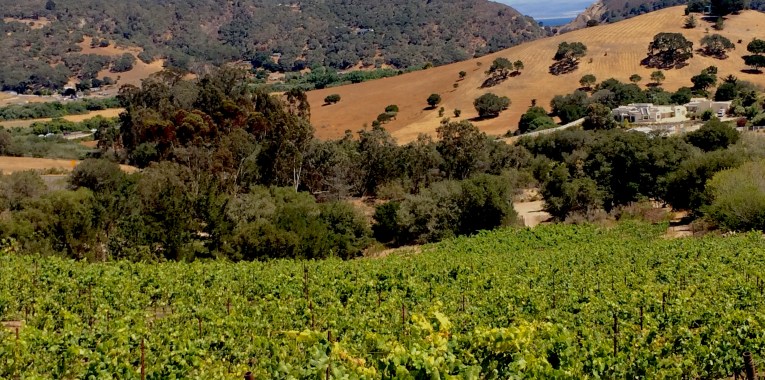
After planting his first Bordeaux vineyard in 2002 and Rhône varietals in 2008-09, former Silicon Valley entrepreneur, Laird Foshay, harvests vineyards growing at 1,700 feet among oaks, grasslands and Angus beef.

So then who is this University of California, Santa Barbara, history major? I kept telling Laird, “I am still having trouble figuring out how a guy who met Bill Gates and Steve Jobs in the early years of personal computer and Internet development, turned to ranching and winemaking? It just seems crazy.”

One thing for sure, Foshay no longer wears Polo shirts and has no intention of going back.

Please read the Sept. 14 post and the second part of this series: Frontier ranching in Paso: Rangeland Wines and Laird Foshay, Part II. Read as Laird put aside criticism and raw beginnings to produce wines worthy of acclaim. Laird lives on his Adelaida Springs Ranch with his wife Lisa. They have two college-age boys: Sam and Jackson and a high school senior, Angeline.