Two and a half hours from the Central Valley is the ever expanding Central Coast wine region, located halfway between Los Angeles and San Francisco. The region includes Paso Robles, San Luis Obispo and even as far south as Santa Barbara. Vines were planted by the Franciscan monks in the late 1790s and were tended to via the many California Missions that doted the region.
“Indiana rancher Andrew York began planting vineyards on his 240-acre homestead. Within a few years, he found that the vines were yielding more than he could market, prompting him in 1882 to establish Ascension Winery, known today as York Mountain Winery. The family planted some of the area’s earliest Zinfandel vines, making Paso Robles is famous for this variety. York initially sold his wines in San Luis Obispo and eventually as far away as San Francisco. Today, York Mountain Winery (located within the York Mountain AVA, adjacent to the Paso Robles AVA ) remains the oldest winery in continuous operation in the county.”
Throughout the Central Coast, the distinct soils and weather create unique, world class wines from Santa Barbara to Paso Robles.
Today, a wide variety of wines are grown on the Central Coast using grape varietals like Pinot Noir, Chardonnay, Cabernet Sauvignon, Merlot, Syrah and Rhône varieties. The wines have received world class recognition with many wineries winning top awards. I believe that Robert M. Parker Jr.’s prediction in the June 30, 2005, issue of Wine Advocate has already come true: “There is no question that a decade from now, the top viticultural areas of Santa Barbara, Santa Rita Hills and the limestone hillsides west of Paso Robles will be as well-known as the glamorous vineyards of Napa Valley.”
Explore Tales of the Cork with me. Read about the growth and influence of California’s winemakers, merchants and chefs. My goal is to find and develop relationships with them; my hope is to uncover and retell their untold stories. Be sure to leave a comment after each story; share your wine, winemaker or food experience.
As my palate evolved, my interest in Californian wines has expanded, wanting to appreciate both the vintner and the production process. I am interested in sustainable wine practices and am thankful for the wide variety of wine choices. And now with wine regions’ climat changing, I am even more aware of how climate, terroir and winemakers may need to research new techniques in order to produce higher quality wines in the 200-mile long (Tehachapi Mountains south of Bakersfield, north to Fresno County and Madera Wine Trail and up the San Joaquin Valley to the city of Modesto in the north) Central Valley region.
According to the Fresno County Farm Bureau, Thompson grapes are the most common planted variety in vineyards across the Central Valley.
Additionally, Viticulturists in the Valley are exploring additional vine varietal opportunities which provide new options for regional growth. In fact, hot weather grape varieties have been planted similar to the ones in Portugal and Spain.
Hot Central Valley summers have produced wine grapes (Thompson) that are traditionally blended with other grape varietals. However, the Central Valley grown Muscat grape is becoming more popular with the 21-34 age group who enjoy sweet Muscato wine. Yet, some have doubts that this or other varieties can flourish in the inland valley’s hot temperatures. That being said, a 2011 UC-Davis Central Valley wine study shows how the Central Valley‘s value-priced wine production is projected to increase and has developed a niche in the marketplace, especially wines that are meant for blending. While jug wines and table grapes have carried the wine region through the 1980s, Zinfandel, Tempranillo and Viognier, Chardonnay and Merlot have also been planted in the last decade. In addition, the Central Valley has developedTawny port and dessert wines that have gained a reputation outside of the region.
The Central Valley is one of three California focus wine regions for Tales of the Cork. The other two are the Sierra Nevada Foothills Wine Region and the Central Coast Wine Region. All are within a day trip of my home base of Fresno, Calif. and account for many of America’s most promising wineries and winemakers.
Explore Tales of the Cork with me. Read about the growth and influence of California’s winemakers, merchants and chefs. My goal is to find and develop relationships with them; my hope is to uncover and retell their untold stories. Be sure to leave a comment after each story; share your wine, winemaker or food experience.
Burgundy winemaking is tradition and viewed as a right. Skills and vineyards are passed down from generation to generation, but occasionally a dreamer or upstart gains a foothold and sets root into Bourgogne’sCôte d’Or.
The Beaune Hospice, founded in 1443, was a place of refuge for orphaned children until 1970. Today the Hospices de Beaune are a testimony to its long history, continue to operate 60 hectares of vineyards and host a wine auction the third Sunday of November.
Born in Paris in 1963 to parents who were strangers to Burgundy, Ulrich Dujardin’s father moved the family to Nancy, France(east of Strasbourg, France) soon after for a job opportunities in the petrol industry. Later the family uprooted and settled in Dijon where Ulrich finished his schooling from 1971-1981. However, as he continued his schooling, working towards an education degree, Ulrich met disabled people in Beaune. The impression impacted him forever.
Ulrich’s father introduced his children to wine at an early age; a common practice for Europeans. His parents enjoyed wine and shared tastes with young Ulrich who gained valuable appreciation for its importance. Wine not only shaped dinner choices but cultural and community events they attended. And wine tasting with his father impressed and provided the impetus for Ulrich to occasionally cutting grapes from vines in the vineyards, influencing and honing early skills. But he could never allow himself to dream of becoming a winemaker. Burgundy winemaking was not in his family’s lineage.
I sat down with Ulrich and his wife Catherine one day in mid June to find out how a man born outside of Burgundy could thrive in a such a small town like Monthelie. In the next couple of posts, Ulrich’s story, despite my poor French skills, are what follows. And while Ulrich’s English is limited, Catherine’s struggle to translate French to English is also a part of the story.
“I grew up knowing about wines and vineyards from my father,” Dujardin said in broken English through his wife Catherine. “He gave me some tastes and I cut some grapes from the vine. This I never forgot.”
But as an outsider, Ulrich never felt or became a part of the winemaking community even after he met Xavier Bouzerand in 1986 of Monthelie, Burgundy, in the Côte de Beaune.
Ulrich Dujardin began to work for Xavier Bouzerand in the vineyards of Monthelie in 1986. The small village and surrounding slopes are 5 KM 3.5 miles from Beaune.
After graduating from school, Ulrich increasingly became interested in working with handicapped people after he took a tour of the Hospices de Beaune: a hospital for the sick and disadvantaged from 1443-1970. Ulrich was moved by the passion of the nurses while visiting the museum and decided to become a handicapped teacher.
Four years later, Bouzerand met Dujardin while Ulrich led a class field trip while working at a Center Aide Travail just outside Dijon. As a teacher who worked with adult handicapped people, Dujardin often took groups to work at temporary jobs. Disabled adults worked in places like woodshops and construction sites, assembly plants and repair shops. They also would help with catering and housekeeping opportunities and labor in the vineyards.
When Bouzerand and Dujardin initially spoke to one another, their communication centered on a handicapped member of Bouzerand’s family. Dujardin’s efforts with adult handicapped people at the non-profit agency impressed Bouzerand and the two men seemed to click; they both shared their expertise, keenly interested in what each other shared. A match was born.
Without a family tradition or land inheritance, Ulrich Dujardin decided to cut back to three days part-time teaching adult handicapped people in 1986. The other four days a week he accepted a position at Domain Bouzerand in Monthelie.
Soon afterwards, and upon Bouzerand’s invitation, Ulrich began making trips to work at the Bouzerand vineyards in Monthelie, about 42 km (26 miles) from Dijon, the region’s capital. At first the visits were on weekends and on holidays from his job at the Center Aid Travail. But within a year, Dujardin committed 50 percent of his time to the winery in Monthelie. He spent Monday through Wednesday working with handicapped adults and Thursday through Sunday working along side Bouzerand.
The aspiring winemaker worked seven days a week between the two business until Bouzerand accepted him as a 50-50 partner, changing the label from a single last name to Bouzerand-Dujardin in 1990.
It became increasingly clear to Bouzerand that his own handicapped son was not able to accept the responsibility of taking over the family winery; as a result, Dujardin’s dream began to emerge. He then focused his full-time energy on the winery. Even if he could not own the land, Dujardin was ready to take charge of a reborn Domain Bouzerand-Dujardin and its eight hectares. He retired from his teaching position in Dijon and its guaranteed salary.
In order to dispel some of the mystery and naivety about Burgundian wines, a short overview and discussion should help clarify and dispel misinformation from the Côte d’Or, including two of Burgundy’s regions: Côte de Beaune and Côte de Nuits.
While this post will discuss the four wine classifications or appellations in the Côte d’Or (Grand Cu, Premier Cru, AOC Communales (Village) and the AOC Regionales (Regional)–see below, a brief background of the region is needed. You also might view maps of both regions via the Beaune-Tourism.com web site:
Since the Romans arrived in France 2,000 years ago, the Burgundy region has produced wine. Today, over 3,000 producers produce mostly bottles of chardonnay and pinot noir, selling wine to locals and around the world.
Evidence of winemaking in the Burgundian landscape dates back to 312 A.D. when a group of people living in Autun sent a letter to Emperor Constantine, asking to lower taxes on low-producing vineyards. When the Romans left France in 401 A.D., the monasteries and abbeys took over the vineyards and developed techniques on how to grow, cultivate, harvest and store grapes. They actually developed the winemaking process that still continues today. Later, a religious order called Cistercians began to document their knowledge and to associate ‘terroir’ with the process. They came to understand that different parcels of land produced varying quality of wine. In fact, they even laid the foundation of the five different wine categories or vintages which characterize Burgundian wine classifications.
Throughout the centuries, monks and the religious institutions became more and more powerful, growing their land holdings in the process. As a result, they became wealthy land owners and Burgundy wines were much sought after. In fact, the best of the region was covered in vines and it was not until the French Revolution when these holdings were broken up and redistributed to area residents. Then, in the 1870s and ’80s, the phylloxera crisis, a grape blight that nearly destroyed the vineyards, forever altering the way Burgundy wine is categorized. By 1886, Chardonnay and Pinot Noir were replanted onto disease resistant, American root stock into much reduced and recategorized Burgundy regions, or appellations; new vineyards and grape stock were only allowed in designated areas based on the terroir. While these two grape varietals became the most prestigious, eight lesser known varieties are grown in smaller quantities and designated parcels (aligoté, gamay, pinot beurot, melon, sauvignon blanc, and césar).
The terroir-diverse soils, rock strata and elevation all contribute to the placement of grape varietals and character of Burgundian wines. Each climat has a distinct flavor, subtleties, aromas and appearance that is unique to its region or appellation.
‘Climats,’ or delineation of classified wine vintages and parcels of land, began during the late 1820s and were altered numerous times over the decades. By 1935, the climat classified, identified and designated the territory where grapes varieties be planted. The terroir-diverse soils, rock strata and elevation all contribute to the placement of grape varietals and character of Burgundian wines. Each climat has a distinct flavor, subtleties, aromas and appearance that is unique to its region or appellation. Burgundy Wines web site is an excellent overview of the importance of Burgundian climats and its 2,000 year history.
Lynne Hammond, of Bringing Burgundy to You, also does a great job explaining the history and background of Burgundy. For our purposes here, she defines terroir as:
“An impossible word to translate into English, ‘terroir’ encompasses all the ingredients found in each vineyard: the soil type, top soil and sub soil, rock strata beneath, its angle facing the sun, its elevation on the slope and its micro climate. It is due to the forces of nature over the millennia – the early sea bed, ancient volcanic activity, effects of the ice age and erosion – that have contributed to a multitude of soil types that create their own identity. You can often see the ‘terroir’ change within metres, thus adding to the complexity of Burgundy wines. It is the diversity of Burgundy’s ‘terroirs’ or soil types that create the exceptional different aromas and tastes that you will find in the Pinot Noir and Chardonnay wines.”
–Lynne Hammond
So Burgundy wines owe much of their development to thousands of years of geological and weather forces but also to human tinkering with varieties and the winemaking processes. It became evident that some regions and geology were better at creating higher quality pinot noir and chardonnay’s than others. The Côte de Beaune vineyards, which cover 20 kilometers in mostly chalky, marly limestone soil, produces mostly white wine (chardonnay). The appellation, Ladoix north of Beaune to just south of Santenay, produces white wine which out-paces red wine in ferruginous soils (pinot noir) by a three to one margin. On the other hand, in the Côte de Nuits, in well drained, Mid-Jurassic limestone soil with a chalky base, world-reknowm red wine (pinot noir) is mostly produced in a 20-kilometer area just south of Dijon to Corgoloin.
On the Grand Cru label, the name of the vineyard is dominant while the words “Grand Cru” is next prominent, beneath the name of the vineyard. In this case, the name of the winemaker, Fabien Coche, is the least noticeable.
The Grand Cru vineyards and appellation make up about 2 percent of the total wine production in Burgundy with the majority found in the Côte de Nuits. Most often they are planted about mid-slopes (250-300m) of the Côte de Beaune and Côte de Nuits regions. The combination of soil, drainage, sun exposure, and vintner skill create the top Burgundy labels.
Burgundy has 33 Grand Crus: 32 Grand Crus in the Côte d’Or (Côte de Beaune and Côte de Nuits) and one in Chablis (in seven different vineyards). On the Grand Cru label, the name of the vineyard is dominant and the words “Grand Cru” is next prominent, beneath the name of the vineyard. The name of the winemaker is the least noticeable. All of the wine from a Grand Cru bottle is from that vineyard–no exceptions. Many of these wines are the most expensive bottles in the world and about 2/3 of them are red pinot noir.
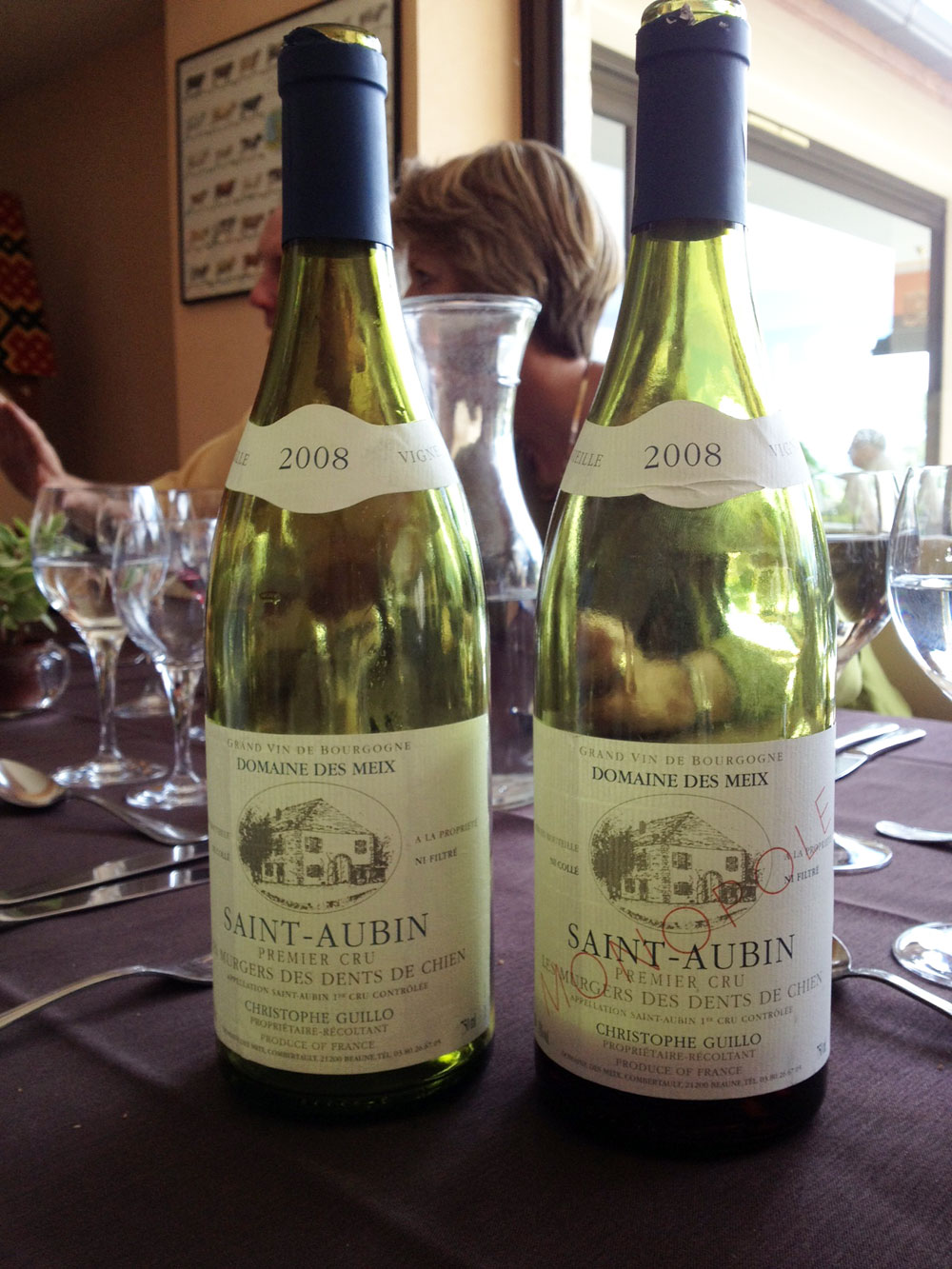
Premier Cru (1er Cru) account for about 10 percent of all Burgundy wines. In this case, this producer owns the whole vineyard and offers a special release “Monopole” bottle (right) of a Premier Cru, promoting its unique qualities.
Premier Cru (1er Cru): The top of the next
Just below Grand Cru and making up about 10 percent of the wine production is Burgundy Premier Cru or 1er Cru. Premier Cru vineyards may be just below, just above or to the side of a Grand Cru vineyard on the slopes and were classified as such in either 1935 or 1936. Each Premier Cru wine is highly regarded and all the grapes are traditionally from a single village vineyard indicated on the label. The winemaker will determine what part of the village appellation the wine will come from. Ola Bergman on the web site Bergman’s Bourgogne says it better than I when discussing Premier Cru:
“For each step up yields are getting lower and the plots of land smaller. The premier crus are labelled in a similar way to the village wines; the name of the village with the addition of the words premier cru or the name of the lieu-dit (vineyard). There are a total of 562 premier crus in Burgundy. Technically the premier crus are part of the village appellations, not appellations in their own right. Inside every village appellation there are a large number of plots. Some of these have consistently produced wines of higher quality and have therefore been singled out as premier crus.”
Now all that being said, I did some additional reading through some of the nationally recognized wine magazines and came across a Wine Enthusiast, July 13, 2010, article by Roger Voss entitled “Unearthing Burgundy’s Magic.” Voss wonders aloud whether there might be any movement to improve the classification on these wines and sets out to determine that for himself. I too have wondered this and read with fascination as he described seven vineyards he believed should be moved up. I am now on a hunt for those wine labels to find out for myself.
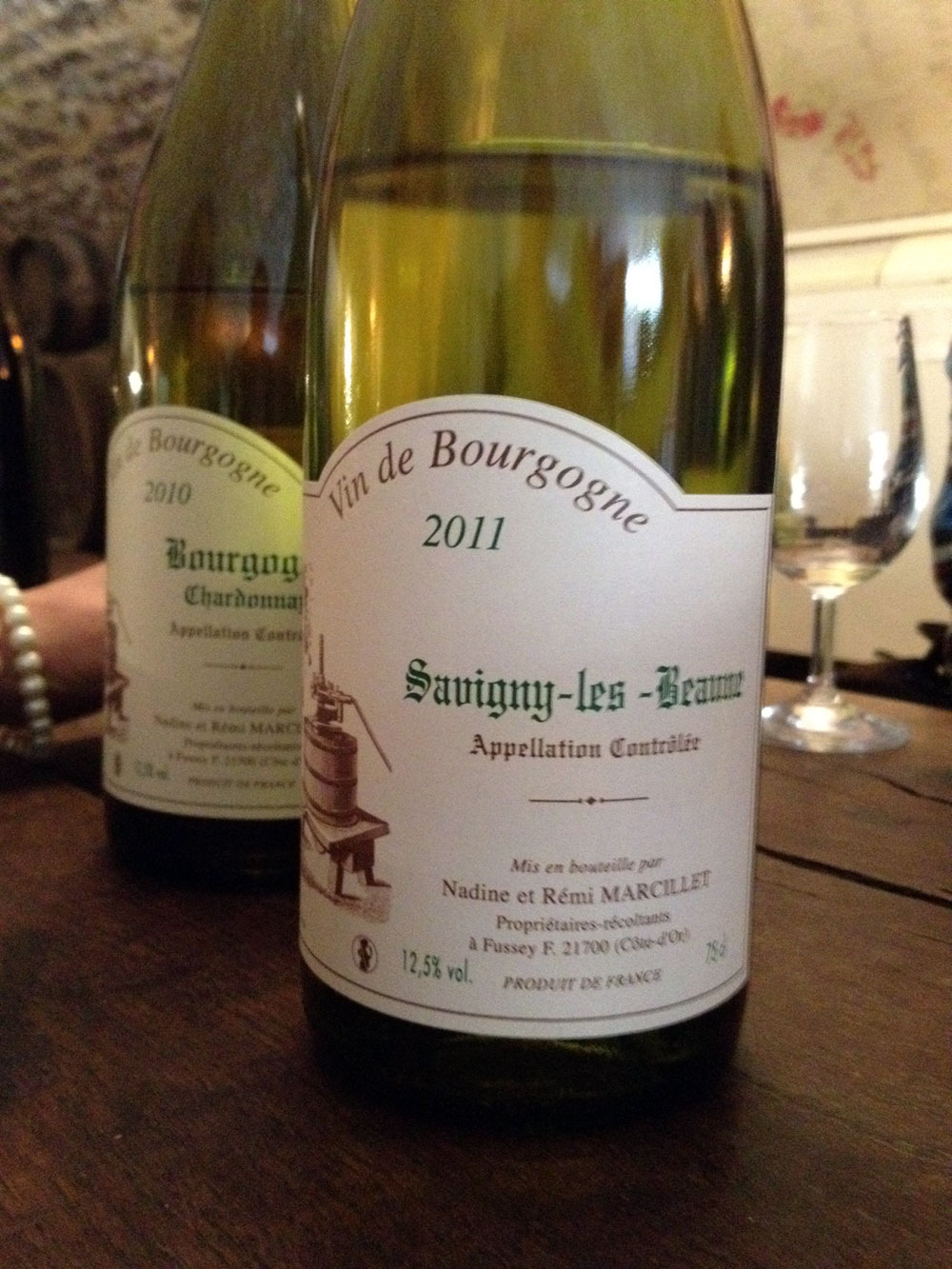
With Burgundy prices often reaching over $100 per bottle, a Village wine is often a wonderful, aromatic alternative. This chardonnay bottle, produced by Domaine Marcillet, actually comes from Savigny les Beaune, a village in the Hautes-Côtes de Beaune appellation.
AOC Communales (Village): The affordable Burgundy
The communal or village wine is arguably the “best bang for your buck” Burgundy. These wines represent about 35 percent of Burgundy production and will list the name of the village or community prominently on the label. In fact, often a single vineyard will be listed as well. Many of the name-brand producers make these wines, and with some simple research, these bottles often become regulars on the lunch or dinner table.
Karen Ulrich who blogged for Imbibe New York wrote “Village Appellations; Climats in Burgundy” in January 7, 2011. She had attended a seminar on the Village appellations and Climats in Burgundy. Her post explains that the village wines are an option for those on a limited budget for French wines. In fact, one purpose of Talesofthecork.com, is to present Burgundy wines and their producers to North American tables. My goal is to reach those who are willing to educate and expand their wine knowledge and tastes. French wines are a wonderful addition to any new world cellar’s reds and whites.
AOC Regionales (Régional): Bourgogne is Burgundy’s base wine
A Régional Bourgogne wine will be produced from anywhere across the Burgundy growing area. The word Bourgogne will be prominent on the label and then the grape variety. These wines are not village or vineyard specific but use grapes combined and blended from all over Burgundy. Régional wines make up 53 percent of all Burgundy wines and are commonly found in markets and wine shops across the world. This classification will include chardonnay and pinot noir but may also be one of Burgundy’s lesser-known wines, including gamay, aligoté, and melon.
As with the wines in the previous categories, soil, growing conditions, and vintner all play an important role in the quality of the Régional wine. In fact, in each category, the buyer cannot just assume a village or vineyard name will assure a top-rate Burgundy wine. The vintner’s role is immensely important. So, try these wines and begin to develop your preferred tastes and palate and then gravitate to a winemaker who creates wines you favor.
After a brief background of Burgundy and two of its regions within the Côte d’Or, including the four classifications of Burgundian wine, I am ready to share tales of those I have met. Next up is the first of many winemaker’s stories: Domaine Dujardin and Ulrich Dujardin of Monthelie. Look for Outsider impacts Burgundy winemaking tradition, Part I, on July 18 or 19.
Despite London getting a large share of the holiday and travel press this year, I decided to kick off Tales of the Cork with a visit to Burgundy, France, in June. But before a visit to taste Burgundian wine or savor a local, traditional meal, some planning is in order. I begin this segment with some tips for anyone looking to create a trip to the French Pinot Noir and Chardonnay wine growing region.
The following is the first post in a series meant to help everyone prepare for a trip to Burgundy, France. The first steps include flights, rental car and international phone service.
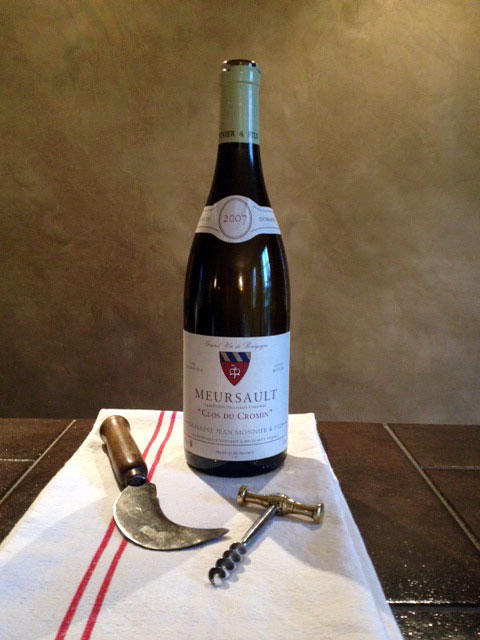
A trip to Burgundy must include the village of Meursault: the center of the wine white world. Tools of the trade? A bottle of white and two 100-year-old instruments.
Getting started: Flights
Assuming France is the country of choice, and wine and food are the reason to travel, I found my trip to Burgundy made easier by flying into Paris-Orly Airport rather than into Charles de Gaulle (CDG). While CDG is often the airport of choice, it is located 16 miles northeast of the city. A better choice for Burgundy-bound travelers is Orly, as it is 11 miles south of Paris.
Orly however, can only be reached via other European airports, so your flight path will include places like London’s Heathrow, Germany’s Frankfurt or Munich and the Netherlands’ Amsterdam airports; however, most of the time, layovers are only 90 minutes. This is easily made up on the other end, traveling to and from the airports via rail links, rental car or cabs (A cab ride to Paris from Orly is about 30 Euros). Also when booking your flights, it may be a good idea to choose your seat immediately, but you will have to pay a premium for this option. I did and was able to choose a “twin” seat in coach with more room (also opt for an exit row or bulkhead seat). I figured comfort was worth the extra money on long flights.
With Orly already south of Paris, traffic snarls and delays are less traveling south. The bonus is that car rental and pick up is within a minute walk of Orly’s front doors.
Getting started: Rental car
Like most metropolises in the world, traffic and navigation are always an issue for a newcomer. I was required to present an International Driver’s License/Permit at the rental counter. These only cost about $15 and need to be obtained at your local AAA office. (Make sure you bring along recent standard passport photos, as they will be needed for the permit) I added a GPS system to my rental car and was out of the airport, traveling south, within the hour of arrival. I found this extra $12 expense worth it because, even when adding an international plan, overseas cellphone roaming charges can be expensive. Plus it is comforting to know I would be “told” in advance by the GPS when and where to turn. This is a good option for a newbie visitor, and driver, in a foreign country.
NOTE: Smartphones can use data for free if used in Wi-Fi hotspots. But good luck getting that option when you are in the middle of nowhere. (See International cell phone plans*)
I rented a Renault Megane from Europcar. Perfect compact 4-door hatchback for my wife and I for an 8-day trip to Burgundy.
A few notes about rental cars though: Be sure to prebook the car before leaving the U.S. and confirm it is for unlimited milage. Also, check with your credit card company that they will cover collision and theft so there is no need to add an extra policy at the rental counter. Plus, if you add coverage, make sure the credit company is listed first on the policy.
In fact, it would be prudent of you to print a copy of your credit card Auto Rental Collision Damage Waiver page and note their phone number. In fact often the travel service number should also be noted. The rental company should cover liability.
When booking the car rental from home, be sure to bring along your pre-paid voucher that the agency emailed you. You will need to present it when you check in. You will most likely also have to show your passport and it must match your name on the voucher. Simply presenting your credit card may not be enough and could cause a delay in receiving your car.
Finally, walk around the car with a rental agency person. Make sure any and all dings, scratches or marks are noted. I found multiple errors on the contract. The company quickly corrected the forms upon my inspection.
NEW POLICY: As of July 1, 2012, each car driven in France must carry two breathalyzer kits. The new law is meant to keep inebriated drivers off the road. There will be a four-month grace period before fines the equivalent of $14 will be assessed if drivers are found not to carry them. France also has very strict and harsh penalties for drinking and driving.
Rail Europe to Beaune or Dijon
For those of you who wish to take the TGV from Paris to Burgundy the trip is made effortless by Rail Europe. For as little as $114 return, you can have an airline-style seat (with more legroom) and access to a bar-buffet car, taking in the French countryside through its large windows. If you want more comfort you might check out the first class cabin. Depending on the time you choose to leave, comfort level and number of stops, the trip will take from 1 hour, 37 minutes to 2 hours, 52 minutes. You can rent a car near each station.
Getting started: International cell phone plans
Before a trip overseas, I added three additional items to my cell phone plan. While service providers vary, I use AT&T. The plans are as follows: WORLD TRAVELER (monthly service $5.99). This brings the cost of calling to $.99 per minute. When traveling outside the U.S., I alter my texting plan to 200 texts per month for $30.00 (Overage $0.35 per message). Under this plan, picture/video messages were sent for $0.50 and I also increased my data plan to 120MB per month for $30. Just remember to cancel this service when you return. Now, in the months and weeks to come, this cost vary and may not be needed if you only use your phone in Wi-Fi hot spots.
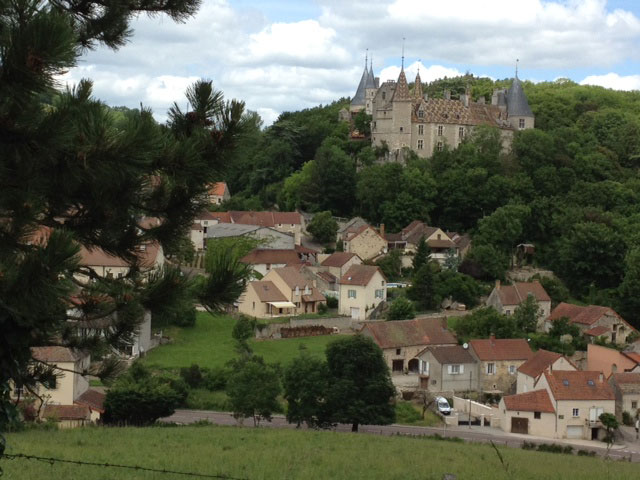
The village and 11th century Château de la Rochepot is just a short drive south of Beaune. It just goes to show that you never know what is just around the corner in Burgundy.
If you have further questions about your ATT account, please refer to ATT Global or call 1-800-335-4685. Verizon, Sprint and T-Mobile customers should contact their providers. I do not promote any particular plan but also want to point out that renting a European mobile phone from companies like Mobal.com may be a good alternative. The company touts recommendations from a variety of sources.
While the decision to travel and setting side time for a vacation is the first step, scheduling the dates and flights are the most important. In my next post on or before July 13, hotel, house and/or apartment rental will require most of our attention. I look forward to sharing behind the scenes stories of those who bring food and wine to us soon.





 TalesoftheCork blog