A time for change: Mike Sinor winemaker of the year, Part II

This blog continues to follow Mike Sinor’s transformation from Assistant winemaker to Byron and Domaine Alfred wineries in California’s Central Coast, to the director of winemaking at Ancient Peaks Winery. Please look for the first post in the series: Get to know 2012 Coast winemaker of the year: Mike Sinor

Sinor LaValle owner directs Ancient Peak Winery

“It was the lowest point in my life,” winemaker Mike Sinor said, after dealing with the deaths of family members in January 2006. “My head was all messed up. Yet even before my loss, I had already begun contemplating a change in work for both me and my family. I knew six months before [family deaths] a new challenge was needed. I believed my time with Terry Speizer [Domaine Alfred] was coming to an end, I just didn’t know it would happen so soon after my parents died. But despite what we were going through, I now knew it was time for me to explore another level of winemaking.”
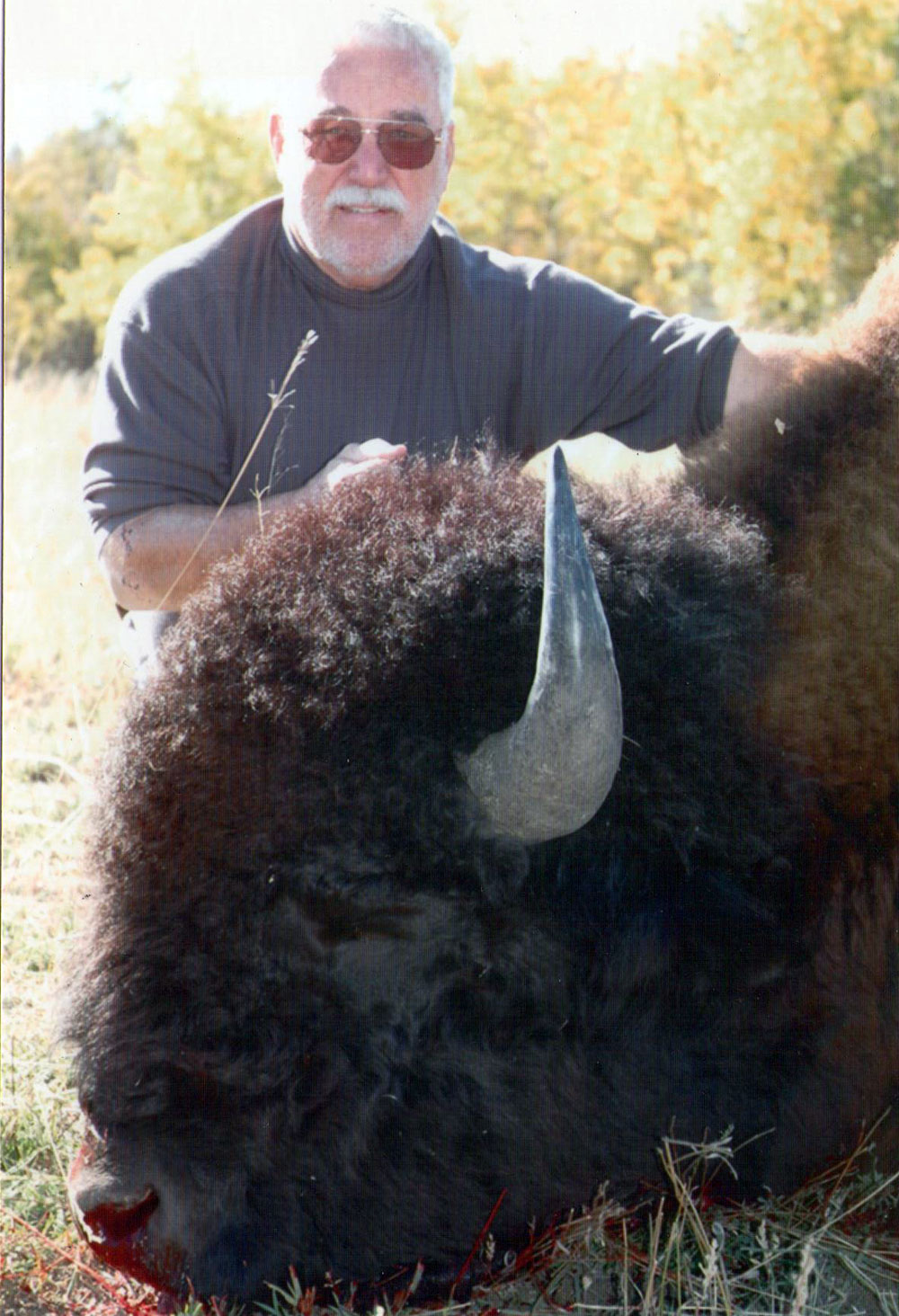
Bernie Sinor on one of his hunting trips to Wyoming where he hunted big game (bison) in 2004.

Little did Sinor know at the time, but the 2012 Central Coast winemaker of the year, would have a 2006 spring to remember, even while mourning the loss of his father, Bernie Sinor and stepmother, Betty Ann.

“I needed to change positions because I could see Domaine Alfred was growing as we became successful, much the same way Byron Wines grew,” Sinor said. “Even before the 96-point score Wine Spectator gave the 2004 Domaine Alfred Pinot Noir [Califa Chamisal Vineyard], I needed a business opportunity. I was saying ‘no’ to a lot of jobs and wanted to do something right for my family. Yeah, it was crushing when my parents were killed and we endured a high level of personal pain. So Wine Spectator’s honor came at the lowest point in my life but I already had decided to leave. I knew there would never be a perfect time to change. And I know growth often comes through uncomfortableness. Terry understood I needed to leave. He’s a good friend and an entrepreneur himself.”

During the spring of 2006, when local proprietors and long-time wine growing families of Rob Rossi, Doug Filipponi and Karl Wittstrom approached Mike with a opportunity to be the director of winemaking at Ancient Peaks Winery, Sinor jumped at the chance to join them in May.

“I had never met these guys from the Santa Margarita Ranch, but from the start, it was a convergence of energies and focus,” Sinor said. “They had been reorganizing the operation at Santa Margarita starting in 2005 and it seemed a good fit. We became business partners rather than an employer/employee relationship. I wanted to have control over the winemaking process and they were comfortable with that. So, I said, ‘let’s start dating’ and we’ve been together ever since.”

Santa Margarita Ranch July 2012

Mike Sinor and I spent the day together at the historic Santa Margarita Ranch, just minutes north of San Luis Obispo, July 26. I wanted to find out why he had left promising positions at Domaine Alfred and Byron Wineries. The man who thrived on creating lasting relationships through his infectious attitude and positive, passionate energy, left sure-fire success for a restart winery. I wanted to find out why he had stayed on at Ancient Peaks Winery in Santa Margarita.

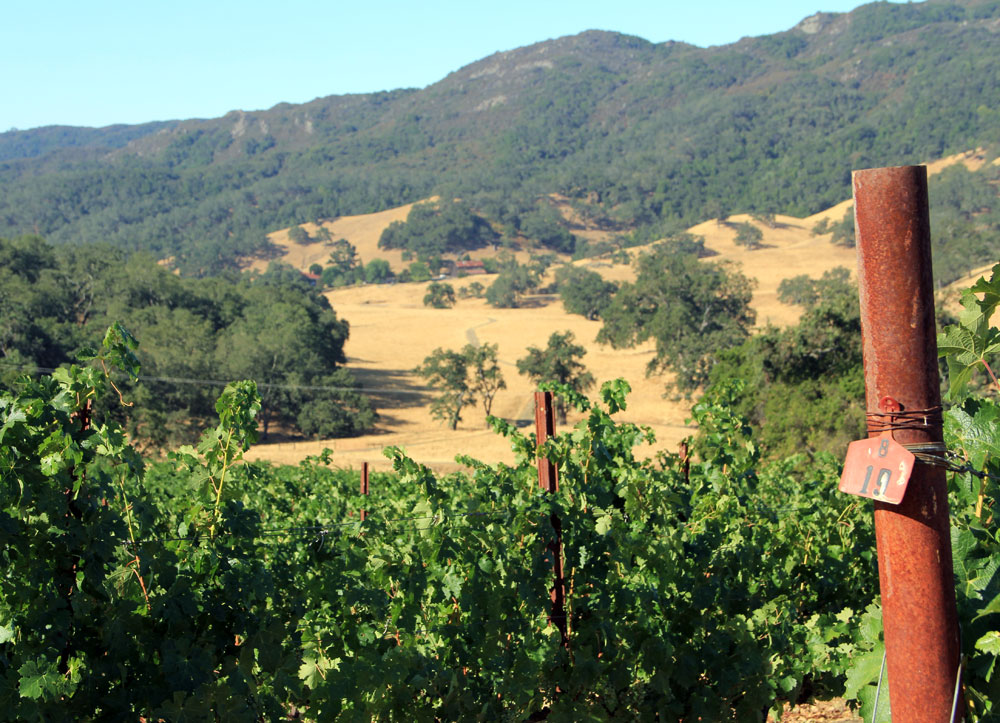
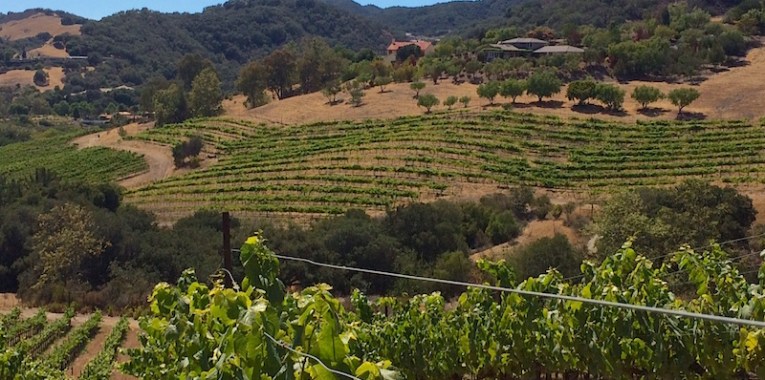
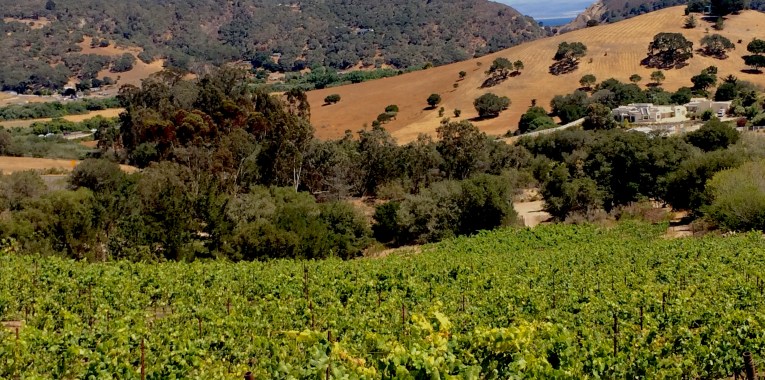
Mike Sinor left Domaine Alfred Winery after receiving an offer to be the director of winemaking at Ancient Peaks Winery in Santa Margarita. The Oyster Ridge Vineyard is in the foreground with the Santa Lucia Mountains providing the backdrop.

While we met briefly at the Ancient Peaks’ tasting room, Mike pulled out a large coffee table book, offering a pictorial and historical background of the ranch and Santa Margarita. I was moved by his attention to names, places, land formations and background of the region. His perspective was so impassioned, it was as if he had been born there. Mike then offered to take me up to the working winery and vineyards. I agreed and looked forward to the 17-mile drive up into the heart of the Santa Margarita Ranch, through pastures of Slender Wheatgrass, Purple Needlegrass and Danthonia Oatgrass.

Mike’s 20-minute version of Ancient Peaks Winery and its history included how Napa Valley’s Robert Mondavi Winery leased a section of the ranch in 1999 for six years. They developed and planted what has become known as Margarita Vineyard. Remarkably, it was the Mondavi family who saw immense potential in the land, and accurately predicted that its diverse soils and marine-influenced climate would deliver remarkable wines.
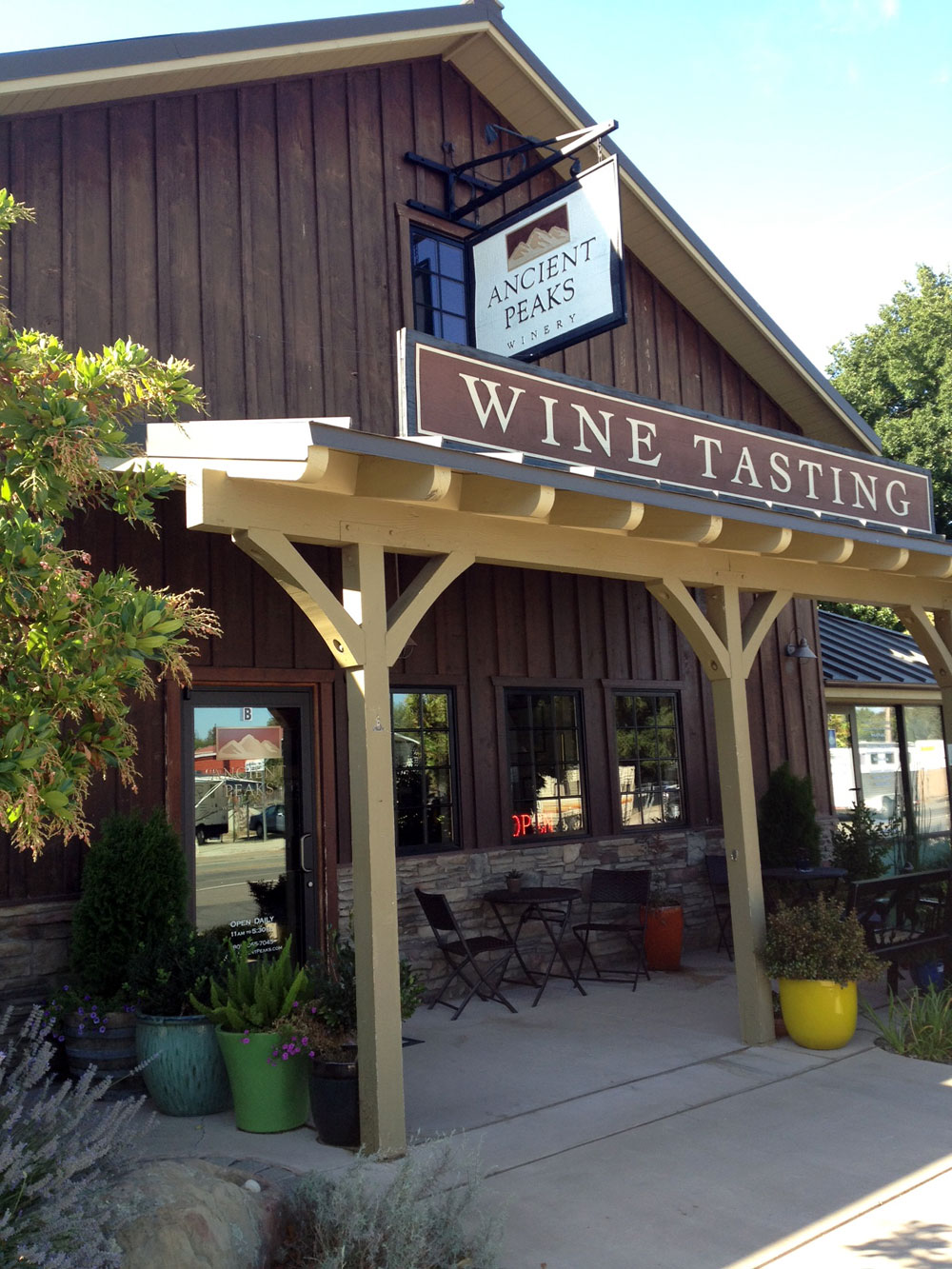
While the vineyards and winery are 17 miles away near the Margarita Vineyard, the Ancient Peaks tasting room is in Santa Margarita, one mile east of Highway 101.

Our conversation digressed to include how the Franciscan missionaries planted grapes on the ranch as early as 1780. In fact the ranch became part of Father Junipero Serra’s famed Mission Trail, culminating with the establishment of Santa Margarita de Cortona, a sub-mission of Mission San Luis Obispo de Tolosa, in 1787. This historic structure, known as the Asistencia, was converted to a barn but remains a centerpiece of the ranch.

Santa Margarita Ranch has survived since the 1840s; however, in 1889, then owner Patrick Murphy sold much of the town’s land to Southern Pacific Railroad in hopes of getting a rail stop. He hoped to move cattle from this sprawling ranch that surrounded Santa Margarita.

Mike Sinor: Super charged, relational winemaker

Mike started humming the tune to Smokey and the Bandit as we neared the winery, located near Creston. When I asked why, he smiled and said this project is just like the song indicated. “We are just old-time entrepreneurs working on a project by the seat of our pants.” I didn’t ask him if he fit the Burt Reynolds persona or Jerry Reed’s truck driver character. But I did get the gist of the metaphor: Sinor delivers–no, Sinor over delivers wine quality for the price point. I can still see the gleam in his eyes as he gripped the steering wheel and sang, “We gonna do what they say can’t be done.”

However, while we walked around the Ancient Peaks Winery, I remembered what Ken “Byron” Brown told me about Sinor: Mike was a good-humored, energetic, young winemaker while he worked at Byron Winery years earlier.

“Mike Sinor stands out as a super-charged, friend of all; every one likes him,” Brown said. “He takes time for relationships but not at the expense of his work. Mike is extra double energy. He brought excitement to the team and ignited everyone at Byron each day.”

During his winemaking career, Mike Sinor, right, worked with Tim Mondavi, left, and Ken “Byron” Brown while creating wines with Byron Winery.

As we walked by the 2011-filled barrels safely tucked away in the aging room, we got to talking about wine, Mike’s preferences and who he enjoys working with besides his partners at Ancients Peaks.

“Actually, I don’t drink a lot of Ancient Peaks wine at home,” Sinor said. “It’s a little like only eating your mom’s spaghetti. If I drink the wines I help create everyday, I won’t get better. Like Burgundy’s winemakers, I want to make wines as good as their grandparents. We don’t have a rich, long history and culture of winemaking like they do in France. So if I’m not improving my pallet, I’m losing.”

Sinor went on to say he chooses to enjoy friend’s wines and finds it refreshing to try different wines from around the world.

Since 2007, Mike Sinor has been the director of winemaking at Ancient Peaks Winery in Santa Margarita.

“For instance, I really like Broadside Wines Cabernet. It is made by winemakers Chris Brockway [Broc Cellars] and Brian Terrizzi [Giornata wines] who are very passionate about wine that is done well; their wines transmit place. In other words, their wines exhibit my mantra: ‘The message is the place; the messenger is the wine.'”

As we continued to walk the grounds of the winery, Mike showed me how Ancient Peaks has added buildings and updated the old Creston Manor and Vineyards that Jeopardy! game show host Alex Trebek used to farm. The latest addition was in spring of this year when extensions were added to the Margarita Vineyards.

Story is unfolding, evolving in vineyards

Our trip across the ranch ended when we stood on a rise overlooking the Oyster Ridge Vineyards. I marveled at Mike’s zeal as he spoke of the land, rich in fossils from an ancient sea bed, adjacent to vineyards planted in shale, sedimentary, volcanic and granite. Mike was spirited and had a fanaticism or fixation on soil that many in this country have for baseball or football. And when we stopped to walk the Oyster Ridge Vineyard, he held a football-sized, petrified crustacean like it was a trophy.

“These (oysters) are high in calcium and, when they are crushed or broken down, create a soil profile similar to those found in the world’s most prestigious grape growing regions.” Sinor beamed as he spoke and the pace of his voice quickened, rising in intensity while we moved from row to row.
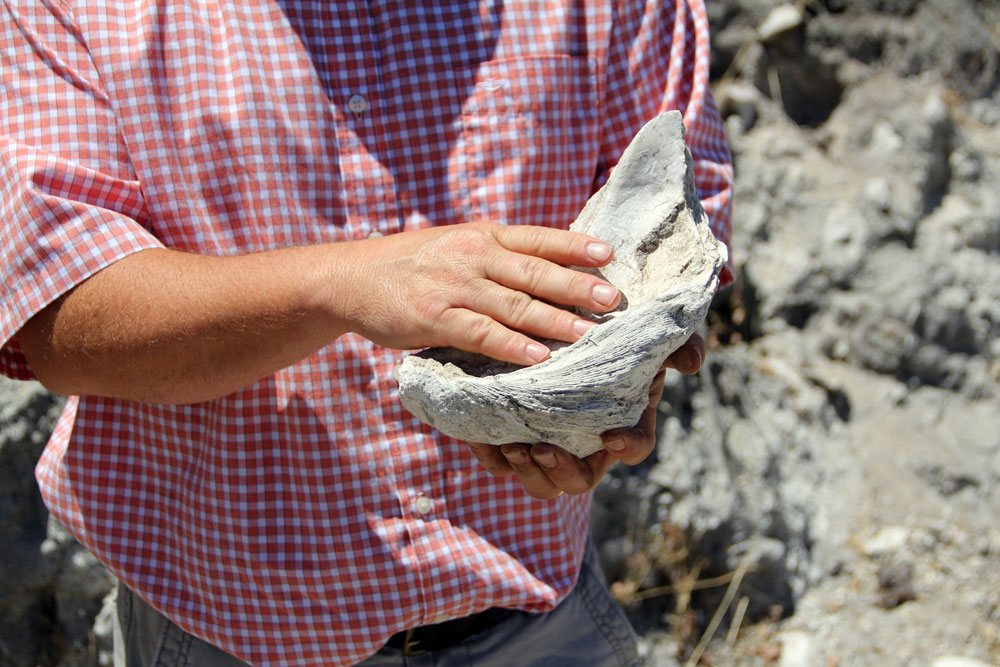
The Ancient Peaks Oyster Ridge Vineyard soils include crushed and larger pieces of ancient, petrified crustaceans. The vineyard was a part of a large seabed millions of years ago.

He spoke about the legacy of environmental stewardship at Margarita Vineyard as if it was his own child. The vineyard advanced to “Sustainability in Practice (SIP),” and was certified by the Central Coast Vineyard Team in 2010.

“There still are places that are compelling to plant but I am still trying to figure out who we are and how to stay on target,” Sinor said. “We have five wines at Ancient Peaks and three White Label wines. And with the longest running ranching operations in California and new zip line business always demanding attention, I am determined to stay in constant watch to focus the winery’s goals to offer high wine quality for the price point.”

Wine Spectator agreed with Mike’s assertion and promoted Ancient Peaks as “Best of the West for $25 or less… 2009 Zinfandel, 2009 Cabernet Sauvignon and 2009 Merlot” in their April 2012 issue.

The 300-400 cases of Sinor-LaVallee [Mike Sinor’s personal label] wines are created from about 14 rows of fruit from the Talley-Rincon Vineyard in the Edna Valley.
I asked Mike how he ensured there was not a conflict of interest between his Sinor-LaVallee label and the Ancient Peaks wines he consulted on.

“I am working with about an acre of fruit from the Talley-Rincon Vineyard and the Sinor-LaVallee wines I make are not meant to compete with Ancient Peaks,” Sinor said. “I am working with 2-4 barrels of wine from 14 rows. Actually, the diversity of exposure is what makes my consulting for Ancient Peaks exciting. The time spent with both brands requires and puts into practice a balance of reading/studying, keeping me fresh. This is fun! I’m honored to do this. Do the math: I get to live at the beach.”

Mike Sinor is married to Cheri and they live in the Edna Valley with their two children: Tomas (12) and Esmee (10). All four of their thumb prints appear on every bottle of the family wine label. “By definition, I am an alcoholic,’ Sinor said, “but I mimic a healthy lifestyle to my children, showing them how to live responsibly.

“I look to enjoy and share my life wife my family and community in good and bad,” Sinor said. “We are born to suffer, grow to overcome suffering. I have my dad’s and previous winemaker’s work ethic. They inspired me and now I work with many of my heroes.”

Mike currently is the President of the San Luis Obispo Vintners Association and says he likes to volunteer his time in community events and organizations because “The wine business has given me everything I own. I owe it to wine.”
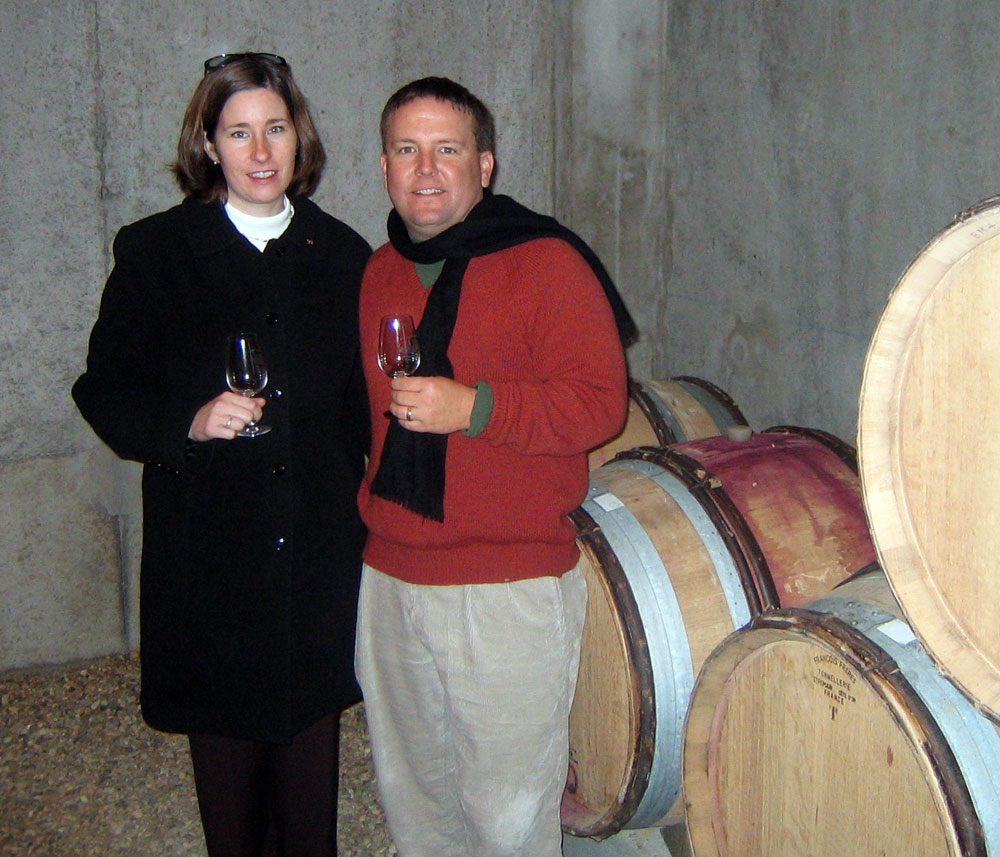
The Sinor-LaVallee wine label is named after Mike’s Spanish heritage and Cheri’s French last name. The Sinors appear here during their 2004 Burgundy trip and winery visits.

For more information on Ancient Peaks Winery and wines, visit Ancient Peaks Winery or Mike’s personal web site: Sinor-LaVallee Wines.

Rangeland Wines and Angus beef: Get to know Laird Foshay

Born in Nova Scotia, Canada, with Sottish and French heritage, Paso Robles raised Laird Foshay, complete with a cowboy hat and boots, intrigued me before I even arrived at the sprawling Rangeland Wines’ home base. I previously read Laird had been a Silicon Valley-type for half his adult life. However, I couldn’t believe for the life of me that, after ten years in computer magazine publishing and ten years as the founder of an investment news service business, he wanted to be a winemaker and rancher in the hills west of Paso Robles.

Once a web publisher for DrDobbs.com and the founder of Investools.com, an investment news service, Laird Foshay gave up his office job for wide open spaces at Rangeland Wines and the 1,500-acre Adelaida Springs Ranch in 2000.

Boy was I wrong. This Central Coast  winemaker not only has kept his ‘shirt and tie’ business savvy, but for the last 11 years has also added plaid, down-to-earth, unpretentiousness to his forté. His wife, Lisa, and him now operate both a winery, and the 1,500-acre  Adelaida Springs Ranch, including all-natural grass-fed 80 Angus beef cattle.

My trip to the Rangeland ranch house came after a visit with Mike Sinor of  Ancient Peaks Winery and Sinor-LaVallee. Despite my late arrival, Laird offered me a ranch guest room. We then talked well into the night, then picked up where we left off in the morning.

But before he shared his story, Laird was keen on giving me a circle tour of the ranch. We jumped into his white pick-up,  tossed the rifles in the back seat and proceeded to give me a personal tour.

The late, July sun seemed to illuminate the golden pasture grasses. The Angus beef grazing in the pastures were smaller than I had seen on other ranches, but the muscular build of the cattle stood out. The high mineral limestone soils created high-standing yellow grass and the animals looked fattened and sturdy after two years. He said the practice of rotational grazing, never allowing the animals more than 30 days in a pasture, kept them fit. The truck traveled down worn paths for almost two hours, and I never saw evidence of overgrazing. In fact, we passed by a few 1,300-pound specimens which Laird said were scheduled to be harvested in the days/weeks to come.

Through the hills, dozens of remarkable, natural springs gravity-fed the ranch’s needs and actually have been doing so since the Salinan Nation and the Chumash native peoples lived in and near this area hundreds of years ago. The many species of oak trees dotted the pastures, rocky outcroppings and at the edges of the vineyards. The laurel oak, live oak, blue oak and valley oak are all common to Paso Robles and the Adelaida Springs Ranch.

Rangeland owner Laird Foshay traded unstable high Internet dollars for fair/bargin-priced land in the oak-covered hills west of Paso Robles and a chance to be an Angus beef rancher and winemaker. He wanted a rural lifestyle and was willing to be a beginner to do it.

As we continued around the ranch, Laird shared his love for the land and the native peoples. We talked about the history of the old Adelaide and the Klau and Buena Vista Mines and mid-1800 homesteaders. Laird spoke as though his family had homesteaded the place, not like someone who had moved there from the City of Palo Alto, just 11 years before. Later, he even pulled out a 1992 copy of J. Fraser MacGillivray’s coffee table book, Adelaida. It is fabulous, self-published book on the history of the region, including manuscripts, photos, and newspaper clippings.

During our drive through golden pastureland, 40 acres of vineyards, past ponds, posts and ranch machinery, we talked about raw beginnings, watering holes, golden eagles and putting up with new visitors to the area: 250-700 pound wild feral hogs or even and maybe even a 200-pound  wild black Russian boar.

“This is a new wild frontier,” Foshay said. “The ranch is a place of opportunity and freedom for me and for our young winemaker, Shannon Gustafson. It’s about a new place. I’m reshaping my history.”

My thoughts turned to a NordicHardware.com, July 2012 article, which published Steve Ballmer’s comments of reshaping  Microsoft, despite its past success. Ballmer’s drive reminded me of Foshay’s confidence about reformatting his life. Laird’s courage and conviction was gripping.

“Hey, I’ve changed careers twice already,” Foshsay said. “I’ve taken a lot of criticism but few things are rocket science and this [ranching] isn’t one of them.”

The 2009 The Watershed (Cabernet, Merlot and Cabernet Franc blend) is one of nine Rangeland wines produced on an annual basis. Rangeland wines are offered through club membership on their web site or through over 20 area wine shops and restaurants.

As dusk fell, the California quail and hares skittered under twigs and piles of dead vine stock. The talk in the truck of  abundant wildlife, including wild turkey, deer, bobcat, mountain lion and bear, red-tailed hawk and a pair of bald eagles, seemed to give evidence of a healthy ecosystem beyond what Foshay was creating with his cattle. Laird added he brought on one other full-time employee in 2011: Nathan Stuart. Since last summer, Paso Robles-born Stuart has managed the vineyards, introduced grazing sheep in the vineyard and also kept the bees busy with the ranch’s honey-making venture.

Our drive ended back at the ranch house with talks of dinner before our conversation would turn to winemaking. Laird offered me a couple of Angus beef hamburgers. No take out or maid service here. The patties sizzled and the fat rendered like juice in a pan: simple western food that smelled of the land. He poured a glass of 2009 Rangeland Syrah Mourvedre. The Rhône varietals grow well in Rangeland limestone and sandstone soils. The Syrah’s robust gaminess and smokey characteristics are complimented by the fresh fruity Mourvedre bouquet, including hints of blueberry and blackberry and flavors of leather, clove, and vanilla. The super fine tannins and smooth texture heightened the organic, mineral-like depth taste of the burgers.

Over his home-grown dinner offerings, talk turned to the interior decor of ranch house. So much of it reflected the land we had just meandered through. The natural limestone and sandstone fireplaces, the huge picture windows overlooking the Santa Lucia Range, pastures and vineyards. Native artifacts found on the property were displayed carefully as if in a museum. Foshay’s crossbred 10-year-old Australian cattle dog, Silver, was welcome inside and out.

Laird wanted to talk about the original Dodd Ranch and Frank Sawyer’s homestead; Sawyer was the physician at the Paso Robles Inn 100 years ago. His son Marshall later bought the ranch land in the 1970s. The area’s history seemed far more important than his successful 20 years as one of Palo Alto’s “bit players” (his humble quotations) of Internet and finance. Heck we even talked about the Paso Mennonites who settled the area in the 1890s.

After planting his first Bordeaux vineyard in 2002 and Rhône varietals in 2008-09, former Silicon Valley entrepreneur, Laird Foshay, harvests vineyards growing at 1,700 feet among oaks, grasslands and Angus beef.

So then who is this University of California, Santa Barbara, history major? I kept telling Laird, “I am still having trouble figuring out how a guy who met Bill Gates and Steve Jobs in the early years of personal computer and Internet development, turned to ranching and winemaking? It just seems crazy.”

One thing for sure, Foshay no longer wears Polo shirts and has no intention of going back.

Please read the Sept. 14 post and the second part of this series: Frontier ranching in Paso: Rangeland Wines and Laird Foshay, Part II. Read as Laird put aside criticism and raw beginnings to produce wines worthy of acclaim. Laird lives on his Adelaida Springs Ranch with his wife Lisa. They have two college-age boys: Sam and Jackson and a high school senior, Angeline.

Get to know 2012 Coast winemaker of the year: Mike Sinor

Sinor LaValle owner a central coast mentor

Earning Wine Spectator’s praise for a 96-point Pinot Noir wasn’t enough to keep Mike Sinor fulfilled. In fact, neither was flying from Santa Maria to Napa for wine and dine lunches on a private Gulfstream jet. The trips to Burgundy and Bordeaux, France, to study winemaking and wine dinners with the Rothschilds were wonderful, but the ‘perks’ and awards always came while working for someone else.

After returning from France in 1996, Mike Sinor started his own wine label, Sinor-LaVallee, with his wife, Cheri, in 1997.

When the Paso Robles Wine Country Alliance and San Luis Obispo Vintners Association each named Mike Sinor California’s ‘2012 Central Coast Winemaker of the Year’ in mid July, the  Visalia, California, transplant soon traveled back to the Central Valley for a promotional event at The Market. Later that evening, Mike and I chatted at Trelio Restaurant during a wine dinner event. We agreed to meet a week later at the fabled Santa Margarita Ranch and  Ancient Peaks Winery, just south of  Templeton, Calif., in order for me to better understand the man behind the honor.

While Mike was raised in the center of agriculture in the State, his father, Bernie, an avid pilot, sold heavy construction equipment as owner and operator of Sinor and Sons Equipment company. Bernie gave young Mike plenty of opportunities to work on the job sites or at the family-owned Fresno junk yard. Mike spoke fondly of his father’s staunch commitment to his business, working hard but taking time to play hard with the family.

Bernie and Mike often went hunting together, and while it did not often include big game, father and son hunted doves in the foothills of Madera. And like many Central Valley residents, the family made numerous trips to Cayucos which is where Mike’s love of the beach began.

But working for Dad was not a part of Mike’s plan. College and the Central Coast beaches lured the high school graduate. The teenager ended up in San Luis Obispo; Mike enrolled at California Polytechnic State University [Cal Poly], ready to become the first college graduate in his family (Mike’s sister, Teri LaFleur, is now a 3rd grade teacher in Woodlake).

sinorstobbe2
I spent a morning with Mike Sinor, right, at Center of Effort in the Edna Valley where he works with a number of other winemakers and also creates his  Sinor-LaVallee brand.

“I was ready to go out on my own,” Sinor said. “My dad taught me my work ethic: to work hard and throw myself into it. So when I wanted to go to college, I had his blessing but I had to pay for it, work for it.”

Sinor’s upbringing, like many from the Central Valley, brought a love for the coast; Cal Poly was a natural choice. The Sinor family encouraged Mike to take responsibility for his education at an early age but expected him to pay for college. He entered Cal Poly hoping to become a high school shop teacher; however, upon meeting his future wife, Cheri, in a Chemistry 101 class, that dream changed: a love for each other and the wine-making journey was born near the beach in 1991.

Many Central California teenagers dream of leaving the San Joaquin Valley for a college beach experience. Mike Sinor left Visalia for San Luis Obispo and a degree from Cal Poly.

“My first job on the Central Coast was on old Corbett Canyon Road when I was 21,” Sinor said, “where I worked at many wineries, including Corbett Canyon Winery; that is where my winemaking training started. Claiborne and Churchill, Chamisal Vineyards, Saucelito Canyon, and Windemere Winery over the next three years (’91-’94). Initally, I had no idea what I was doing,” Sinor continued, “but these area wineries and winemakers became my community.”

Mike did more than just put in time at local wineries. He became a part of their families, including Bill and Nancy Greenough’s at Saucelito Canyon.

“We had previously lost a daughter when Mike showed up to work at our vineyard,” Nancy said. “While I had college kids around to be a positive influence to our youngest (Margaret and Tom), Mike Sinor lived out his time with us like their older cousin. Besides working that first harvest with us, there was not a job he wouldn’t do. Mike is an extremely positive person, has clear values, hardworking, and enthusiastic. He always did a job well.”

sinorskullcoe

Whether Mike picked the kids up from school or punch downs three times per night, Nancy said Mike found joy in whatever task he undertook. She never felt awkward about asking him to do the “crappy job” or the worst job at the winery. Mike had a Valley Boy reputation: always hard working. No job was beneath him.

“Mike was like a Junk Yard Dog,” Bill Greenough said. “There wasn’t anything he couldn’t fix: from tractors to wine equipment. Actually, I don’t know why he initially wanted to become involved with wine but he was so curious.

He always wanted a better way to do things, even if it involved the worst of jobs. He always volunteered: ‘I’ll do that…no problem.’ He willed himself to learn the wine process. He was so attuned to sensory changes to wine, juice, the smells, fermentation, pressing, barreling. His nose was always busy. He keeps an eye on stuff; his senses became like a hound dog sniffing, sniffing it out.”

Mike and Cheri’s personal wine label is Sinor-LaValle. Mike’s Spanish family heritage is the Sinor and Cheri’s background is French; thus the LaVallee.

Sinor not only had time for the wine business and babysitting the kids, but the Greenoughs said Mike took so much pride in completing even unusual tasks.

“We had this VW wagon sitting on our property; it had been parked for 10 years,” Nancy said. “Mice had moved into the camper: a 1966 Volkswagen Westfalia. Mike took it completely apart, got rid of the mice and put back together. He always brought out the best in people. The kids loved him.”

Today, Mike no longer wears a pony-tail under his baseball cap, something that Bill jokingly chided him for while Sinor lived in a house in the vineyards. Sinor, while living out a ‘Rush Limbaugh work ethic in the morning and country music in the afternoon,’ has given back to the Greenoughs. He has helped mentor Tom Greenough as he took over as Saucelito Canyon’s winemaker.

“I discovered myself because of them,” Sinor said. “They introduced me to my livelihood and I became so close to them; I not only worked by day, but I occasionally took care of their kids in the evening. Not only do I love my career but I also love the land and the people I am indebted to for my success. I love this community; it raised me.”

After graduating with a degree in Industrial Technology, Sinor began working for the Robert Mondavi family at Byron Vineyard in Santa Maria during the harvest of 1994. He rapidly gained respect as moved up from his cellar position to Assistant winemaker to Ken ‘Byron’ Brown.

Sinor’s background and passion for the land and vineyards also increased as he made two trips to France to study French winemaking processes with a focus on the vineyards and domains of Burgundy. These trips became even more personal as he married Cheri while on a trip to  Beaune, Burgundy, in 1996. A year later, Cheri and Mike started their own label: Sinor- LaVallee Wine Company. Their name is a ‘marriage’ of their two heritages: Sinor-Spanish and LaVallee-French. Their focus? Like that of their shared love: 300-400 cases of Pinot Noir.

Sinor worked with Byron Vineyards and Winery until November of 2000; he had seen production quadruple, a new winery built, and hundreds of new acreage planted. He left Byron after four years for his first winemaker position at Domaine Alfred [Chamisal Vineyard] in the Edna Valley and never looked back, despite what he gave up.

Sinor began his winemaking journey at Byron Vineyards and Domaine Alfred, where his 2004 Domaine Alfred Pinot Noir Edna Valley Chamisal Vineyards Califa earned 96-points from Wine Spectator. He currently works at Ancient Peaks Winery in Santa Margarita.

“It was very emotional for me to leave Byron after working with incredible people and the Mondavi family,” Sinor said. “No one could believe I was willing to give up the private jet excursions from Santa Maria to Napa for lunch or trips to Burgundy to learn more about winemaking. Why would this little guy from Visalia give up drinking with the Rothschild family?”

Domaine Alfred had been a small winery renewed by owner Alfred “Terry” Speizer. He planted the dormant vineyard with the latest French clones, including six Pinot Noir and five Chardonnay clones, in the mid 1990s. Speizer made Sinor his winemaker in November 2000.

“I felt a need to change,” Sinor said. “There is never a perfect time for change. I knew personal growth comes from uncomfortableness. So I risked and Terry gave me control over 80 acres of vines and the winemaking. We made a good team.”

The two worked the vineyards to near perfection for five and a half years, expanding and tinkering with the vineyards.

Sinor’s mantra is passionate: Wine done well will transmit its environment.

After 5 1/2 years as Domaine Alfred’s winemaker, Sinor felt like a change was imminent. He had offers for a lot of jobs but the opportunities were not a right fit.

“The message is the place, the messenger is the wine,” Sinor said.

Wine Spectator agreed with Sinor and put Domaine Alfred on the map on June 15, 2006. They rated the 2004 Domaine Alfred Pinot Noir Edna Valley Chamisal Vineyards Califa. This was the highest score their critics had ever rated any Central Coast Pinot Noir. The Chardonnay, Syrah, and Grenache also earned acclaim.

As a winemaker from a world class winery, Sinor led the Central Coast into notoriety. Sinor joined Brian Talley and a group of vintners who pioneered a new organization in 2001: The World of Pinot. He served on the board of directors for 10 years. Countless others in the industry kept him busy for interviews and consulting. Mike and Cheri’s Sinor-LeVallee wine label continued its own success in the Edna Valley and all seemed right. All seemed right to everyone except Mike and Cheri.

“Even before Wine Spectator came out and gave our pinot the high score, I was already thinking my time at Domaine Alfred was coming to an end,” Sinor said. “I knew a major grow of the brand was coming; we built a new winery and would need to hire more people to support the increased production. Both Cheri and I knew we didn’t want to stay much longer. I had lots of offers to leave but nothing seemed right. It was time to explore another level and personal growth but I didn’t want to do a job I have done before.

Family and community relationships continue to shape Mike and Cheri Sinor. In this 2003 family photo, Cheri holds a reluctant Tomas and Mike cradles Esmee.

“Some people said I left [Domaine Alfred] because of the accident. But I had been thinking about leaving since the fall of 2005, months before the high score and our time of grieving.

The Sinor family’s direction changed forever, Jan. 13, 2006. On a routine flight back to Visalia’s Municipal Airport, Mike lost his dad, Bernard “Bernie” Sinor, his stepmother, Betty Ann, and his stepsister’s two children. The plane crash claimed all their lives and reshaped Mike’s next steps.

Please check out A time for change: Mike Sinor winemaker of the year, Part II. Read as Mike overcame his great loss and accepted a new challenge at Ancient Peaks Winery in Santa Margarita, Calif. His wife, Cheri, and Mike still produce Sinor-LeVallee wines and continue to be leaders in the Edna Valley winemaking community.

Ulrich Dujardin: Outsider impacts Burgundy winemaking tradition, Part II

This blog continues to follow Ulrich Dujardin’s change from an adult handicapped teacher in Dijon to a traditional Burgundian winemaker. Please look for the first post in the series: Outsider impacts Burgundy winemaking tradition, Part I.

Wine merchant and writer Kermit Lynch reflected on the French wine aesthetic in a 1998 Food and Wine article that underscores the importance of the region to the wine making process. He wrote that in order to understand the French wine culture, one must interpret or acknowledge the ‘goût de terroir.’ It “refers to the character or style or personality a certain vineyard site gives to its wines.”

For Ulrich Dujardin, winemaking is all about paying attention to detail and that includes all aspects of the winery. This gated entrance to the stone building warehouses the winemaking equipment, including the wine barrels stored the 12th-15th century caves below.

While this affects most bouteilles de vin de Bourgogne, I believe Ulrich Dujardin’s personality, character and style distinguish Domaine Dujardin, creating the distinctive features and flavor of his wine. Dujardin bet his future through the day-to-day operations and willed himself to become a vigneron, despite no family ties to Burgundy. He implemented his passion for reinvigorating the lives of disabled people. Ulrich took a personal interest in their lives through “hands-on” education. This zeal corresponds to his love for the land and winemaking.

Despite his nearly year-round schedule, Ulrich Dujardin, center, takes an hour or two each week to teach about his techniques to groups who visit his domain.

For the next 18 years, Dujardin poured himself into the Bouzerand winery. However, the vinification process gradually became more and more the product of Ulrich’s growing desire to own and vinify in an all-natural process rather than prized ways of the past. He insists on traditional methods, including nurturing the vines while avoiding pesticides or herbicides. He also oversees, and personally participates in, a completely hand-harvested crop. In fact, he continues to hire handicapped adults in the Domain Dujardin vineyards. He took over all aspects of the domaine, including a hands-on approach to pruning, harvesting, winemaking and marketing of all eight of the domaine’s appellations.

With the domain revived due to Dujardin’s attention to detail, Bouzerand* decided to sell Ulrich his half of the domaine in 2008.

Ulrich Dujardin, left, is the factor, the expertise, that helps marriage the taste of centuries in Monthelie. He has built a reputation on the traditional natural process, without the use of pesticides and herbicides, harvesting by hand.

The Parisian-born outsider, and now full-fledged Burgundian, redrew a new label, this time without the Bouzerand name for the first time. Ulrich now owns and operates Domain Dujardin as a sole proprietor on the slopes of Monthelie. The 12th and 15th century caves are now his to use and store the nine different appellations, including wines from four different communes: Beaune, nearby villages of Auxey-Duresses, Meursault, and of course, Monthelie.

“I am a committed to being a part of each stage of the (winemaking) process,” Ulrich said in French and translated to English by his wife, Catherine. “I trim vines, sorting in field, harvest grapes, and manage process from bunches to barrels and bottling.”

Catherine, shaking her head in agreement, also added that Ulrich was also available to other winemakers in the area to help them with their production. He also teaches winemaking techniques to groups who visit his domaine.

Domain Dujardin wines are created by a distinct personality and character that distinguish them a part of the Monthelie landscape and culture.

“Ulrich is always helping others,” Catherine said. “He still hires handicapped people to work in the vineyards and spending time with others who need help.” She paused and then added, “He works too much.” Catherine repeated the last sentence in French. Ulrich smiled, shrugged his shoulders and shook his head in agreement. He said something in French that I didn’t catch and Catherine didn’t repeat it.

Catherine did emphasize one last point before we finished dinner.

“Ulrich has a drive for people to like and appreciate what he does,” Catherine said. “He is so good; he always wants to help out others with their work, including in the fields, but he does not ask for any help himself. He has a big heart.”

As the evening drew to a close, and I finished the chocolate torte Ulrich’s daughter, Margaux, made, I asked him about further plans to grow the domain as his appellations usually sell out. His answer is simple. “Why, I already have enough?” His smile sent me adrift as he gestured to his home, the vineyards through the open window and family at the table.

Domaine Dujardin produces red and white wine, listing 10 appellations from four communes. His Village Meursault white is much sought after in Burgundy.

According to Burgundy Discovery’s Lynne Hammond, Domain Dujardin has already made a name for itself in French wine competitions and are currently sold in some Parisian wine shops.

“The Domaine’s (Dujardin) Premier Cru wines are regularly cited in the French publications: Le Guide Hachette des Vins (The Hachette Guide to Wines) and have been awarded 16 medals in the last few years, including five gold from the (Concours de Paris (General Agricultural Competition: Paris), Concours des Grands Vins de France de Mâcon (The Committee on Fairs, Competition National Fair of Wines and Macon) and the Burgundia d’Or Councours (Burgundy Wine Competition).”

–Lynne Hammond

Dujardin is also a member of the select group of Vignerons Independants (Independent Winegrowers) that typify the small, family domaines that dominate French winemakers.

“We’ve known Ulrich for 10 years,” Hammond said. “He was one of the first growers we met when David [husband] and I moved here from the UK to set up our business in the world of Burgundy wine. He is a passionate and caring man – about his family, friends, lifestyle and wines. This passion truly comes through in his wines, which are expressive and well-balanced. We always say passionate winemakers make passionate wines!”

In the same FoodandWine.com article listed above, Kermit Lynch describes that a French wine seems to “taste of centuries.”

“Goût de terroir is the result of complex interactions between many factors, such as grape variety, geology of the soil, climate and microclimate, topography, native yeasts and microbes, nearby vegetation and vinification. The genius of the French wine culture is founded on the ideal marriage of all these factors (and probably more), marriages perfected in each locale over centuries of trial, error and experience. The genius of the French wine culture is founded on the ideal marriage of all these factors (and probably more), marriages perfected in each locale over centuries of trial, error and experience.”

I believe Ulrich Dujardin is the factor, the expertise, that helps marriage the taste of centuries in Monthelie. He has built a reputation with a personal stake in the community and a sincere love of all human beings. Dujardin is willing to give more than he could ever get in return and exudes a sold-out attitude and desire to create masterpieces from his own backyard that are sure to outlive him.

Ulrich Dujardin, left, and Domain Dujardin produce five appellations of white and five of red wines, including two Premier Crus.

Come and meet Ulrich, with Lynne and David Hammond’s Bringing Burgundy to You wine weekend event alongside France’s largest Wine Fair – Salon des Vins des Vignerons Independants. This fair takes place in the old Flemish city of Lille, around 60 minutes north-east of Paris, between Nov. 16-19. Each year, 600 growers taking part, all of whom are Vignerons Independants. Meet Ulrich, taste his wines and enjoy a private gourmet dinner hosted by Ulrich, David and Lynne.

Ulrich Dujardin lives in the village of Monthelie with his wife, Catherine, and three children: Paul, Margaux and Luc.

For more information on Domaine Dujardin, visit the web site, check out Monthélie Vignerons or email Ulrich at domaine.dujardin@orange.fr. While it is difficult to get Domain Dujardin wines from the winery, often they can be purchased at local wine shops in the villages of Santenay, Meursault and Beaune.

For more information on Burgundy wine classifications, read my previous post.

Please return to www.talesoftheCork.com or email talesofthecork@gmail.com for updates on future availability of Domaine Dujardin wines.

_____________________________________________________________________________________________________

*Bouzerand: After Xavier Bouzerand retired from the domain in 2008, he opened a wood carving studio in Beaune where he can still be seen creating works of art with wood.

California Sierra Nevada Foothills Wine Region

Sierra Foothills Wine Region

While many rush to Napa Valley and its world-renown labels, the Sierra Foothill Wine Region has been quietly making wine since the Gold Rush of the mid-1800s. Boom towns across the Sierra Nevada range popped up nearly overnight. Soon thereafter higher altitude vineyards were planted with Zinfandel, Syrah and Petite Sirah, Viognier and even some Grenache grapes in granite and volcanic rock. The region is characterized by mining and lumber towns, four seasons, vineyard elevations of 1,500-3,000 ft. and art enthusiasts.

While Napa and Sonoma Wine Regions were approved as appellations years before, the Foothill region was accepted as a sub appellation in the 1970s. The area can be easily reached from Sacramento (1 hour) or even San Francisco (2 1/2 hours); restaurants and wineries in the Foothill area already provide a good alternative to the many nationally known super stars of Napa Valley.

Zinfandel grapes were first grown in the Shenandoah Valley since Gold Rush days. Over 100 wineries sprouted by the mid 1840-50s and operated until the mid 1880s when the destruction of old-growth forests and riverbeds brought legislation to end those practices. Shortly thereafter, as thirsty gold miners and forestry personal left the area, winemaking in the foothills declined.

While winemaking continued even through Prohibition, the region has been known for value-wines until the rebirth of the industry in the 1970s. However, the late 1990s brought new life to the region as cult and boutique wineries have sprouted bringing high quality wine to the region.

Sierra Nevada Foothills Wine Region is a wine and vacation destination just like the Napa Valley or Central Coast. The Foothill region spans from Sonora in the south to Jackson and Plymouth to Placerville and Auburn in the north. The quaint villages, their restaurants, hotels and bed and breakfast establishments are well suited to the historic trails. And the history of Gold Rush country is well worth revisiting.

This is one of three California focus wine regions for Tales of the Cork. The other two are Central Valley Wine Region and the Central Coast Wine Region. All are within a day trip of my home base of Fresno, Calif. and account for many of America’s most promising wineries and winemakers.

Explore Tales of the Cork with me. Read about the growth and influence of California’s winemakers, merchants and chefs. My goal is to find and develop relationships with them; my hope is to uncover and retell their untold stories. Be sure to leave a comment after each story; share your wine, winemaker or food experience.

Salut!