According to Super Bowl XLVII By The Numbers (via @digtriad), “Americans will consume an estimated 50 million cases of beer on Super Bowl Sunday. For those counting at home, that’s 1.2 billion beers.” So with over 325,000,000 gallons of beer washing down tons of junk food, BBQ wings, chili and pizza, are any of you willing to stand up against a sea of hop lovers to pour, swirl and sip from the vine?
Food and Wine editor Ray Isle (@islewine) quipped this morning on Twitter, “…it takes a brave soul to open some wine.”
Be sure to include wine for your informal Super Bowl party. Central California coast wines like Ancient Peaks Zinfandel provide an excellent beverage alternative to bring your own beer.
Cultural traditions create closeness and the NFL’s Super Sunday has become a national holiday, heck an icon, for Americans, galvanizing communities regardless of race, age, political preferences or religion. For one Sunday a year, most can put aside bias and prejudices to gather in a sometimes unlikely consortium to cheer and debate over the pride and bragging rights of two cities.
Then, for the sake of the underdogs amongst you, be strong and courageous. The fruit of the vine has every right to be in that living or family room, den, community center and converted garage. While Anheuser-Busch, Budwieser, and the MillerCoors family of beers and/or a plethora of micro beers are most likely to fill the coolers, a glass of wine most certainly fits well with Super snacks.
On Feb. 1, 2013, Isle posted his Best wines for Super Bowl snacks as part of CNN’s Eatocracy page. And to take this just a bit further, I want to add my suggestions for those looking to serve BBQ wings, chili and nachos. The following choices should be easily purchased even today at your local grocer or may even be buried in your wine closets.
The Adobe Red is a proprietary Zinfandel-based blend with effusive aromas of cherry spice, blackberry and pepper, with hints of brambles and plum.
The following are easy drinking, inexpensive wines meant to wash down party foods. For goodness sake, save your best occasion vino for $100 meals at destination restaurants. However, even a wine connoisseur can enjoy simple wines. Be sure to open the bottles a couple of hours before serving at room temperature.
Zinfandel blends:
2009 Clayhouse Adobe Red Zinfandel-based blend: The 2009 Clayhouse Adobe Red is a flavor fusion of 32% Zinfandel, 25% Petite Syrah, 13% Malbec, 11% Cabernet Sauvignon, 10% Syrah and 9% Petit Verdot. The blend has overtones of cherry and blackberry which dominate the palate. Spices and pepper linger with hints of branbles and plum. The finish is balanced with vanilla and oak characteristics.
2009 Phantom by Bogle Vineyards: This California blend of 52% Zinfandel, 46% Petite Sirah and 2% Mourvèdre, has some spice to it along with rich black raspberries and briary boysenberries in a full-bodied wine with hints of cedar and juniper.
Zinfandel
The 2010 Seghesio Sonoma County Zinfandel is a classic bottle from Sonoma County. The spicy, lush black fruit of Alexander Valley offers up briary and raspberry flavors, along with structure, of cooler Dry Creek Valley. Take the time to enjoy the mocha, tobacco, leather and exotic spices in this fabulous 100% Zinfandel wine.
Earning “Steal of the Year” honors in Sunset Magazine, 93 points in Wine Spectator and a San Francisco Chronicle Top 100 Wine of The Year, the 2010 Ancient Peaks Zinfandel is rooted in their estate Margarita Vineyard. This Ancient Peaks offering is 100% Zinfandel offers vibrant aromas of crushed raspberry and blueberry with a dash of sweet oak. Bright, juicy flavors of raspberry, boysenberry and black cherry anticipate notes of cola and spice. A smoky vanilla note joins luscious acidity on a rich, jammy finish.
Cabernet blends
2009 Tres Sabores ‘Por Que No’ Zinfandel blend: This Napa red is from St. Helena and is a bistro and BBQ favorite. If you have yet to try this blend of 53% Zinfandel, 32% Cabernet Sauvignon, 15% Petite Sirah, & 1% Petit Verdot, I say Why Not! enjoy its dark red blend. The juicy, mild raspberry and blueberries flavors and has hints of black pepper give Por Que No its party favorite label. This bottle needs to be on your ‘go to’ list.
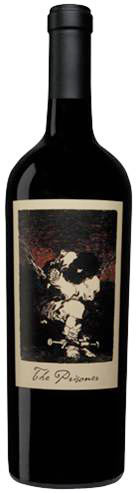
Wine Spectator consistently gives The Prisoner between 90-93 points since 2003 and has been a Top 100 wine fixture since 2007.
Orin Swift’s The Prisoner 2010 Napa Valley Red wine is reminiscent of wines first made by Italian immigrants who originally settled the Napa Valley. The wine has a dense red and black hue that is framed in vibrant crimson. Look for black currant, dark blackberry, cherry, and cassis rounded out by subtle hints of seasoned French and American oak. The finish is long, lingering and filled with soft velvety tannins lasting for nearly thirty seconds. The blend is 44% Zinfandel, the 26% Cabernet Sauvignon, 18% Syrah, 9% Petite Sirah, 2% Charbono and 1% Grenache; this gives the wine soft, integrated tannins which allow it to be approachable now and with a pleasant finish. Wine Spectator consistently gives The Prisoner between 90-93 points since 2003 and has been a Top 100 wine fixture since 2007.
Now I want to go on record to say a good bottle of beer like a Russian River Brewing Company’s double IPA Pliny The Elder can add so much to tasty eats. And there is nothing wrong with a Sierra Nevada Pale Ale, Firestone Walker Pivo Pils, Red Stripe Jamaican Lager, Dos Equis Dark Lager or a Waldhaus Spezial Gold lager from Germany.
However, there are so many great wines available today for backyard BBQs and informal parties. Don’t be intimidated by those only tipping the smaller bottles. I know you have a favorite beer too but don’t be afraid to uncork a bottle of wine at a casual event. The party is a food event and that is exactly what wine is meant to enhance.
If I haven’t convinced you to add wines to your beverage list, there are other options besides the classic Super Bowl beer list from the top two providers. You might check out BeerAdvocate’s Top 250 list. They list many of the most popular, thirst stopping and taste-bud numbing beers, including web sites and availability. Let me know which is on your list.
With 21 years of wine buying, retail sales and the development of a large, loyal customer following, Stan Kato and The Grape Tray have relocated to The Opus I Shopping Center just north of Fresno’s Fig Garden and Bullard High areas, Jan. 4, 2013.
While those who shop for wines at local grocery stores may not have the interest or take the time to seek out unique wine offerings, many vino aficionados appreciate Kato and his staff’s wine scholarship along with The Grape Tray’s long-time focus on customer service.
The former Los Angeles finance manager relocated to Fresno to be closer to family and has built The Grape Tray’s retail reputation to include award-winning, popular top 100 rated wines and hard to find boutique choices for sophisticated palates. Kato’s emphasis is on old-school business practices and a no-nonsense value per bottle sold is what makes his 4,700 customers keep coming back.
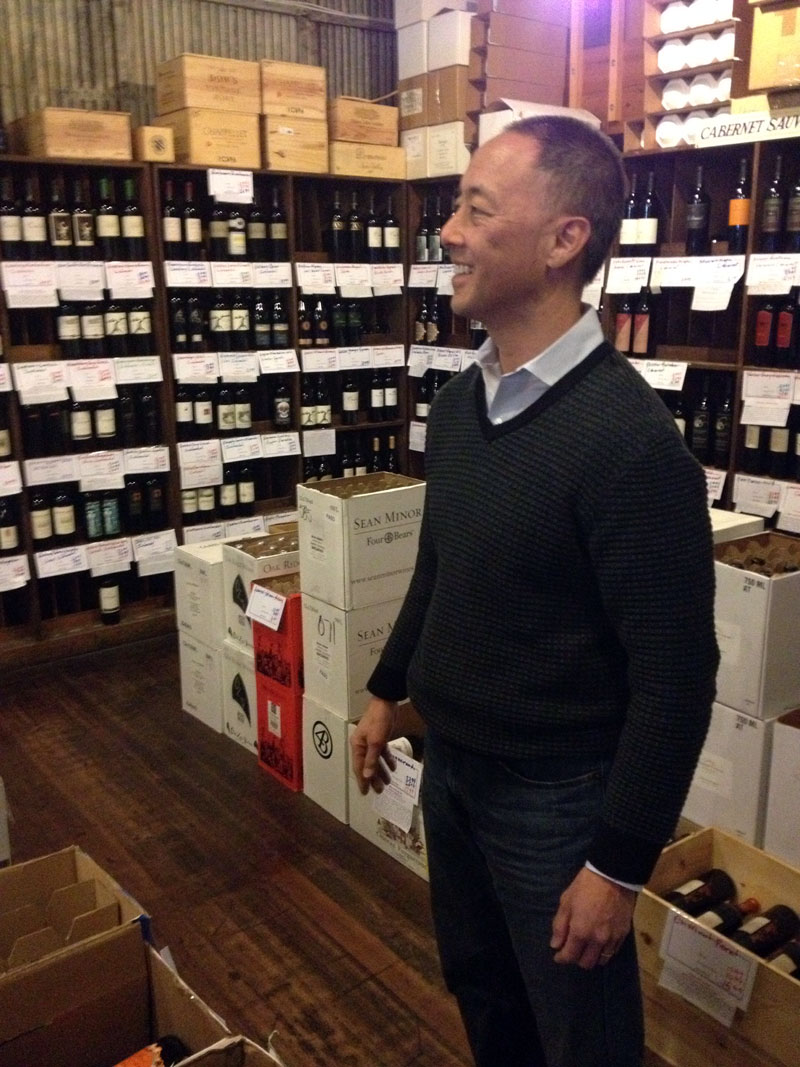
After 21 years in business, owner Stan Kato moved The Grape Tray wine shop to the Opus I Shopping Center, Jan. 4, 2013.
“While our new store is four miles from the old location, it is actually closer to most of our current customers,” Kato said. “People will follow me out to the new location if they feel we offer something of value. I believe driving an extra two to four miles will not stop my customers from visiting us, especially those who know what we do. We have a good product at a fair price. If we continue to do that, people will come.”
Sandwiched in between Mathnasium, a math tutoring center, and Wild Rose, Foral and Gifts, The Grape Tray fits very well into the Opus I Center on the northwest corner of Palm and Bullard.
All of the businesses are small and compact–no chain stores here–offering local storefronts. Each has 1,500 square feet or less and are all independently owned. And as a result they all have their own clientele, which often produces crossover business. Customers shop for their vitamins at Ounce of Prevention, restring a tennis racket at The Stringer, take their dog to the Central Bark groomer or pick up their watch or ring settings from Mitch’s House of Jewels. There is definitely synergy in this center.
The customers who shop at The Grape Tray know that Stan provides an alternative to the standard wine set; many appreciate the selection and have not had an issue with the move to a smaller store.
While in-store, Internet and email sales continue to be strong, Kato believes his success is largely based on a no nonsense, straight-forward personal approach to provide fresh product, competitive pricing along with unique hard to find items.
“I have been buying wine from Stan for over 10 years,” Johanna (last name withheld) said. “While I have purchased wine from other shops, I return to The Grape Tray because Stan gives excellence advice, great customer service, his selection is wonderful and really takes care of his clients. He spends time talking with me and even makes time to find wines when I have a special request. I often recommend him to my friends and acquaintances and I tell them I would buy wine from him no matter where I live in the city.”
Kato says he left the Shaw and Fresno location because he wanted to be closer his customer base and provide easier access, moving into the space vacated by a pilates studio.
“I wanted a smaller location (1,000 square feet), did not want to offer food anymore, wine only,” Kato said. “The new spot had to be in a decent location. So my real estate broker told me about Opus I and while we looked into a couple of other places, our new spot seemed perfect.
While The Grape Tray is about a third of its former size, Stan Kato continues to grow his wine offerings and specials to over 4,700 regular customers.
“The owners of the complex liked the idea of having The Grape Tray,” Kato said. “I know they checked us out, talking to a lot of people in this center. They spoke to other businesses and came to the realization that we would be a good fit here. Opus I now has a wine shop, jeweler, a place to get high end vitamins, and a book store…. This bookstore, Petunia’s Place is a dynamite, rockin’ kid’s store. They are good, no great, at what they do. You have a yoga place Fig Garden Yoga Studio a Catholic bookstore (The Holy Child) and D Hou Chinese Restaurant.”
While not all Grape Tray customers who walk in the shop or make inquires via the phone or Internet want to discuss their wine purchases, Kato and his staff are committed to continuing their decades-long tradition of building relationships, finding them the right bottle for the table or event.
“An important part of my business is listening to my customers,” Kato said. “I have customers everywhere, whether they be local or out of State. Many offer tips and heads up. We get information and inquires and we look into those. And of course, I am always reading online, reading the industry (wine) publications.”
Kato related story after story of how he managed local, phone or Internet customers narrow their wine choices. His focus is educating customers on wine choices.
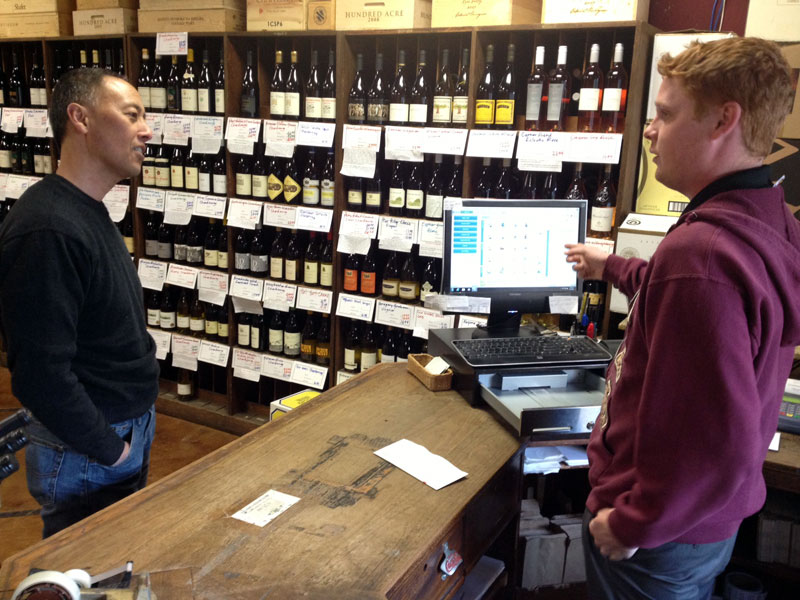
Kato traditionally has staffed his wine shop with Fresno State enology students, including senior Kerry Fitzgerald, right.
“A couple contacted me recently after I hadn’t seen them for over 10 years,” Kato recalled. “I had met them at one of my tastings a decade ago. Then out of the blue, the couple come into the shop. I was shocked. So we started to dialogue about an event they were going to have and they asked me about wine choices and if I could provide them with $40-$50 Cabs. So we talked about pricing, the competition and a value choice rather than just a name brand with a high score. While they preferred a high-priced brand name Cab, I sensed this was not their first choice. So I steered them to a lesser-known but high quality wine. It took a little education but after I offered to give them a tasting, they ultimately chose the lesser-known over the high-end cab.”
That story seemed to be at the heart of Stan Kato. He said he didn’t know why the couple decided to come back into his shop after a decade, but they ended up buying a large amount of value wine. Stan said he is happy to sell Camus and Veuve Clicquot or more expensive bottles but will not just hand someone an expensive label when a customer asks for it.
Kato is up front and says there’s no gimics, no smoke and mirrors at The Grape Tray. There’s no inflated retail prices with the staff applying a big discount at the register. It’s straight up fair pricing for a bottle of wine.
“I want to know whether a high-priced, well-known label is the best option for a dinner party or large event,” Kato said. “In this case, we sold them lesser-known and well-respected wine label whose vintage we recommended as exceptional. The customer did not have to buy a bottle that they really didn’t need or want. It fit what they said they were looking for: elegance, not over-the-top ripe and in a price range they could afford. And in the end, the customer was tickled pink, happy. We got wonderful feedback. It was a win-win situation.”
This kind of sales requires a lot of tasting and familiarity with wines and to try and a wine merchant must anticipate what their guests and customers will like. For instance, Stan says he often ask the ages of the wine drinkers. A 22-year-old probably will like something different than a 55 or 60-year-old and the buyer should be aware of varying preferences at the same event.
“We do business the old fashion way: its fair and its honest,” Kato said. “There’s no gimics, no smoke and mirrors here. There’s no inflated retail and then we take off a big discount. It’s straight up fair. The inventory is current, and we carry products that people want to buy whether because they are chasing the points or its because the wines are hard to find or because they are popular. We are compeitive, fair and being price driven plays an important part of it.”
After moving from San Francisco and retiring from the trade show business, Carl and Pam Bowker had settled in the windy Templeton Gap area west of Paso Robles on the Central California coast. The couple’s newly purchased vineyard was producing a mix of Cabernet Sauvignon, Chardonnay and Pinot Noir, but Carl was not convinced his vineyards would develop world class wines at Caliza Winery.
Carl and Pam Bowker had traveled to Italy in 2001 and their eyes were opened to utilizing old world wines in a new world venue. They farmed the vineyards on both of theCaliza Wineryproperties, but Carl longed for a stronger connection to the limestone soils he named his winery after. He began spending more and more time with winemakers in Paso Robles and became more familiar with the emerging interest in Syrah and other Rhône varietals. During a party for a real estate agent, Bowker met winemakers Erich and Joanne Russell of Rabbit Ridge Winery and Russell Family .
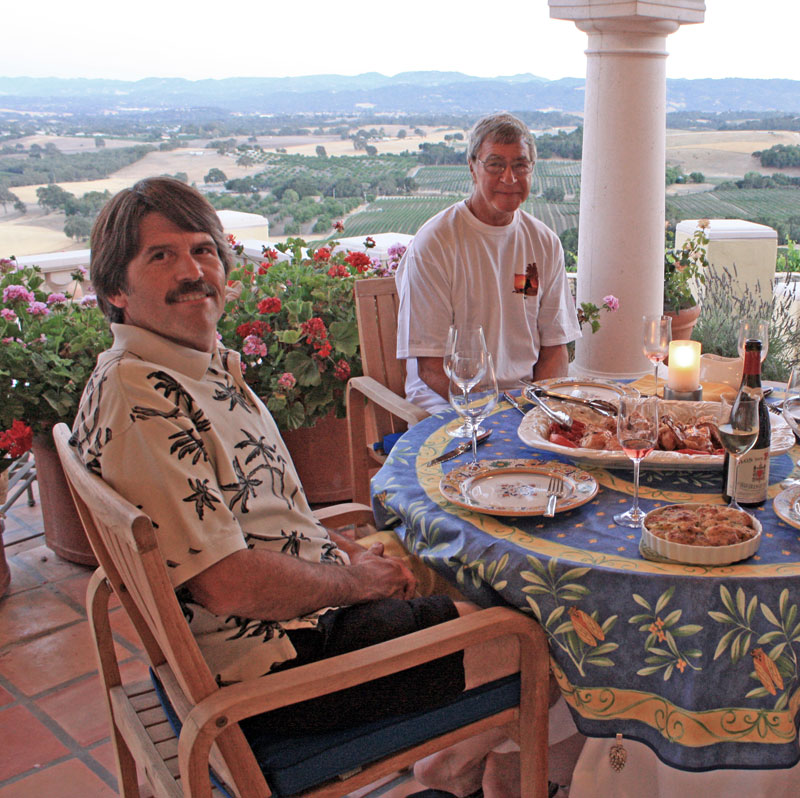
Carl Bowker’s, left, passionate interest in winemaking caught the attention of Erich Russell of Rabbit Ridge Winery. The two forged a friendship and have shared many social times together, including this 2009 Provence-inspired dinner at the Russell home with their wives, Pam and Joanne.
“I had been making wine for over 20 years,” Erich said, “and Carl seemed genuinely interested in being a winemaker. He first came around while I was building my winery in 2001 and decided to join us for crush in 2002. We got together often to talk about wine and in the process he learned to put on a wine clip and join two hoses together. At first it was obvious he was new to the process and I offered to do his jobs I gave him to do. It would go faster if I did it. But he learned how to use hoses, clamps and steel fittings from our time together in the early days at Rabbit Ridge.”
While Bowker was a green horn in 2002, it didn’t take him long to become an integral part of the harvest for Rabbit Ridge and Russell Family wines in 2004.
“While we were mostly too tired to have fun even though we worked together, I could see Carl was going to be good at winemaking,” Russell said. “Carl was not like many of the other new winemakers. He was neat, clean, hard working, anal about the process. The man wouldn’t leave each night until everything was just right in the winery.”
But it was during their time together that the Bowkers and Russells became friends. They shared dinners together and began talking about an ever-growing excitement for Syrah and especially Rhône varietals. Both couples signed up for a trip to France led by a small group of wine writers.
Erich and Joanne Russell, left, chose to vacation in France with Pam (right center) and Carl Bowker for a two-week trip to the Rhône region in 2004, visiting over 15 wineries.
“We had enjoyed them [Rhône varietals] in restaurants and felt we needed to see for ourselves what the French were doing,” Bowker said. “So the Rhône Valley trip was a great next step for us. We learned a lot on that trip. I got to taste first-hand the distinctly difference wine-style in the North Rhône, which is all Syrah. And I love the robust, rich and powerful wines from the North such as the Hermitage, Saint Joseph and Cronas areas. I also learned so much more about the blended wines in the South, where they incorporate Grenache, Mourvedre and numerous other varieties, and picked up the tools of blending their depth and character. I was inspired to make a California version of these Châteauneuf du Pape or Côte du Rhône style blends.”
Russell fondly remembers the Rhône trip with Bowker as it not only solidified their friendship but also helped keep him focused on Rabbit Ridge value-based wines.
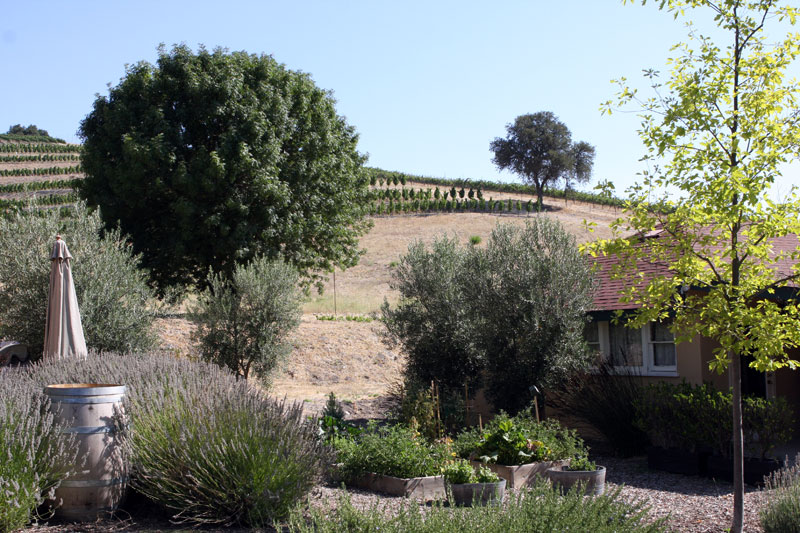
After his 2004 trip to the Rhône Valley, Bowker made the decision to rip out all of the existing vines on his Anderson Road property and plant Syrah clones. He also planted other varietals, including Grenache on this hill behind the tasting room.
“Carl, our wives and I have similar interests and personalities,” Russell said. “While we enjoy creating or eating fancy dinners out, we decided to do dinner like the locals. We had free night to get dinner on our own one night. Instead of paying for another expensive dinner in Avignon, in southern France, all four of us decided to buy cheap Rhone wine from a local wine store and get some cheese and salami from a market. After following a couple people carrying baguettes, we eventually found a bakery, bought a fresh baguette of our own. Our dinner that night was as good as any gourmet dinners on the trip. And we loved and drank inexpensive local Rhône wines.”
Not only did Bowker tour and taste while in France but he asked numerous questions about the vineyard planting methods, irrigation, soil-types, root stock varieties and clones, so that he could use this knowledge in his new Paso Robles vineyard. Together, with the two-year Napa Valley College viticulture and enology program, Bowker had the confidence to forge forward.
The Spanish word, “Caliza,” means a thin band of limestone. The catchy word describes the layers of soil under Bowker’s Syrah and Rhône varietals.
Bowker says that the 2004 French tour inspired him to make a “killer Syrah” and believes he “is now making that quality Syrah from fruit off his Anderson Road vineyard. The trip cemented the style of my Rhône varieties.”
His new-found inspiration morphed into a determination to join the growing movement of Paso Robles wineries planting Rhône varietals, creating for the Central Coast a Syrah-based regional identity parallel to Napa’s Cabernet focus. The trip to France solidified his Rhône focus. He then chose to have his soil tested by a soil scientist, hiring consultants by the end of the year.
Wine Spectator’s James Laube believes the Paso Robles area focus on Syrah and Grenache has strengthened the region. The epicenter of this blending has created a term used by California winemakers with many referring to the winemakers as Rhône Rangers.
After harvest in 2004, Bowker made a critical decision that would alter the direction of Caliza Winery for the following year.
“I made an incredibly hard financial decision, and in the spring of 2005,” Carl said, “we decided to remove the existing vineyard. The vines were ripped out, the land was tilled and a brand new irrigation system was installed. It was a hard decision because we spent most of our retirement funds, but we knew it was the right thing to do. We replanted Syrah and many other Rhône varieties, changed the location of the vines, installed the most current soil monitoring equipment, state of the art irrigation system, and incorporated sustainability farming practices.”
Bowker says the 2004 French tour inspired him to make a “killer Syrah” and believes he is now making that quality Syrah from fruit off his Anderson Road vineyard.
While other vineyard owners were beginning to consider changing out their vineyards in the Paso Robles region, Bowker’s decision was not without risk.
“I believe Carl works 10 times harder than he ever thought he’d have to work,” Russell said; “everyone has to in this business. He took a huge gamble in 2005 to tear out the vineyards. He had to go to a lot of extra work and remove the vines and irrigation. I’ll bet there were times he wished he was on the beaches of Maui.”
Hawley is a California State University, Fresno, with a degree in viticulture and enology. The Bowkers met him in Paso Robles on several occasions while he was a winemaker at Summerwood Winery and became huge fans of his winemaking style and ability.
“In one encounter we talked to him about helping guide us as we developed the Caliza brand,” Bowker said. “We were one of the first to sign him as a consultant. He worked with us for three years, helping with numerous important decisions: harvest timing, fermentation protocol and all aspects of the wine production. All the way, Scott was more of a trainer and mentor doing all that was necessary to help me completely understand the process than a paid consultant. In the end, he kind of worked himself out of a job as he mentored me so well.”
A very successful winemaker in his own right, Scott Hawley, now of Torrin Vineyard, became Bowker’s mentor and consultant in the early days of winemaking for the new Caliza brand. The first Caliza wines were made in 2006 from mostly purchased fruit as Bowker’s new vineyard was not yet producing. Grapes from that first vintage were sourced from neighboring Torrin Vineyard as well as the Russell Family Vineyard, just a short distance away. Bowker became confident Caliza Winery was going to be a major part of the Rhône movement like his Anderson Road area neighbors such as Booker Vineyard, Brian Benson Cellars, L’Aventure Winery and Torrin Vineyard.
As his skills mature, Bowker continues to focus on the details of winemaking but has learned to balance analytic chemistry in the lab and the creative ‘gut feelings’ of the best vintners.
“I was first introduced to Carl through a vineyard manager when he was buying his property,” Hawley said. “When I was in my consulting phase, I would look at property rather than being concerned with the people side of the business. I became familiar with the now Caliza property through someone else at first. I knew I wanted to work with that property and could see its potential.”
Shortly after meeting Bowker, Hawley said he knew this winemaking greenhorn was different than most Paso wine folks he had come into contact with.
“Carl was mild-mannered and super easy to get along with,” Hawley said. “He knew exactly what he wanted to achieve but was honest in that he didn’t know how to get there.”
While Bowker was inexperienced, without a track record in the wine business, Hawley said the newest Templeton Gap resident had the motivation, ambition, and focus to create something special.
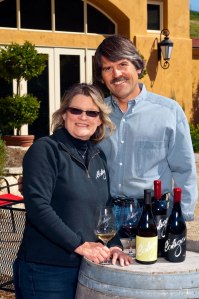
Caliza Winery is one of many wineries on Anderson Road making Rhône-style varietals. While co-owner Pam Bowker, left, can often be found in the tasting room she will also become president of the local Rhône Rangers chapter in 2013.
“I could tell right away Carl was different,” Hawley said. “As soon as I agreed to work with him, he became absorbed in winemaking. Carl was, and still is, a sponge. He incorporated and assimilated everything I could show or teach him. He was meticulous, writing down and taking in everything I said. In fact, I had to watch my steps with Carl. He would go back to his notes and more than once I needed to be careful with what I did or said. I had to watch my Ps and Qs.”
As far as Hawley could remember, Bowker had a penchant for details. Carl was so focused on the process, he took everything literal and often became the punchline of winemakers’ jokes.
Carl and Pam Bowker produce 6-8 Rhône varietals on the Caliza property, including the Tanzer International 91-point rated 2010 Azimuth.
“I wanted to be sure Carl understood a little about the importance of a clean environment in the winery,” Hawley said while chuckling. “But when I returned later, I found Carl, in classic fashion, decked out in a tie-back blue suit like he was working in a sterile lab complete with goggles on. I guess he was under the impression he needed zero contamination. But to his credit, he took the learning curve seriously and his attention to detail has paid off.”
The major strength of the Caliza Winery is that it’s almost completely self created. Most of Bowker’s wines are estate grown; he planted the vines himself and each year he helps pick, crush, create and bottles the wine. He is the whole picture. He knows what he wants when the year starts and is focused on gaining the unique characteristics of the vineyards.
Carl’s winery has a fine collection of six different Rhône-style clones, allowing him to handcraft his estate wines. Many are award-winning, including the 100 percent Rhône-style 2010 Syrah as well as the 2010 Azimuth which blends 40 percent Mourvedre, 30 percent Syrah and 30 percent Grenache.
“Carl is successful today–his wine sells,” Russell said. “He doesn’t need to pay a distributor to sell his wines; word of mouth shows how good Carl is.”
Caliza’s Syrahs and Rhône-style blends are award-wining, unique, big and intense. Bowker knows and experiences and lives out the whole picture, block, vineyard, and year with the final product. He is hands-on from beginning to end and there is a story behind each bottle of wine.
“Wine is made from the ground up,” Bowker says, “hand in hand, put together, made beautiful.”
Caliza Winery is located on 2570 Anderson Road, Paso Robles, CA 93446. The winery tasting room is open Thursday through Sunday, 11 a.m.- 4:40 p.m. or by appointment by calling 805.237.1480.
Bowker and his wife, Pam, are members of the Paso Robles Rhône Rangers regional chapter: a term used to describe those who produce Rhône-style wines in the United States. They also belong to the national Rhône Rangers: America’s leading non-profit organization dedicated to promoting American Rhône varietal wines. Caliza is a very active participant in the organization, both nationally and in the local Paso Robles chapter. In fact Pam will lead the Paso Robles chapter in 2013 as president.
The 2010 Caliza Azimuth
Carl has been on the Rhône Ranger panel for several seminars discussing Rhône wines at the national event held each year in San Francisco. Be sure to check out the 16th Annual Rhône Rangers San Francisco Tasting, March 22-23, 2013, at Fort Mason. Over 500 of the best American Rhône wines from more than 100 Rhône Rangers member wineries will be poured.
The Paso Robles regional chapter of the Rhône Rangers will next host the 2013 Paso Robles Rhône Rangers Experience at the Broken Earth Winery, Feb. 17, 2013. Over 40 wineries will explore with the public what makes Paso Robles so ideal for Rhône varietals. Tickets for the seminar and lunch are $85.
For more information on the Rhône Rangers, read the March 31, 2011, Wine Spectator article, “Talent Show”; it briefly outlines the Paso Robles’ new wave of wines from this growing network of California Rhône go-getters.
Carl Bowker passionately pursued entrepreneurial opportunities in the trade show and convention business for 26 years while living and working in the San Francisco area. But in 2001, a Wine Spectator/Mondavi-sponsored, tour of Tuscany, convinced himto transform his horticultural focus into a viticulture dream. Who knew nine years later the same magazine would honor the rookie winemaker with their Pick of the Month.
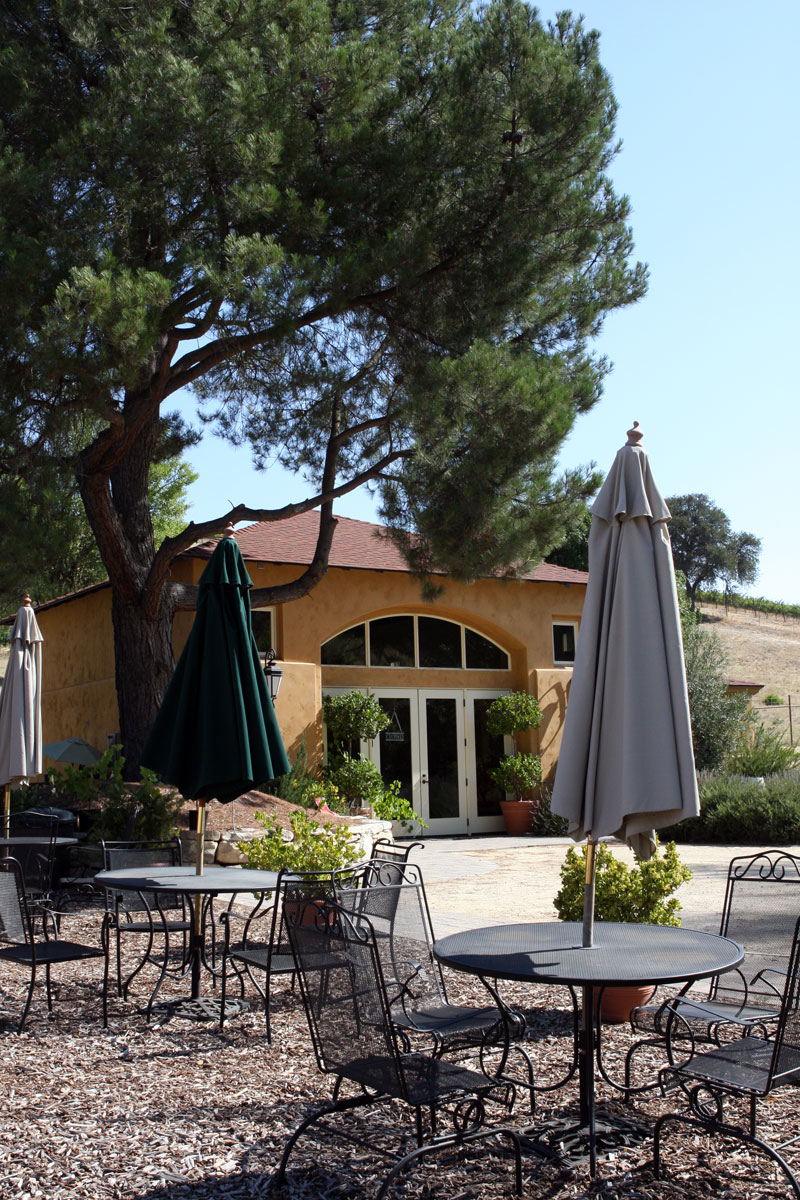
Just before the 2012 harvest, I visited with Carl for nearly three hours on the outdoor patio at Caliza Winery. We sat underneath a couple of umbrellas, overlooking the Syrah vineyards, while he shared his journey with me.
Bowker was born and raised in Kailua, Oahu, Hawaii, and began his farming experiences tagging along with his father, an irrigation specialist on the Island. According to the Caliza web site, the time spent time on Island farms, working the soils beside his father, shaped young Carl’s career aspirations.
After decorating conventions and trade shows with plants and flowers for 26 years, Carl Bowker switched careers from horticulture to viniculture after two European wine tours.
After graduating from the University of Hawaii in 1980, Bowker left the islands at 23. He landed in California, and put his business degree into practice, working in the convention services industry.
The former Hawaii resident then decided he was willing to strike out on his own after three years. He literally decided to grow his own plant rental trade show business.
“I began my business renting plants and flowers for each convention, coordinating the setup and removal of decorations only to repeat the process time after time,” Bowker said. “I loved the process of creating memorable esthetics. However, it didn’t take long before I realized that there really wasn’t someone who was dedicated to trade shows. So I created my own business: Exhibit Plant and Floral. Instead of renting plants and flowers, I provided my own plants and flowers for conventions across the country.”
Bowker traversed the country for 23 years, moving freight as he coordinated the installation of plant and food decorations for trade shows. After each convention and post show clean up, he moved his gear to another destination. This endeavor later became ‘top shelf.’ He ensured a first-rate presentation by owning all the live green and cut floral arrangements in the displays.
“I loved the creative part of the business,” Bowker said. “It was fun. My wife, Pam, and I met a lot of great people and we loved to travel. We liked to put things together so our business thrived. We had horticultural green houses and plants all around the U.S. so it kept us pretty busy.”
Despite the success of Exhibit Plant and Floral, Carl Bowker and Pam’s food and wine trips to Napa and Sonoma began to transform their interests from plant rental to winemaking.
Despite the success, Bowker was not convinced he would retire as a trade show businessman. While the couple loved to cook, Pam and Carl had been introduced to wine and food pairings on dinner trips to wine country. Conveniently for them, the Bowker’s business was headquartered just outside of San Francisco, So the couple made frequent trips to Napa and Sonoma for weekends to wine and dine.
“While we hadn’t previously been interested in wine and foodies,” Bowker said, “Pam and I loved to entertain and cook. And we found there were great restaurants in the Napa/Sonoma area, so we made time to get over there, even if it was just for dinner.”
However, the event which changed the course of his life was the 2001 trip to Italy’s Tuscany region.
It was during a Italian wine tour that the couple expanded their appreciation for world class wines and for what the land could produce. While in Tuscany, Carl and Pam spent time with many of the region’s finest wine-producing families. The couple attentively listened to the details of wine production and noticed the special connection the families had with their land. From this experience, Carl vowed that he would make this the way of life for himself and his family. He wanted to become a part of the groundswell of excitement of Central Coast winemaking.
With the Tuscan hillsides in the back ground, Carl and Pam Bowker hang out along side a vineyard on a foggy morning during their 2001 trip to Italy.
“We almost did not get to go on the Tuscany trip,” Bowker said. “After the 9/11 attack, the trip was moved back two weeks. We decided to go but with a lot of concern. Now it is amazing to think how one event provided direction and changed the course of our lives.”
Even as he was interested in moving to a wine region like Paso Robles, it didn’t take long before Carl knew he needed to go back to school. He knew his horticultural focus in the trade show and convention business would not help him create acclaimed wines. After he returned from Italy in the fall of 2001, he began attending Napa Valley College to learn about viticulture and enology, completing an associate program in 2004. He believed these went hand in hand; grapes and wine are created from the ground up.
“I loved what I was doing with the plant business and I thought, ‘wouldn’t it be neat to do this with the wine business?'” Carl mused. “I already had a green thumb so why not get the education I needed work to with grapes? So I took wine science and the chemistry of wine classes.”
Lowell Zelinski, left, of Precision Ag Consulting, consults with Carl Bowker each week at Caliza Winery. He provides vineyard management and technical services and has done so since 2008.
Our time was briefly interrupted by Lowell Zelinski of Precision Ag Consulting who has been working with Caliza Winery since 2008. They briefly spoke about the irrigation plans for the day. Zelinski often checks in with Carl and provides vineyard management and technical services to Caliza and many other wineries in the Paso area.
Later I caught up with Zelinski who enthusiastically endorsed Bowker as someone who was quick to offer winemaking suggestions to all who asked in the region. In fact, Zelinski shared that Carl had often been a resource for his own small winery: First Crush Cellars.
“Carl is the real deal,” Zelinski said. “He is generous and generally interested in my recommendations concerning the Caliza vineyards and he is a hands-on guy. He is a consummate professional who seems to care and is passionate about winemaking.”
While their interchange lasted less than five minutes, Carl and Lowell’s banter was upbeat, to the point and ended with a chuckle.
Already on a quest to start a new life in fall of 2001, the Bowkers decided to travel to San Diego County where his mother and father lived. They drove down California Highway 101 and initially planned to stop in the Carmel Valley, near San Luis Obispo. It was a late November night and the drive was cut short by fog.
Carl and Pam Bowker found the Paso Robles wine region quite by accident after a foggy evening drive to SoCal prevented them from going any further south. Today Caliza Winery in the Templeton Gap west of Paso Robles creates award-winning wines.
“As the weather was deteriorating, we hoped to go as far as San Miguel,” Carl said. “In fact, as we drove near the town any further travel proved to be unsafe. Once we decided to stop, we hoped the town would have a motel. In fact, it was the first glow we saw–the only motel in town. It was a simple place and gladly stayed there that night–the evening before Thanksgiving.”
Early the next morning, the couple left, looking for great cup of coffee. They took the first exit: Paso Robles.
“We got off the Highway 101, looking for Starbucks, but Paso didn’t have one at the time,” Carl said. “We drove down Spring Street to the Paso Robles Inn. We had breakfast at the counter but no espresso. I remember Pam saying, ‘this is a cute little town–a little like downtown Sonoma. A cool town.’ We liked it so much and felt it was a wine town and deserved an extra night.”
After Thanksgiving, the Bowkers stopped in Paso Robles on way back to San Francisco and stayed another night. Ingtrigued by the country and the people, the couple made frequent trips to the area, checking around Templeton and eating at McPhee’s Grill.
“Next door to McPhee’s is a real estate office where we would check the listings,” Carl said. “Pam saw our winery property listed in the office and it got us interested. But at the time we both agreed to look at something else. In fact, I began spending a lot of my time–a week at a time–looking at property in the Paso Robles area. It became my … it became our focus. And it took us about a year to settle on our property here in the Templeton Gap. I love the country feel of Paso.”
Carl actually found the first property without Pam. He made an offer on the 50-acre Peachy Canyon site in late 2002. The Bowkers bought the first parcel and continued farming its 23 rows of Cabernet and bottling a Cabernet/Syrah blend called Companion.
Carl Bowker creates 200 cases of Caliza Companion as a blend of estate grapes, using 50% Cabernet Sauvignon from the Peachy Canyon property. The rest of the blend comes from the Anderson Road vineyards: 30% Syrah, 10% Mourvedre and 10% Tannat.
“Pam had faith in me,” Carl said. “I originally came to look at the Peachy Canyon site on my own.” Later Pam came down and it didn’t take long and she charmed the sellers, sealing the deal. “We were city people, out of the area and the previous owner was a little nervous about selling to outsiders. But we approached this opportunity as our land, our home. It was after Pam arrived and we all talked that the deal was completed. Pam helped the previous owner be comfortable with us taking over.”
Her faith in her husband’s ability continues to pay off and, while Caliza Winery is not necessarily known for Companion, the 2006 vintage received a 90+ points from Robert Parker’s Wine Advocate (June 2008) in Issue #177: California’s Rhone Rangers.
Carl says he feels fortunate to have “discovered” Paso Robles, and at the time, believed it to be a new frontier in winemaking. They kept looking for superior vineyard property and added a second land purchase on Anderson Road in 2003. This 60-acre piece of land had an old declining 25-acre vineyard planted mostly to Chardonnay and Pinot Noir, but the Bowkers felt strongly that this land could become the cornerstone of the new Caliza Winery and vineyards with some major modifications.
“We bought for location as we wanted to be in the Templeton Gap area west of Paso Robles,” Carl said. “We chose this location to be a part of this amazing land, region and culture. We also wanted to be a part of the Paso wine movement and its huge upside. However, I knew I needed a special place to grow Rhone varieties and there is no better place than here.”
While a first trip to Italy help create an obsession for winemaking, a tour of France’s Rhone Valley solidified Carl Bowker’s vision for old world wine in the new world. In 2005 he planted 20 acres on their hillside property on Anderson Road, joining cutting edge winemakers in the famed Templeton Gap.
While their newly purchased Templeton Gap winery was producing Chardonnay and Pinot Noir, Carl Bowker was not convinced his vineyards would develop world class wines. A fall 2004 trip to the Rhône Valley convinced Carl to make the hardest decision he’s ever had to make in his life. Please return in a couple of weeks to TalesoftheCork for “Caliza Winery: Templeton Gap nets a Rhone Ranger” and Carl Bowker’s tale of “making wine that will grab your attention!”
Charles Krug, the oldest family-owned commercial winery, along with St. Helena Kiwanis Club, St. Helena Chamber of Commerce and CHEERS! St. Helena, hosted The Napa Valley Wine Wave, Oct. 7.
Something was not right and Napa Valley residents take a stand at Charles Krug Winery, Oct. 7, 2012.
Located in one of the premier wine growing regions of the world, Napa residents, winemakers, growers and businesses believe the rightful place for the longest relay wine toast record belongs in St. Helena, California.
The problem: A group of Chinese located in Guangzhou, China, set a new record of 321 participants in November 2011. Knowing this was going to happen, seemed to rub St. Helena resident Lowell Smith the wrong way and he, with support from the St. Helena Kiwanis Club, birthed the idea of the Napa Valley Wine Wave and decided to raise scholarship money for local schools in the process.
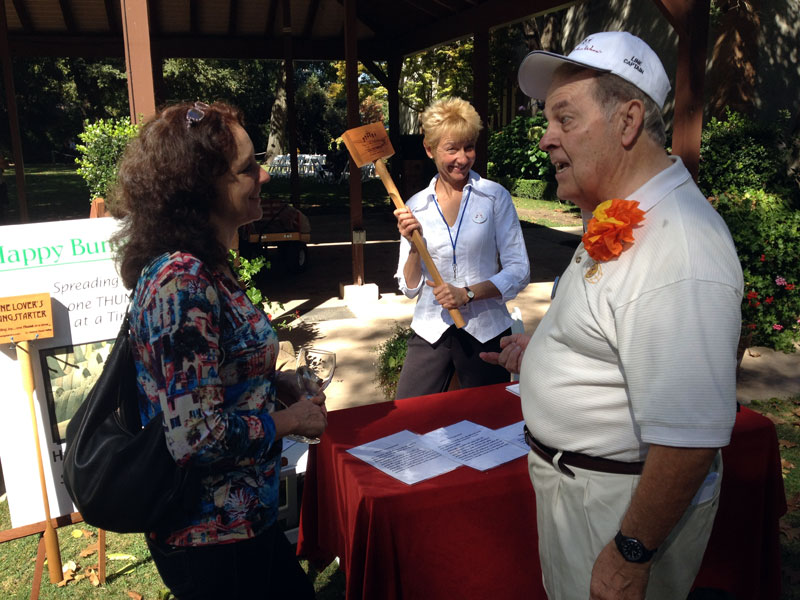
Lowell Smith, right, discusses final preparations with a Wine Wave participant. Ali Morse, rear, sells commemorative bungstarters during the event. The are also available through the web site: http://www.happybungstarters.com.
“We actually applied for a Guinness World Record and the Wine Wave about a year and a half ago,” Smith said. “We then got the approval to apply for this record and have been planning this event ever since.”
Smith said Guinness World Records get 50,000 requests a year for setting records. Out of those, Guinness approves about 2,000 and most get accomplished.
“I actually walk down the line as the attempt is happening and will be counting with my clicker to make sure that everyone who participates does it correctly,” Hessling said. “What this group needs to do in order to break, or achieve, that record today is to have a minimum of 322 participants take part in the toast, according to the guidelines that are established by Guinness.”
As the Guinness World Book of Records adjudicator, Johanna Hessling (center) walks down the line during the wine wave attempt, she uses her clicker to make sure everyone, including Lori Ayre (right) and Cheryl Gould, participates according to the rules.
Jay Lewis, a member of St. Helena Kiwanis Wine Wave Committee and retired professor from Pacific Union College in Angwin, Calif., volunteered to be a line captain to make sure his charges did everything right.
“I’m excited because so many people are coming together to participate in a World Record,” Lewis said. “The Chinese hold the record with over 300 plus and we are hoping to get 500. This is a great event to hold in the Napa Valley, the center of the wine industry, but the Chinese currently hold the record. Oh, come on!”
Set on the tree-lined grounds of the first commercial winery in California, Charles Krug Winery is a natural place to host over 500 people to participate or watch the Napa Valley Wine Wave.
Maggie Pramuk, center, works for Robert Biale Vineyards and is on the Appellation St. Helena board. She was excited to be a winery representative, pouring at the Napa Valley Wine Wave. Pramuk said she couldn’t believe how fun this is!
Kara Chamberlain, a student at the Culinary Institute of America (CIA) at Greystone in St. Helena, heard about the Wine Wave and record attempt from her professor.
“We were sent out an email asking for volunteers or participants because this is for a scholarship fund that actually benefits our school,” Chamberlain said. “A few of my friends from school came here to promote something that we love. This has been so good for me to talk to the many winemakers of the St. Helena area and taste their many different wines. I appreciate that because that is what we are studying. I am hoping to become a wine writer. I am talking to the winemakers as much as possible and networking as well.”
In fact these and other students, along with local businesses, including French Blue, Sorensen Catering and Armadillos Restaurant, served appetizers while the wine relay participants toasted and clinked their way into the record book.
Charles Krug Winery is unique in the Napa Valley as it is still 100 percent family owned and now moving into the fourth generation. Pete Jr., the youngest son of Peter Mondavi, Sr., believes Napa is the rightful place for a record like the Wine Wave.
“St. Helena is where the industry started and Charles Krug Winery is as good as any in Napa Valley,” Mondavi said. “The winery opened in 1861 … 151 years ago. But first and foremost, this is about Kiwanis. We have been involved with St. Helena Kiwanis Club as a venue for fundraising events for many years. They came over with this idea and what better place to host this event? We have beautiful grounds that can hold over 500 people. Come to see where Napa all started.”
Peter (Pete) Mondavi, Jr. (right), proprietor of Charles Krug Winery, praises Kiwanis for creating the Napa Valley Wine Wave opportunity and thrilled the Mondavi-owned winery is able to host the event.
The “wave” of toasters kept Hessling busy from 1:30-2:30 p.m. She watches as each takes turns clinking glasses and sipping wine. After toasting, each participant turns to the person next to them and the process follows from one to two, two to three and so on. The longest relay wine toast is a sequential toast where participants clink glasses in order, from start to finish, rather than the more common toast where everyone clinks glasses simultaneously. Hessling kept pace and smiles each time a red flag raises, denoting when a 100th participant completes the toast.
As each one took turns, a “cheers,” “salut” or other proclamations sounded as individuals look into a partner’s eyes while sipping 2009 Charles Krug Zinfandel. A distinct ‘clink’ and the ringing sound of glasses chime as the dings or pings mix with laughter and chatter.
A 65-foot red and yellow hot air balloon from Napa Valley Balloons provided an impressive backdrop and participants danced to Ancestree, a Santa Cruz roots reggae band. The group grooved and mixed three-part harmonies into an impressive reggae/rock mix from 10:30-1:30 p.m.
St. Helena resident Sue Collins came with her husband Peter to enjoy the unusual afternoon festivities. Peter said they have had many memorable events at the winery and Charles Krug continues to be community-oriented, hosting great events on the property.
“We are here to support Kiwanis and support the wine industry,” Sue said. “We hope to have a little fun, get together with some good music and friends and enjoy a glass of wine in a beautiful location. Oh, and of course, there’s that Guinness thing, too.”
Ira C. Smith, Sports Director at KVON/KVYN, proclaims to the 487 participants, they broke the Guiness World Record. Johanna Hessling then awards Pam Simpson (CEO/President of St. Helena Chamber of Commerce) a framed certificate honoring the Napa Valley Wine Wave record, while Lowell Smith thanks Hessling with a commemorative bungstarter.
While hundreds gathered on the Charles Krug grounds, including the 487 people who took turns to ‘clink, sip and clink,’ there were dozens of others who watched as spectators; students and volunteers served and the Saint Helena Community Band played instrumental numbers until most revelers left.
“We brought our community together and we set a Guinness World Record,” St. Helena Mayor, Del Britton, said. “This unique world record now resides in the Napa Valley, the heart of the wine experience.”
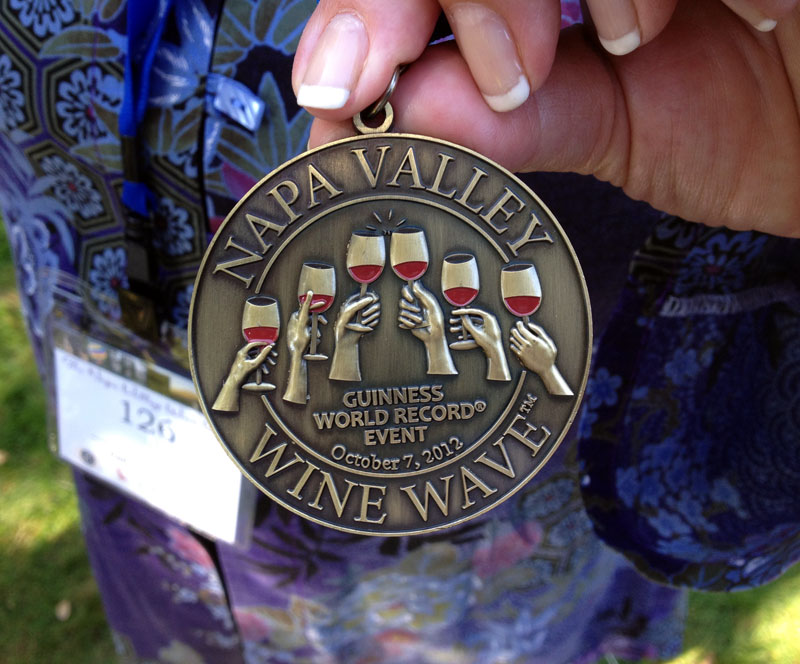
All 487 Napa Valley Wine Wave participants received a medal commemorating the Guinness World Record for the longest relay wine toast, Oct. 7.
Upon completion of the record, Hessling, along with Master of Ceremony, Ira Smith, announces that the new world record of 487 now belongs to the Napa Valley Wine Wave of St. Helena, California. Each participant also received a world record medallion to commemorate the event.
The Napa Valley Wine Wave was created by the St. Helena Kiwanis Club, in partnership with the wineries of Appellation St. Helena, St Helena and St. Helena Chamber, CHEERS! St. Helena, as a way to raise money for scholarships. Proceeds raised from the event go towards scholarships in the agriculture, viticulture, winemaking, business and hospitality industries. For more information and opportunities to purchase commemorative merchandise and donations for scholarships, visit the Napa Valley Wine Wave or on Twitter at @NVWineWave.
Johanna Hessling, an official Guinness World Book of Records adjudicator (center bottom), pronounces St. Helena the new home of the Longest Relay Wine Toast. The Napa Valley Wine Wave and its 487 participants cheer and toast their new record, Oct. 7, 2012. (Photo by Charles O’Rear)
















 TalesoftheCork blog