Viticulture and Enology programs promote Fresno State research at Grape Day

My wife’s hospital co-worker asked me last week to chauffeur her son to daily chess and chef camps. Her 12-year old son needed something to pass the time, rather than sit home alone watching TV. At first I said no, but have since enjoyed learning about Fresno’s summer camps; this week, I am limo driver for the youngster’s canoe camp on the San Joaquin River.

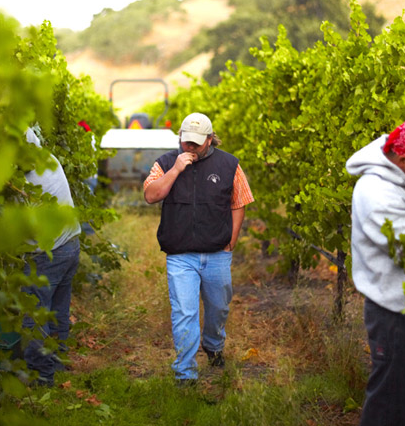
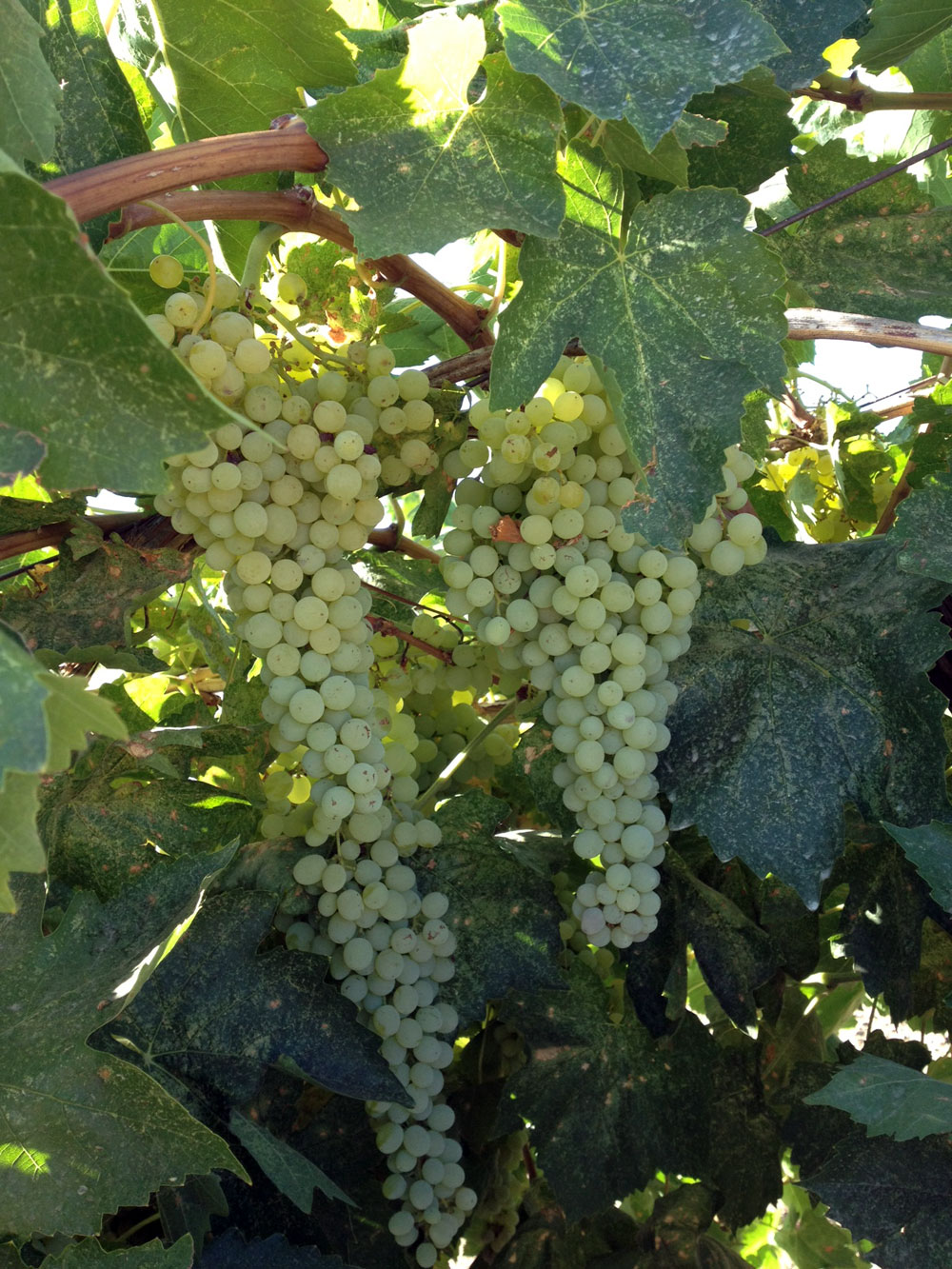
The daily deliver and pick up routines last about 45 minutes, but the trip takes me by area vineyards both near the river and California State University, Fresno [FSU]. Ripening grape clusters along country roadways initially attracted my attention, so I took the time to stop and check on the status of the Thompson and Muscat vineyards.
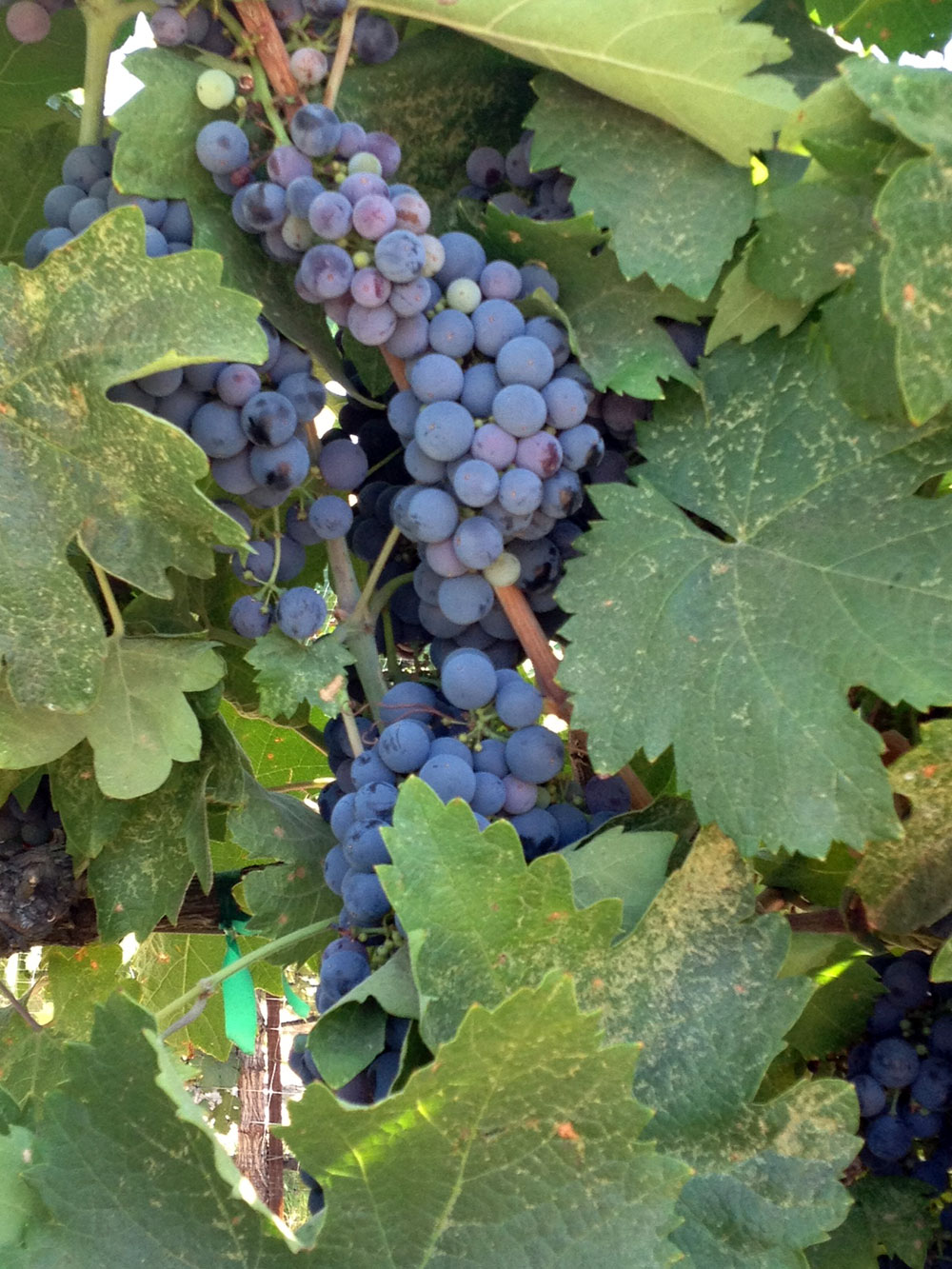
Fresno State students grow many grape varietals and create award-winning bottles of Barbera, Petite Sirah, California Syrah, Chardonnay, Rosè and Pinot Gris.

As temperatures heat up in August, schools and universities are gearing up and the grape harvest is not far off. So it was no surprise to me the Fresno State Viticulture and Enology program is set to host Grape Day, Aug. 14.

According to their web site, “Grape Day is an informal field day and open house held at the Department of Viticulture and Enology at Fresno State for grape growers, pest control advisers, winemakers, and winery personnel. The event is designed to showcase the latest grape and wine research conducted at Fresno State and to provide an educational forum on current issues affecting the grape and wine industry.”

Senior enology major Kerry Fitzgerald is planning to attend Grape Day by helping out one of his viticulture professors, Kaan Kurtural, as he talks about mechanical management (machine harvest, pruning). Fitzgerald is excited to attend his first Grape Day.

“This is going to be a very good experience,” Fitzgerald said. “Not only will I be able to listen to my professors, but FSU enology alumni will be on hand to share why the program helped them graduate into successful careers.

Fitzgerald has kept tabs on FSU alumni and winemaker Bo Barrett of Chateau Montelena. The Fresno State graduate is often referred to the winemaker of Bottle Shock fame. Fitzgerald met Barrett at the Fresno State Winery in March 2012 at the Home of Tomorrow’s Winemakers event.

Besides meeting Barrett, Fitzgerald also has worked at The Grape Tray, a Fresno wine cellar and sandwich shop, where he has been encouraged by another FSU graduate selling his bottles via the retail market.

Winemaker and FSU alumni Bo Barrett, right, is senior Kerry Fitzgerald’s winemaker hero because of his involvement with the “Judgement of Paris.” The Chateau Montelena Chardonnay Barrett and his dad entered in a 1976 Paris blind tasting showed the world Napa had come of age.

“Alumni Dave Scheidt sells his wines at The Grape Tray as Mastro Scheidt Family Cellars. It is really cool to have a guy who graduated from Fresno State selling his stuff in the retail market,” Fitzgerald said. “Fresno State enology students are successful upon leaving the program and I am excited to listen to them share their stories at the event as well.”

Fitzgerald went on to say how Fresno State is the only student-operated commercial winery in California. The students complete their book work but then learn how to grow the grapes to using winemaking equipment from harvest to bottling. They not only read about sorting, using the wine press, punching down, checking the sugars and racking the wine, but they can sell it via the Rue and Gwen Gibson Farm Market.

“I love being a Fresno State enology student because this is as close to real world experience as it gets and I’m still in school,” Fitzgerald said. “I can be in class one hour then spend hours in the vineyards or winery learning hands-on. You cannot get that anywhere else. We are student farmers becoming winemakers. We research and test as much or more than anyone else and we produce and sell our product. People should come to Grape Day to check us out and find out for yourself.”

Grape Day is a half-day event held every other year at the Jordan College of Agricultural Sciences and Technology on Fresno State campus. There will be practical field and indoor presentation with viticulture and enology professors sharing the latest grape and wine research.

Fresno State is one of five campuses in California which have notable winemaking programs: Napa Valley College, California Polytechnic State University, Sonoma State University and University of California, Davis.
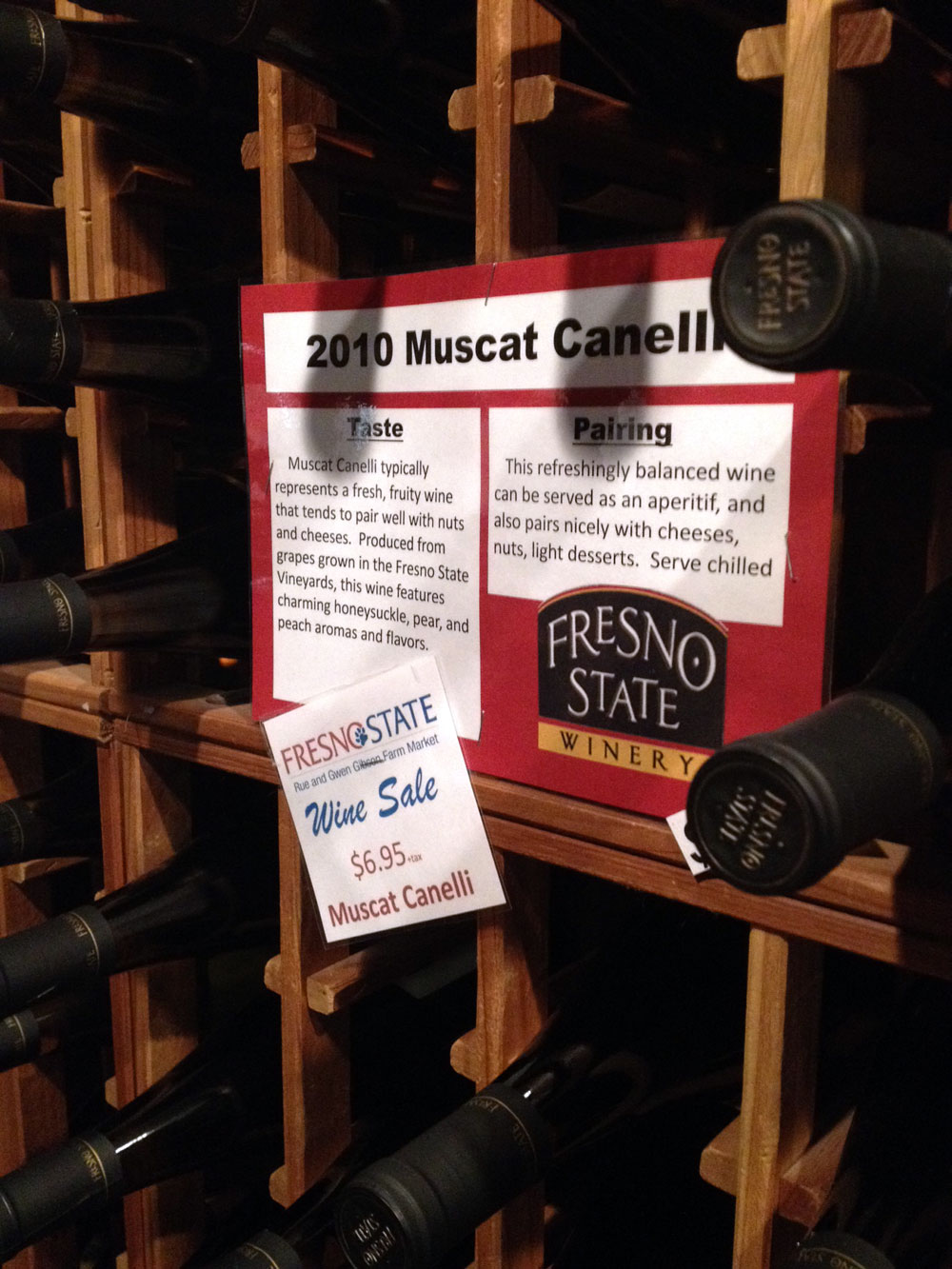
In 1997, the California State University, Fresno, became the first university in the United States to have a winery fully licensed to produce, bottle and sell wine.

Registration and exhibits open at 7:30 a.m. with the program running from 8 a.m. to noon in the shaded lawn west of the Viticulture building. A BBQ lunch is sponsored by American Vineyard Magazine and will be on the lawn near the Viticulture and Enology building, 2360 E. Barstow (between Cedar and Maple) on the north side of the street, surrounded by vineyards. To reserve a spot at Grape Day, visit the Viticulture and Enology web site. Tickets are $20 and $15 for current students. Be sure to bring a hat and sunscreen.

Tours of the unique facilities, refreshments, and lunch are included in the registration fee. Parking is available in the yellow or green lots with a courtesy parking code. Check for the code at registration. Without a code, parking at FSU is $3 per day.

A spokesperson for the program was not available to comment on the event and suggested interested students or community members refer to the July 31 Fresno State News press release.

According to the Fresno State web site, one of the focuses of the event will be to “learn about the latest research into crop forcing, nematodes, grape-rot measurement and mechanization. A complete list of presentations are listed.

“Dr. Sanliang Gu, holder of the Ricchiuti Chair of Viticulture, will discuss “Crop Forcing – Yield and Cultural Practices” and his work on introducing degree-hours to better interpret heat accumulation and thermal distribution of regions and vintages for wine grape production.”

Dr. Sanliang Gu briefly discusses crop forcing in this short YouTube video previously posted.

For those interested in checking out the Enology program at California State University, Fresno, and the Fresno State Winery, be sure to contact them at the winery. For Enology inquiries, call 559.278.2791 or call 559.278.9463 for winemaking inquiries. The campus farm, the Rue and Gwen Gibson Farm Market, has fresh produce for much of the spring through fall, including many of the California award-winning student produced wines. Their phone number is 559.278.4511. Be sure to also visit the Jordan College of Agricultural Sciences and Technology web site on how to become involved as a Fresno State viticulture and enology student.
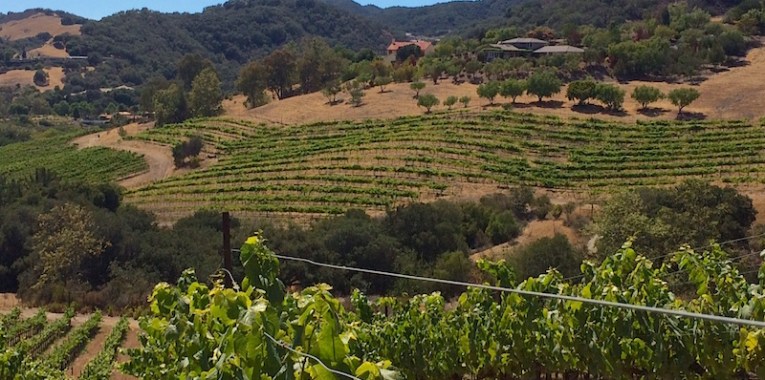
Get to know 2012 Coast winemaker of the year: Mike Sinor

Sinor LaValle owner a central coast mentor

Earning Wine Spectator’s praise for a 96-point Pinot Noir wasn’t enough to keep Mike Sinor fulfilled. In fact, neither was flying from Santa Maria to Napa for wine and dine lunches on a private Gulfstream jet. The trips to Burgundy and Bordeaux, France, to study winemaking and wine dinners with the Rothschilds were wonderful, but the ‘perks’ and awards always came while working for someone else.

After returning from France in 1996, Mike Sinor started his own wine label, Sinor-LaVallee, with his wife, Cheri, in 1997.

When the Paso Robles Wine Country Alliance and San Luis Obispo Vintners Association each named Mike Sinor California’s ‘2012 Central Coast Winemaker of the Year’ in mid July, the  Visalia, California, transplant soon traveled back to the Central Valley for a promotional event at The Market. Later that evening, Mike and I chatted at Trelio Restaurant during a wine dinner event. We agreed to meet a week later at the fabled Santa Margarita Ranch and  Ancient Peaks Winery, just south of  Templeton, Calif., in order for me to better understand the man behind the honor.

While Mike was raised in the center of agriculture in the State, his father, Bernie, an avid pilot, sold heavy construction equipment as owner and operator of Sinor and Sons Equipment company. Bernie gave young Mike plenty of opportunities to work on the job sites or at the family-owned Fresno junk yard. Mike spoke fondly of his father’s staunch commitment to his business, working hard but taking time to play hard with the family.

Bernie and Mike often went hunting together, and while it did not often include big game, father and son hunted doves in the foothills of Madera. And like many Central Valley residents, the family made numerous trips to Cayucos which is where Mike’s love of the beach began.

But working for Dad was not a part of Mike’s plan. College and the Central Coast beaches lured the high school graduate. The teenager ended up in San Luis Obispo; Mike enrolled at California Polytechnic State University [Cal Poly], ready to become the first college graduate in his family (Mike’s sister, Teri LaFleur, is now a 3rd grade teacher in Woodlake).

sinorstobbe2
I spent a morning with Mike Sinor, right, at Center of Effort in the Edna Valley where he works with a number of other winemakers and also creates his  Sinor-LaVallee brand.

“I was ready to go out on my own,” Sinor said. “My dad taught me my work ethic: to work hard and throw myself into it. So when I wanted to go to college, I had his blessing but I had to pay for it, work for it.”

Sinor’s upbringing, like many from the Central Valley, brought a love for the coast; Cal Poly was a natural choice. The Sinor family encouraged Mike to take responsibility for his education at an early age but expected him to pay for college. He entered Cal Poly hoping to become a high school shop teacher; however, upon meeting his future wife, Cheri, in a Chemistry 101 class, that dream changed: a love for each other and the wine-making journey was born near the beach in 1991.

Many Central California teenagers dream of leaving the San Joaquin Valley for a college beach experience. Mike Sinor left Visalia for San Luis Obispo and a degree from Cal Poly.

“My first job on the Central Coast was on old Corbett Canyon Road when I was 21,” Sinor said, “where I worked at many wineries, including Corbett Canyon Winery; that is where my winemaking training started. Claiborne and Churchill, Chamisal Vineyards, Saucelito Canyon, and Windemere Winery over the next three years (’91-’94). Initally, I had no idea what I was doing,” Sinor continued, “but these area wineries and winemakers became my community.”

Mike did more than just put in time at local wineries. He became a part of their families, including Bill and Nancy Greenough’s at Saucelito Canyon.

“We had previously lost a daughter when Mike showed up to work at our vineyard,” Nancy said. “While I had college kids around to be a positive influence to our youngest (Margaret and Tom), Mike Sinor lived out his time with us like their older cousin. Besides working that first harvest with us, there was not a job he wouldn’t do. Mike is an extremely positive person, has clear values, hardworking, and enthusiastic. He always did a job well.”

sinorskullcoe

Whether Mike picked the kids up from school or punch downs three times per night, Nancy said Mike found joy in whatever task he undertook. She never felt awkward about asking him to do the “crappy job” or the worst job at the winery. Mike had a Valley Boy reputation: always hard working. No job was beneath him.

“Mike was like a Junk Yard Dog,” Bill Greenough said. “There wasn’t anything he couldn’t fix: from tractors to wine equipment. Actually, I don’t know why he initially wanted to become involved with wine but he was so curious.

He always wanted a better way to do things, even if it involved the worst of jobs. He always volunteered: ‘I’ll do that…no problem.’ He willed himself to learn the wine process. He was so attuned to sensory changes to wine, juice, the smells, fermentation, pressing, barreling. His nose was always busy. He keeps an eye on stuff; his senses became like a hound dog sniffing, sniffing it out.”

Mike and Cheri’s personal wine label is Sinor-LaValle. Mike’s Spanish family heritage is the Sinor and Cheri’s background is French; thus the LaVallee.

Sinor not only had time for the wine business and babysitting the kids, but the Greenoughs said Mike took so much pride in completing even unusual tasks.

“We had this VW wagon sitting on our property; it had been parked for 10 years,” Nancy said. “Mice had moved into the camper: a 1966 Volkswagen Westfalia. Mike took it completely apart, got rid of the mice and put back together. He always brought out the best in people. The kids loved him.”

Today, Mike no longer wears a pony-tail under his baseball cap, something that Bill jokingly chided him for while Sinor lived in a house in the vineyards. Sinor, while living out a ‘Rush Limbaugh work ethic in the morning and country music in the afternoon,’ has given back to the Greenoughs. He has helped mentor Tom Greenough as he took over as Saucelito Canyon’s winemaker.

“I discovered myself because of them,” Sinor said. “They introduced me to my livelihood and I became so close to them; I not only worked by day, but I occasionally took care of their kids in the evening. Not only do I love my career but I also love the land and the people I am indebted to for my success. I love this community; it raised me.”

After graduating with a degree in Industrial Technology, Sinor began working for the Robert Mondavi family at Byron Vineyard in Santa Maria during the harvest of 1994. He rapidly gained respect as moved up from his cellar position to Assistant winemaker to Ken ‘Byron’ Brown.

Sinor’s background and passion for the land and vineyards also increased as he made two trips to France to study French winemaking processes with a focus on the vineyards and domains of Burgundy. These trips became even more personal as he married Cheri while on a trip to  Beaune, Burgundy, in 1996. A year later, Cheri and Mike started their own label: Sinor- LaVallee Wine Company. Their name is a ‘marriage’ of their two heritages: Sinor-Spanish and LaVallee-French. Their focus? Like that of their shared love: 300-400 cases of Pinot Noir.

Sinor worked with Byron Vineyards and Winery until November of 2000; he had seen production quadruple, a new winery built, and hundreds of new acreage planted. He left Byron after four years for his first winemaker position at Domaine Alfred [Chamisal Vineyard] in the Edna Valley and never looked back, despite what he gave up.

Sinor began his winemaking journey at Byron Vineyards and Domaine Alfred, where his 2004 Domaine Alfred Pinot Noir Edna Valley Chamisal Vineyards Califa earned 96-points from Wine Spectator. He currently works at Ancient Peaks Winery in Santa Margarita.

“It was very emotional for me to leave Byron after working with incredible people and the Mondavi family,” Sinor said. “No one could believe I was willing to give up the private jet excursions from Santa Maria to Napa for lunch or trips to Burgundy to learn more about winemaking. Why would this little guy from Visalia give up drinking with the Rothschild family?”

Domaine Alfred had been a small winery renewed by owner Alfred “Terry” Speizer. He planted the dormant vineyard with the latest French clones, including six Pinot Noir and five Chardonnay clones, in the mid 1990s. Speizer made Sinor his winemaker in November 2000.

“I felt a need to change,” Sinor said. “There is never a perfect time for change. I knew personal growth comes from uncomfortableness. So I risked and Terry gave me control over 80 acres of vines and the winemaking. We made a good team.”

The two worked the vineyards to near perfection for five and a half years, expanding and tinkering with the vineyards.

Sinor’s mantra is passionate: Wine done well will transmit its environment.

After 5 1/2 years as Domaine Alfred’s winemaker, Sinor felt like a change was imminent. He had offers for a lot of jobs but the opportunities were not a right fit.

“The message is the place, the messenger is the wine,” Sinor said.

Wine Spectator agreed with Sinor and put Domaine Alfred on the map on June 15, 2006. They rated the 2004 Domaine Alfred Pinot Noir Edna Valley Chamisal Vineyards Califa. This was the highest score their critics had ever rated any Central Coast Pinot Noir. The Chardonnay, Syrah, and Grenache also earned acclaim.

As a winemaker from a world class winery, Sinor led the Central Coast into notoriety. Sinor joined Brian Talley and a group of vintners who pioneered a new organization in 2001: The World of Pinot. He served on the board of directors for 10 years. Countless others in the industry kept him busy for interviews and consulting. Mike and Cheri’s Sinor-LeVallee wine label continued its own success in the Edna Valley and all seemed right. All seemed right to everyone except Mike and Cheri.

“Even before Wine Spectator came out and gave our pinot the high score, I was already thinking my time at Domaine Alfred was coming to an end,” Sinor said. “I knew a major grow of the brand was coming; we built a new winery and would need to hire more people to support the increased production. Both Cheri and I knew we didn’t want to stay much longer. I had lots of offers to leave but nothing seemed right. It was time to explore another level and personal growth but I didn’t want to do a job I have done before.

Family and community relationships continue to shape Mike and Cheri Sinor. In this 2003 family photo, Cheri holds a reluctant Tomas and Mike cradles Esmee.

“Some people said I left [Domaine Alfred] because of the accident. But I had been thinking about leaving since the fall of 2005, months before the high score and our time of grieving.

The Sinor family’s direction changed forever, Jan. 13, 2006. On a routine flight back to Visalia’s Municipal Airport, Mike lost his dad, Bernard “Bernie” Sinor, his stepmother, Betty Ann, and his stepsister’s two children. The plane crash claimed all their lives and reshaped Mike’s next steps.

Please check out A time for change: Mike Sinor winemaker of the year, Part II. Read as Mike overcame his great loss and accepted a new challenge at Ancient Peaks Winery in Santa Margarita, Calif. His wife, Cheri, and Mike still produce Sinor-LeVallee wines and continue to be leaders in the Edna Valley winemaking community.

California’s Central Valley Wine Region

Central Valley Wine Region

As my palate evolved, my interest in Californian wines has expanded, wanting to appreciate both the vintner and the production process. I am interested in sustainable wine practices and am thankful for the wide variety of wine choices. And now with wine regions’ climat changing, I am even more aware of how climate, terroir and winemakers may need to research new techniques in order to produce higher quality wines in the 200-mile long (Tehachapi Mountains south of Bakersfield, north to Fresno County and Madera Wine Trail and up the San Joaquin Valley to the city of Modesto in the north) Central Valley region.

According to the Fresno County Farm Bureau, Thompson grapes are the most common planted variety in vineyards across the Central Valley.

Additionally, Viticulturists in the Valley are exploring additional vine varietal opportunities which provide new options for regional growth. In fact, hot weather grape varieties have been planted similar to the ones in Portugal and Spain.

Hot Central Valley summers have produced wine grapes (Thompson) that are traditionally blended with other grape varietals. However, the Central Valley grown Muscat grape is becoming more popular with the 21-34 age group who enjoy sweet Muscato wine. Yet, some have doubts that this or other varieties can flourish in the inland valley’s hot temperatures. That being said, a 2011 UC-Davis Central Valley wine study shows how the Central Valley‘s value-priced wine production is projected to increase and has developed a niche in the marketplace, especially wines that are meant for blending. While jug wines and table grapes have carried the wine region through the 1980s, Zinfandel, Tempranillo and Viognier, Chardonnay and Merlot have also been planted in the last decade. In addition, the Central Valley has developed Tawny port and dessert wines that have gained a reputation outside of the region.

The Central Valley is one of three California focus wine regions for Tales of the Cork. The other two are the Sierra Nevada Foothills Wine Region and the Central Coast Wine Region. All are within a day trip of my home base of Fresno, Calif. and account for many of America’s most promising wineries and winemakers.

Explore Tales of the Cork with me. Read about the growth and influence of California’s winemakers, merchants and chefs. My goal is to find and develop relationships with them; my hope is to uncover and retell their untold stories. Be sure to leave a comment after each story; share your wine, winemaker or food experience.

Salut!

Celebrate Fresno Restaurant Week(s)

The Fresno Regional Independent Business Alliance (FRIBA) was formed in late 2010 to educate, market and inform the public on the importance of supporting locally owned and independent businesses. One result of this group is Fresno Restaurant Week, now in its second year.

Actually it’s Fresno Restaurant Weeks, but whose counting.

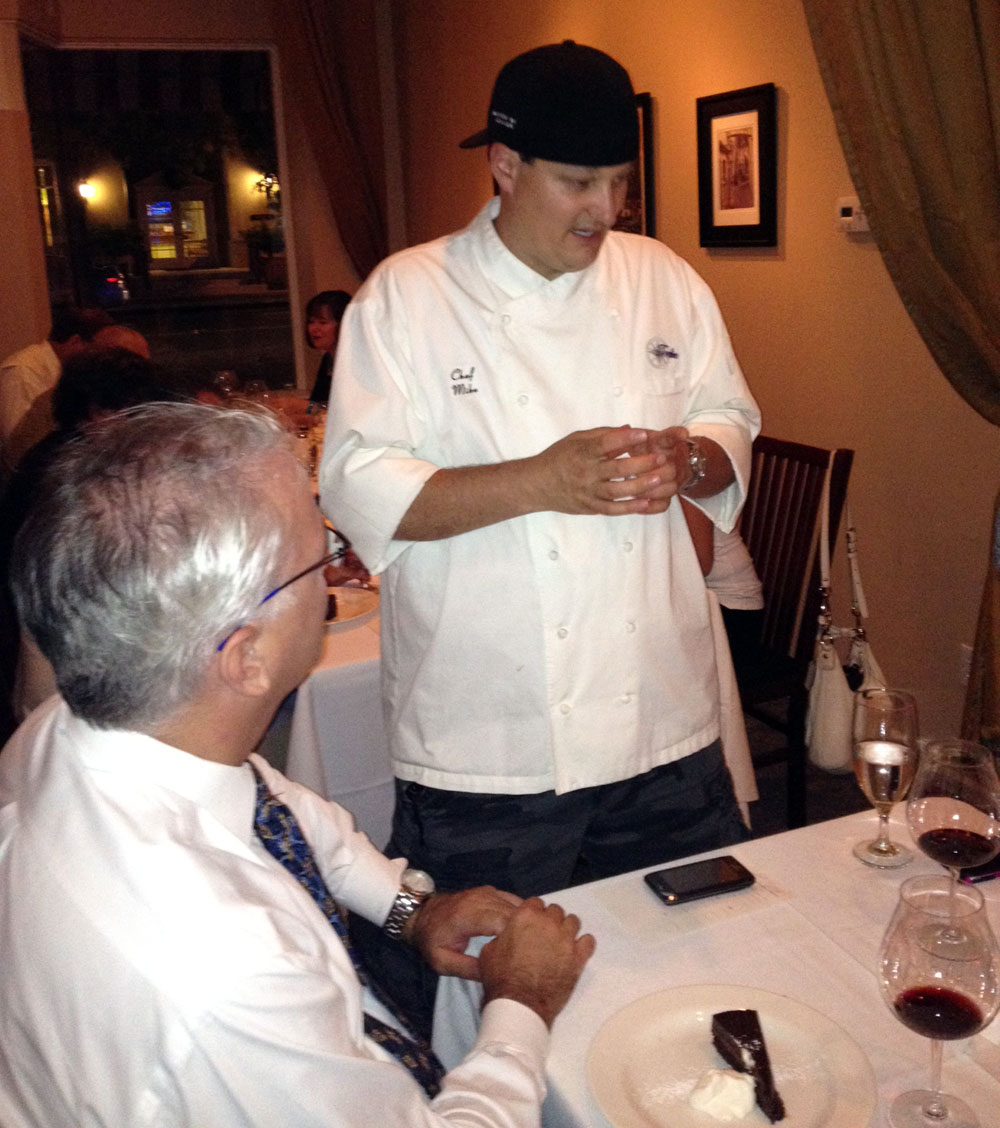
Chef, Mike Shackelford, often visits with Trelio patrons each evening after serving the main dishes. Located in downtown Clovis, Trelio is one of 25 Fresno area restaurants participating in the two-week promotion.

In an effort to educate the area community about independent local restaurants, FRIBA along with six sponsors, have listed 25 eateries for the 2012 Fresno Restaurant Week, July 20-Aug. 3. Amy Huerta, who works for the City of Fresno as the Local Business Initiative Manager, says that FRIBA serves all kinds of local businesses; Fresno Restaurant Week is just one way to grow area commerce and provide traction to develop the organization.

“I work for the City of Fresno, promoting independent businesses,” Huerta said, “and while I am not paid by the city to assist FRIBA, I do work with local business owners on how to develop the organization. My role is to help strategize Fresno Restaurant Week, including managing the promotion and media. I also partner with the organization to find innovative ways to educate our community.”

All 25 restaurants have paid a $500 fee in a cooperative marketing action plan. Huerta believes FRIBA not only has tremendous growth potential for the sponsors and businesses who participate, but also sees the organization developing and expanding to include other smaller cafes, bistros or restaurants who could not afford this year’s promotion.

“The impact of events like Fresno Restaurant Week are so important to understand. It’s an example of local businesses banding together in order to promote each other, and by doing so, improve the local community.”
–Amy Huerta, City of Fresno’s Local Business Initiative Manager.

“We are only a start-up organization,” Huerta said. “While we sent cards of ‘Save The Date’ to over 200 restaurants and actually visited many of those, not all could participate. We hope to expand Fresno Restaurant Week to twice a year. Hopefully more will be able to participate and the cost per business should go down. Our hope is to include even more smaller independent owners.”

According to Huerta, the $500 fee the 25 restaurants paid is projected to provide about $12,000 in advertising. Each participating restaurant posts a poster listing all participating eateries. They all put aside competition for the power of group marketing.

The auto industry learned a piece of this strategy years ago when they banded together and now can be located in auto centers rather than spaced miles apart.

Piazza Del Pane has a $22 pre-fix dinner menu which includes an appetizer, choice of entree, dessert, and a glass of wine.

FRIBA is not just for restaurants. According to their FRIBA’s web site, “Research shows that when a dollar is spent at a locally owned and independent business, on average that dollar will re-circulate three times the amount of money back into our local economy when compared to that same dollar spent at a chain business.”

This is true whether purchases are made from one of the local farmer’s markets to the guy who repairs shoes. A list of the FRIBA membership is on their web site; each pays $150 annual fee.

“The impact of events like Fresno Restaurant Week are so important to understand,” Huerta said. “It’s an example of local businesses banding together in order to promote each other, and by doing so, improve the local community. This is a great, innovative way for the people of Fresno and Clovis to try restaurants they wouldn’t normally visit and try new things. And it is good for the restaurants to try new price fix menus.”

Other cities across the country have organized restaurant weeks, including New York City and San Francisco. In fact, the Open Table, an Internet restaurant reservations site has a special web address just to organize Restaurant Week Specials and Prix-Fixe Menu Offers from Coast to Coast.

So Fresno County, while the chain restaurants like Denny’s, Outback Steakhouse or Olive Garden might be your favorite, consider opening up your wallet or purse for one of the locally owned independent diners, bistros, restaurants or cafes. Invite a friend or couple to join up for a night on the town. Most of the Fresno Restaurant Week participants have their special menus posted online. Scroll down to review each one, choose a place to eat and make a reservation. The coffers of Fresno County will be glad you did.

Salut!

In an effort to educate the area community about independent local restaurants, FRIBA along with six sponsors, have listed 25 eateries for the 2012 Fresno Restaurant Week, July 20-Aug. 3. (Illustration used by permission)