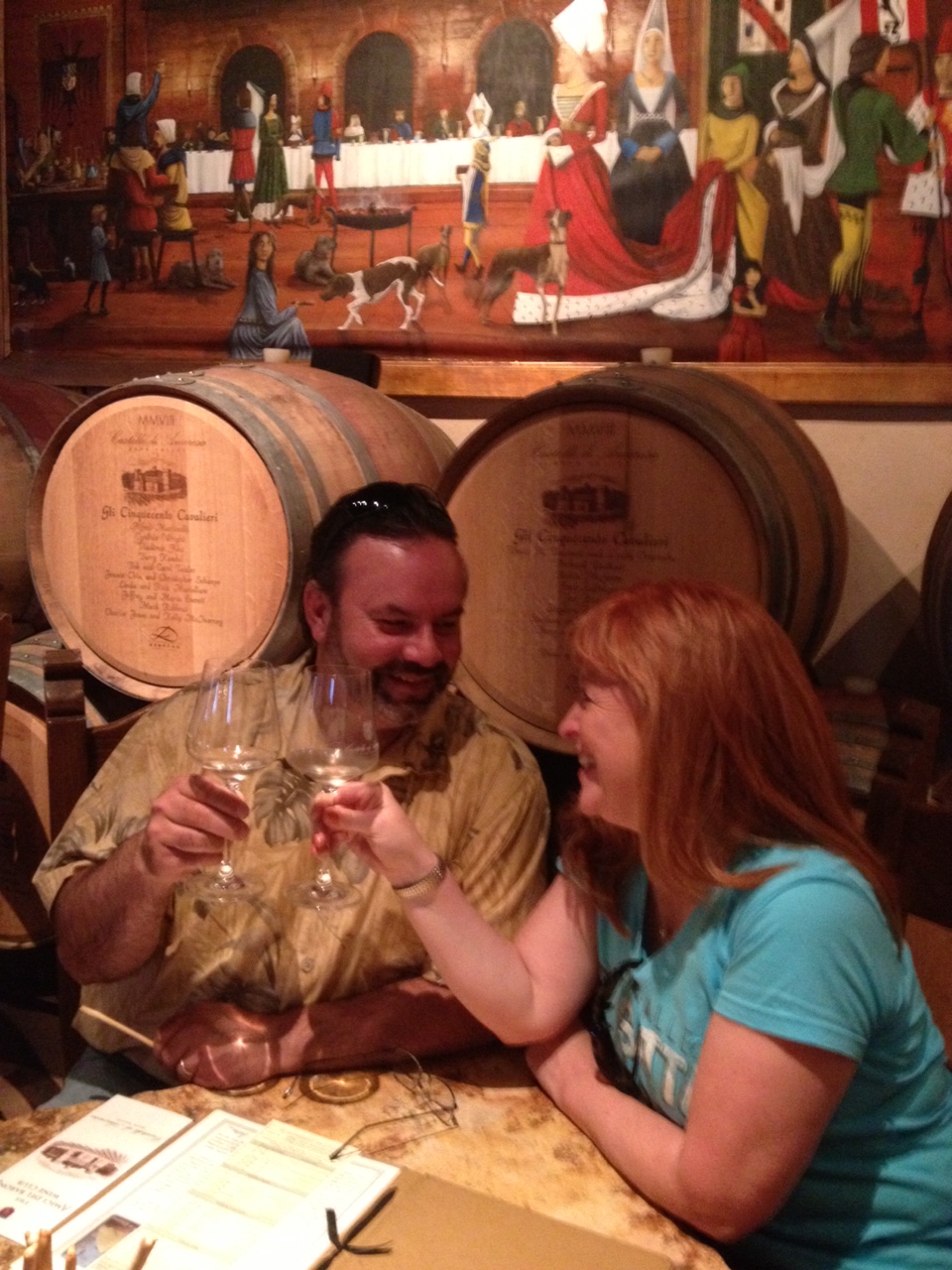
After an hour touring the castle and winery of Castello di Amorosa, I was fortunate to settle into the Il Passito Room to relax and wine taste. For the next hour, my wife and I tried 10 different wines and will offer our observations on half of them.
After tasting the Vermentino (see previous post), John, our host, suggested we begin with two more whites before moving on to their Rosato and six reds. While the 2011 Pinot Bianco and the 2011 Napa Valley Chardonnay were refreshing, I was most interested in the Castello di Amorosa reds this time round.
I will say though, the Pinot Bianco was dry and crisp with aromas and flavors of apple and grapefruit. It should age well over the next couple of years but is a light wine and probably overpriced at $25. (1561 cases) However, folks at the 2013 San Francisco International Wine Competition, June 2013, named it Best in Class. As of the date of publication, discounts are available. The 2011 Napa Valley Chardonnay earned a Silver Medal at the 2013 San Francisco Chronicle Wine Competition. This is a food-friendly wine with apple, pear and light buttery overtones. ($28, 1,344 cases)
The 2012 Gioia Rosato, a 100% Sangiovese, touts bright strawberry and cranberry flavors with plum and red delicious apple aromas, perfect for picnics.
With the heat in California at near record levels, I began the “red” tasting with the 2012 Gioia Rosato di Sangiovese. This Italian-style Rosè is 100% Sangiovese and reflects its darker rosy-red hue. The bright strawberry and cranberry flavors become creamy in the finish while the plum and red delicious apple aromas fill the glass and perfect for picnics, charcuterie or sipping by the pool.
This hot weather wine could be served with salmon salad, but was a little too bright for my tastes. Yet I must say, while created in the new world, this Rosato has substance to it like old world wines with lingering minerality, finishing with hints of citrus and spice. A good mix and worth the risk. Priced a little high at $24, it could use another year in the bottle to mature. (2056 cases)
For more on my Castello di Amorosa wine tasting experience, return to TalesoftheCork.com for my upcoming post: Tuscan tasting: Castello di Amorosa Pinot Noir. Castello di Amorosa wines are only available at the castle or by mail order. They are not available in restaurants. To order Castello wine, visit their web site at CastellodiAmorosa.com or call 1.707.942.8200.
Location:
Castello di Amorosa is open seven days a week from 9:30 a.m.- 6 p.m., March-October and 9:30 a.m.- 5 p.m., November-February. The castle/winery is located 5 1/2 miles north of St. Helena and 2 miles south of Calistoga at 4045 N. St. Helena Highway, Calistoga, CA 94515. Phone numbers: Office (707) 967-6278; Reservations: (707) 967-6272.
Be sure to return check out my Twitter @TalesoftheCork and on my Instagram (talesofthecork) daily postings. I also would covet those who would suggest a wine, restaurant, chef or hotel to visit. Feel free to contact me through social media or via email at talesofthecork@gmail.com.
Since the completion of the winery in 2007, a trip to the northern end of Napa Valley is not complete without a tour of the Tuscan medieval-inspired Castello di Amorosa castle.
With three trips to Napa already behind me, it was time to tour some of the winery and castle’s 107 rooms, caves, ramparts, battlements, apartments, prison and dungeon. Besides, I heard owner Dario Sattui’s small lot wines and winemakers have scored well in competitions and U.S. News & Travel writes that visiting Castello is the “No. 4 out of 9 Best Things To Do” while in the Napa Valley.
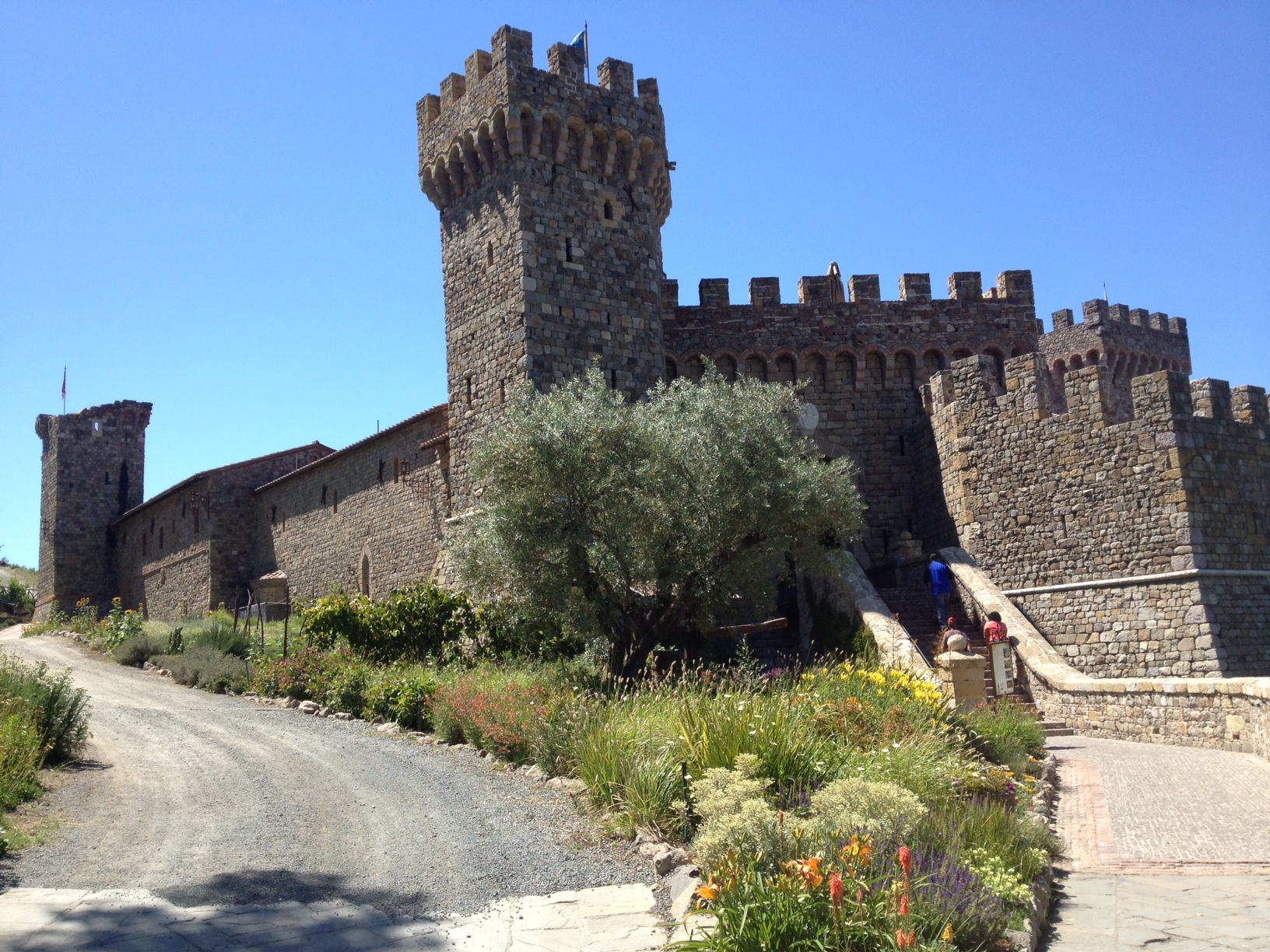
Determined to make the medieval Tuscan castle authentic, owner Dario Sattui only used old, handmade materials or employing old world techniqus to build Castello di Amorosa in Calistoga, Calif.
After a lunch visit with owner Mark Young of Calistoga’s Brannan’s Grill (an upcoming post), Geena and I hooked up with long-time local resident, Peter Stetson, and made our way to Castello di Amorosa down Highway 29 to visit the time-warped 13th century castle.
While I was unable to meet owner Dario Sattui, the fourth-generation winemaker’s imprint is everywhere. After nearly a 30-year labor of love, including 15 years of research and 14 years of building his old world castle (VIDEO by ThumbsUpWine), the guided tour of the winery, castle and wines still amaze me two weeks later.
The inspiration behind the 121,000 square foot castle and three acres of rooms resulted from Dario’s fascination with Italian medieval architecture. It began with a passion for Italian ancient properties and grew to an obsession.
While I foolishly avoided the castle on previous trips, too many outstanding reviews piqued my interest on Castello di Amorosa’s accomplishments since opening. While the $40 million castle on 171 acres, 30 of which are grapes, is all Dario’s vision, the V. Sattui Winery in St. Helena was his first responsibility as he has rebuilt its reputation after his great-grandfather, Vittorio Sattui, one of California’s first vintners, let it fall into disrepair during Prohibition.
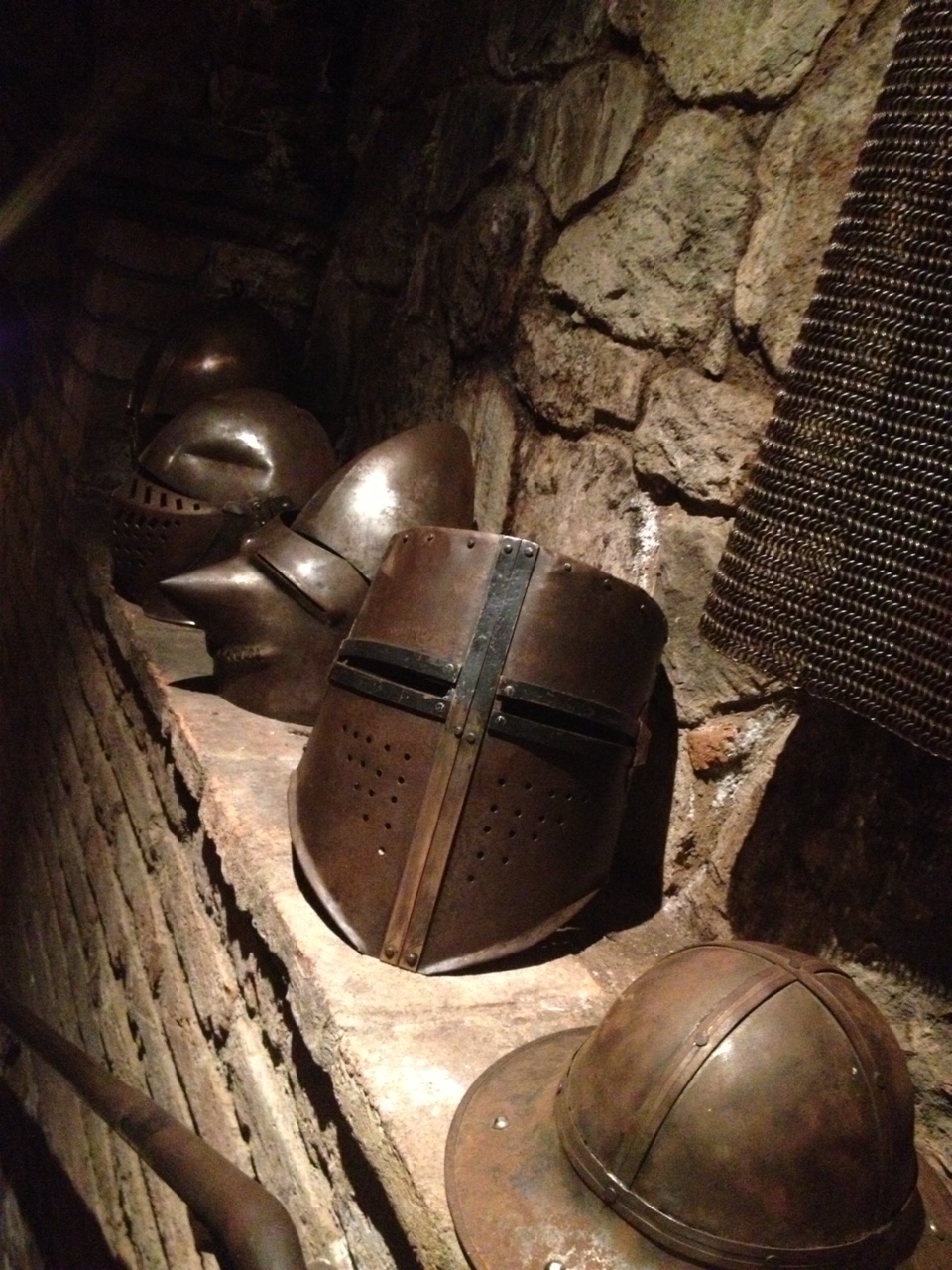
Sattui collected and built all the elements a medieval castle would have possessed, including a moat, drawbridge, high towers and ramparts, torture equipment and ancient armor.
However, as a child, Dario would play among the barrels and tanks in the underground cellars while dreaming of reviving V. Sattui Winery when he grew up. Following college graduation, Dario traveled around Europe for two years in an old VW van. It was during this period his fascination for medieval architecture began to take shape.
Living out of his van, he would visit medieval castles, monasteries, palaces, farmhouses and wineries studying their designs, taking photographs and completing detailed sketches and renderings. And after he rebuilt the V. Sattui Winery, its very success became the impetus for Dario to further expand his dream to create a medieval castle and winery.
After driving up the cyprus-lined drive, Peter escorted us up the grand stone-chiseled stairwell into the castle. The inside main Courtyard was just as impressive, maybe even more, than the outside. The estate has a wooded forest behind the castle and vineyards in the front.
I marveled, smiled and had to think back on my many trips to European castles. I loved how Dario placed his Tuscan-inspired vision on a hill overlooking the Napa Valley. The castle’s “ruined” tower (5 defensive towers in all), high ramparts, courtyards, well, functioning church, stables, vaulted and arched wine cellars ushered me back in time.
After numerous trips to Italy and specifically Tuscany, Dario knew his Napa Valley dream needed skilled old world men and women to create an authentic context for his wine. He hired Italian artisans who crafted all the leaded glass windows by hand and hand-carved all the ceiling beams. In fact, Italian artists made all lamps, iron gates and decorative iron pieces by hand over an open forge. He hired craftsman from Denmark, Austria and France as well. Each room was hand built and original. No room is the same, including the gorgeous antique brick cellars.
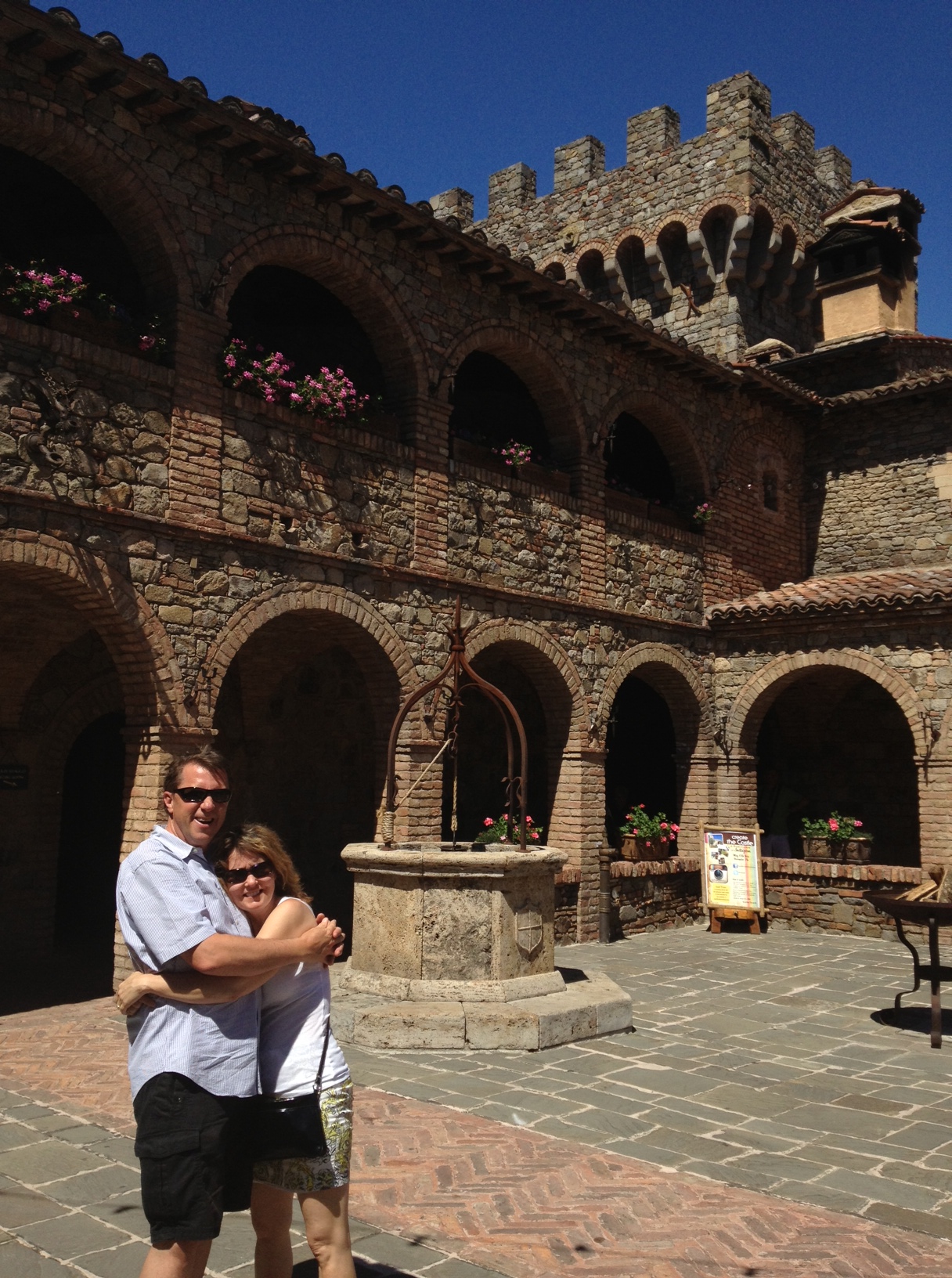
My wife, Geena, and I stopped for a moment to admire The Courtyard, complete with a well, before we moved upstairs to the Il Passito Room to relax and wine taste.
The drawbridge spanning the moat and the gargoyles perched atop the entrance column earn the respect of the visitor. The hand-painted Italian-style frescos and maze of underground rooms, including the 12,000-square-foot Grand Barrel Room, create a sense of awe and appreciation for the varied building styles of a castle created to emulate centuries of building techniques.
As we toured, I saw an authentic stone fireplace from the 14th century, ancient wine press, a wrought iron dragon from the times of Napoleon and an Iron Maiden from the late Renaissance, which dominates the torture chamber. The dry moat, chicken, ducks and sheep and goats farm all add to a wonderful experience.
As the tour guide walked us though the eight levels of rooms, my wife kept telling me to hurry up; I kept getting left behind. At one point I was annoyed. I wanted to wander amongst the 107 rooms at my leisure taking in each niche and nuance. I was definitely transported back to the Italian castles I visited a few years earlier. I didn’t want to reenter the 21st century.
Dario either brought over the building materials from Europe or instructed the craftsmen to create the building out of local materials as old world counterparts did centuries ago. I loved the Great Hall’s 500 year-old fireplace. It is flanked by hand-painted Italian frescoes which took two artists nearly a year and a half to complete.
The 22-foot high coffered ceiling rivals many of the great ceilings in Tuscany. Celebrities like Arnold Schwarzenegger, former NYC Mayor Rudy Giuliani Jon Bon Jovi, Joe Montana, Clint Black, Gordon Getty, Jr., Robert Redford, and others have been hosted in the Great Hall.
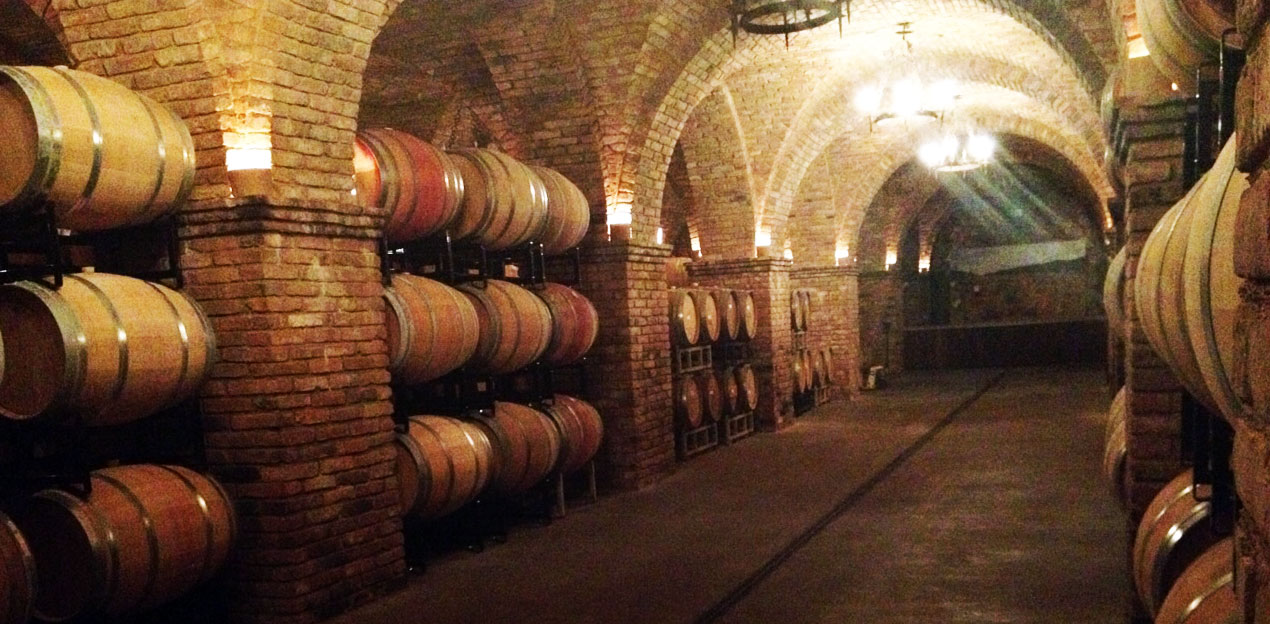
The Grand Barrel Room uses 40 ribbed Roman cross-vaults all constructed from ancient brick shipped from Europe and includes a 40-foot, hand crafted travertine tasting bar.
Near the end of the hour tour, we ended up in the 12,000 square foot Grand Barrel Room with its 40 ribbed, Roman cross-vaults containing hundreds of wine barrels and a 40-foot, hand crafted travertine tasting bar. We also viewed other small lot cellars containing wine bottles and large formats from the original V. Salluti collection.
I chose not to spend time in the gift shop or La Fattoria (Italian Farm Store) for olive oil, teas, flour, etc., so we headed up to the Il Passito Club Room to continue our Wine Aficionado Tour.
Just outside of the Il Passito Room is the hidden gem of the Castle. The Il Passito patio secluded terrace has views of our hilltop watchtower as well as our crushpad below. It is also only a few steps from Castello’s Lake Mario. Open to the hillside, but unknown to most patrons of the castle, it boasts some of the best sunset views in the Diamond Mountain region.
Enjoy a guided tour through the castle and winery followed by a private tasting of six of Castello di Amorosa wines, including low production, high end reserve wines. Reservations are highly suggested.
The three of us finally settled into the Il Passito Room to relax and wine taste perched high above the Courtyard. We were a world away not only from Napa but from the crowds and bustle of Castello’s daily grind. The Il Passito Room normally functions as the Wine Club Member’s room.
However, the millions of dollars spent on the castle and grounds has not prevented Dario from establishing a world class array of wines.
While his vision created Castello di Amorosa, Dario has a team of winemakers and staff to ensure his mostly Tuscan-influenced Italian-style and growing Bordeaux red wine programs continues to produce world-class results. Sebastiano Rosa of Bolgheri, Italy, winemaker at Tenuta San Guido – producer of Sassicaia- one of Italy’s leading Bordeaux-style red wines joined the San Francisco International Wine Competition’s 2012 Winemaker of the Year, Brooks Painter, Peter Velleno and Laura Orozco in March 2012 to form a strong group under the Castello label.
Our host, John, was superb in his knowledge of Castello di Amorosa’s wines and was willing to chat about background, vineyards, soils and technique. I began the tasting with a 2012 California Vermentino. It was so refreshing on a warm Napa afternoon. The traditional Mediterranean white grape is grown in Northern Italy and Southern France. It was very aromatic with plenty of citrus (I’m a grapefruit fan) and a subtle minerality to finish. I loved it! At home I paired a bottle of Vermentino with grilled, chilled salmon salad (dill, capers, celery, onions, raspberry vinegar, red onion).
While not on the wine list, the 2012 California Vermentino is excellent; the dry crisp citrus aroma and flavor is wonderful.
For more on my Castello di Amorosa wine tasting experience, return to TalesoftheCork for my July 4 post: Tuscan tasting: Castello di Amorosa 2012 Rosato. Castello di Amorosa wines are only available at the castle or by mail order. They are not available in restaurants. To order Castello wine, visit their web site at CastellodiAmorosa.com or call 1.707.942.8200.
Castle and wine tasting tours
General admission ranges from $18-$43 per person depending on the level of wine and/or castle interest. No reservations necessary for groups under 12 for general admission. However a guided tour through the castle and winery followed by a tasting of five premium wines in one of the castle’s private tasting bars requires reservations.
Location:
Castello di Amorosa is open seven days a week from 9:30 a.m.- 6 p.m., March-October and 9:30 a.m.- 5 p.m., November-February. The castle/winery is located 5 1/2 miles north of St. Helena and 2 miles south of Calistoga at 4045 N. St. Helena Highway, Calistoga, CA 94515. Phone numbers: Office (707) 967-6278; Reservations: (707) 967-6272.
The first of a number of posts on my recent long weekend in Calistoga, California.
Pioneer Samuel Brannan touted Calistoga as a health and wellness destination, including the healing powers of the natural spring and mud baths by the mid 1860s.
My daughter’s wedding almost two years ago derailed this year’s European travel schedule. Geena and I hoped our 50-something years would earn us trips across the pond but post high school education for three daughters has challenged our pocketbooks. So a trip to Tuscany will have to wait for another year.
Instead the north end of the Napa Valley seemed a good alternative. Calistoga, California, a town of world-class wines, artisan shops and fine restaurants proved to be a perfect surrogate vacation spot.
Calistoga is precisely what two overworked professionals needed. So we decided to put a dream of Tuscany on hold and spend a long weekend pampered by small-town hospitality.
We checked into Fanny’s Bed and Breakfast instead of a local hotel. While this end of Napa Valley has fabulous inns, we wanted, no needed, some personal attention and innkeeper Deanna Higgins provided the human touch that helped make our stay memorable. Situated in a peaceful neighborhood only two blocks from Lincoln Avenue, the two-story is a short walk to a creek, park and old town.
Tucked away in a quiet neighborhood, Fanny’s B&B is a wonderful alternative to the inns of Calistoga, California.
Fanny’s, named after novelist Robert Louis Stevenson’s bride, is a quiet 1915 Craftsman-style cottage featuring a great front porch, rockers, and an old-fashioned swing–a true wine country retreat. Each upstairs bedroom is cozy and inviting, featuring plank floors, feather comforters, and window seats that will take you back to memories of Grandma’s attic. All rooms include a queen-size bed, private bath, and a sumptuous country breakfast.
After asking for a short history, Deanna explained how Samuel Brannan helped establish Calistoga as a Spa town destination during the early 1860s. He hoped it would become reminiscent of New York’s Saratoga Springs. By 1868, Brannan’s Napa Valley Railroad Company’s track was completed to Calistoga, making the journey from San Francisco easier. Later the gold rush dominated the 1880s and the town flourished as a destination for health and wellness. Today day spas, including the Lincoln Avenue Spa, provide healing powers of local mud and mineral waters. The spas, coupled with outdoor recreational activities and wine tasting, create an outstanding health/wellness and vacation setting.
Fanny’s Bed and Breakfast is well appointed and has been completely renovated. The charm is enhanced by Deanna’s attention to comfort. She offered us complimentary cold drinks, coffee and/or a bottle of wine after we settled into our room.
In the 25 years since owning Fanny’s, Deanna seems to have perfected the art of hosting. She chats briefly with guest upon arrival and during her breakfast service. I appreciate how she allows guests free reign of the home without intrusion. I felt comfortable to relax in overstuffed chairs in the front room, enjoy the porch overlooking the large shaded yard and neighborhood> But when prompted, Deanna is quick to offer suggestions on area itineraries, including wine tastings, lunch and dinner spots and entertainment or recreational options.
Guests at Fanny’s first enter into a marvelous, comfortable front room complete with fireplace, overstuffed chairs, window seats and bookshelves.
Inside are interesting antique furnishings with homey window seats for reading. The collection of books, magazines and games in the eclectic library is complete with an array of nooks and crannies. The home has appropriate old-fashioned decorations which tell the story of someone who was well-traveled and connected to the house and Calistoga. I loved the attention to detail, including professionally clean, tidy rooms. The home is air-conditioned in summer and the fireplace and atmosphere warms the home year-round.
I absentmindedly left a pair of shoes in the room and Deanna was kind enough to mail them back without any hesitation. She was a wealth of information, wonderful hostess and fabulous cook who created varied, memorable breakfasts that were different each morning.
While I do not often stay a bed and breakfasts, I heartily recommend Fanny’s Bed and Breakfast. Deanna can be reached via 1206 Spring Street, Calistoga, CA 94515.
According to Super Bowl XLVII By The Numbers (via @digtriad), “Americans will consume an estimated 50 million cases of beer on Super Bowl Sunday. For those counting at home, that’s 1.2 billion beers.” So with over 325,000,000 gallons of beer washing down tons of junk food, BBQ wings, chili and pizza, are any of you willing to stand up against a sea of hop lovers to pour, swirl and sip from the vine?
Food and Wine editor Ray Isle (@islewine) quipped this morning on Twitter, “…it takes a brave soul to open some wine.”
Be sure to include wine for your informal Super Bowl party. Central California coast wines like Ancient Peaks Zinfandel provide an excellent beverage alternative to bring your own beer.
Cultural traditions create closeness and the NFL’s Super Sunday has become a national holiday, heck an icon, for Americans, galvanizing communities regardless of race, age, political preferences or religion. For one Sunday a year, most can put aside bias and prejudices to gather in a sometimes unlikely consortium to cheer and debate over the pride and bragging rights of two cities.
Then, for the sake of the underdogs amongst you, be strong and courageous. The fruit of the vine has every right to be in that living or family room, den, community center and converted garage. While Anheuser-Busch, Budwieser, and the MillerCoors family of beers and/or a plethora of micro beers are most likely to fill the coolers, a glass of wine most certainly fits well with Super snacks.
On Feb. 1, 2013, Isle posted his Best wines for Super Bowl snacks as part of CNN’s Eatocracy page. And to take this just a bit further, I want to add my suggestions for those looking to serve BBQ wings, chili and nachos. The following choices should be easily purchased even today at your local grocer or may even be buried in your wine closets.
The Adobe Red is a proprietary Zinfandel-based blend with effusive aromas of cherry spice, blackberry and pepper, with hints of brambles and plum.
The following are easy drinking, inexpensive wines meant to wash down party foods. For goodness sake, save your best occasion vino for $100 meals at destination restaurants. However, even a wine connoisseur can enjoy simple wines. Be sure to open the bottles a couple of hours before serving at room temperature.
Zinfandel blends:
2009 Clayhouse Adobe Red Zinfandel-based blend: The 2009 Clayhouse Adobe Red is a flavor fusion of 32% Zinfandel, 25% Petite Syrah, 13% Malbec, 11% Cabernet Sauvignon, 10% Syrah and 9% Petit Verdot. The blend has overtones of cherry and blackberry which dominate the palate. Spices and pepper linger with hints of branbles and plum. The finish is balanced with vanilla and oak characteristics.
2009 Phantom by Bogle Vineyards: This California blend of 52% Zinfandel, 46% Petite Sirah and 2% Mourvèdre, has some spice to it along with rich black raspberries and briary boysenberries in a full-bodied wine with hints of cedar and juniper.
Zinfandel
The 2010 Seghesio Sonoma County Zinfandel is a classic bottle from Sonoma County. The spicy, lush black fruit of Alexander Valley offers up briary and raspberry flavors, along with structure, of cooler Dry Creek Valley. Take the time to enjoy the mocha, tobacco, leather and exotic spices in this fabulous 100% Zinfandel wine.
Earning “Steal of the Year” honors in Sunset Magazine, 93 points in Wine Spectator and a San Francisco Chronicle Top 100 Wine of The Year, the 2010 Ancient Peaks Zinfandel is rooted in their estate Margarita Vineyard. This Ancient Peaks offering is 100% Zinfandel offers vibrant aromas of crushed raspberry and blueberry with a dash of sweet oak. Bright, juicy flavors of raspberry, boysenberry and black cherry anticipate notes of cola and spice. A smoky vanilla note joins luscious acidity on a rich, jammy finish.
Cabernet blends
2009 Tres Sabores ‘Por Que No’ Zinfandel blend: This Napa red is from St. Helena and is a bistro and BBQ favorite. If you have yet to try this blend of 53% Zinfandel, 32% Cabernet Sauvignon, 15% Petite Sirah, & 1% Petit Verdot, I say Why Not! enjoy its dark red blend. The juicy, mild raspberry and blueberries flavors and has hints of black pepper give Por Que No its party favorite label. This bottle needs to be on your ‘go to’ list.
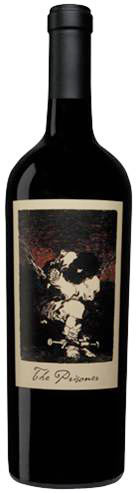
Wine Spectator consistently gives The Prisoner between 90-93 points since 2003 and has been a Top 100 wine fixture since 2007.
Orin Swift’s The Prisoner 2010 Napa Valley Red wine is reminiscent of wines first made by Italian immigrants who originally settled the Napa Valley. The wine has a dense red and black hue that is framed in vibrant crimson. Look for black currant, dark blackberry, cherry, and cassis rounded out by subtle hints of seasoned French and American oak. The finish is long, lingering and filled with soft velvety tannins lasting for nearly thirty seconds. The blend is 44% Zinfandel, the 26% Cabernet Sauvignon, 18% Syrah, 9% Petite Sirah, 2% Charbono and 1% Grenache; this gives the wine soft, integrated tannins which allow it to be approachable now and with a pleasant finish. Wine Spectator consistently gives The Prisoner between 90-93 points since 2003 and has been a Top 100 wine fixture since 2007.
Now I want to go on record to say a good bottle of beer like a Russian River Brewing Company’s double IPA Pliny The Elder can add so much to tasty eats. And there is nothing wrong with a Sierra Nevada Pale Ale, Firestone Walker Pivo Pils, Red Stripe Jamaican Lager, Dos Equis Dark Lager or a Waldhaus Spezial Gold lager from Germany.
However, there are so many great wines available today for backyard BBQs and informal parties. Don’t be intimidated by those only tipping the smaller bottles. I know you have a favorite beer too but don’t be afraid to uncork a bottle of wine at a casual event. The party is a food event and that is exactly what wine is meant to enhance.
If I haven’t convinced you to add wines to your beverage list, there are other options besides the classic Super Bowl beer list from the top two providers. You might check out BeerAdvocate’s Top 250 list. They list many of the most popular, thirst stopping and taste-bud numbing beers, including web sites and availability. Let me know which is on your list.
After moving from San Francisco and retiring from the trade show business, Carl and Pam Bowker had settled in the windy Templeton Gap area west of Paso Robles on the Central California coast. The couple’s newly purchased vineyard was producing a mix of Cabernet Sauvignon, Chardonnay and Pinot Noir, but Carl was not convinced his vineyards would develop world class wines at Caliza Winery.
Carl and Pam Bowker had traveled to Italy in 2001 and their eyes were opened to utilizing old world wines in a new world venue. They farmed the vineyards on both of theCaliza Wineryproperties, but Carl longed for a stronger connection to the limestone soils he named his winery after. He began spending more and more time with winemakers in Paso Robles and became more familiar with the emerging interest in Syrah and other Rhône varietals. During a party for a real estate agent, Bowker met winemakers Erich and Joanne Russell of Rabbit Ridge Winery and Russell Family .
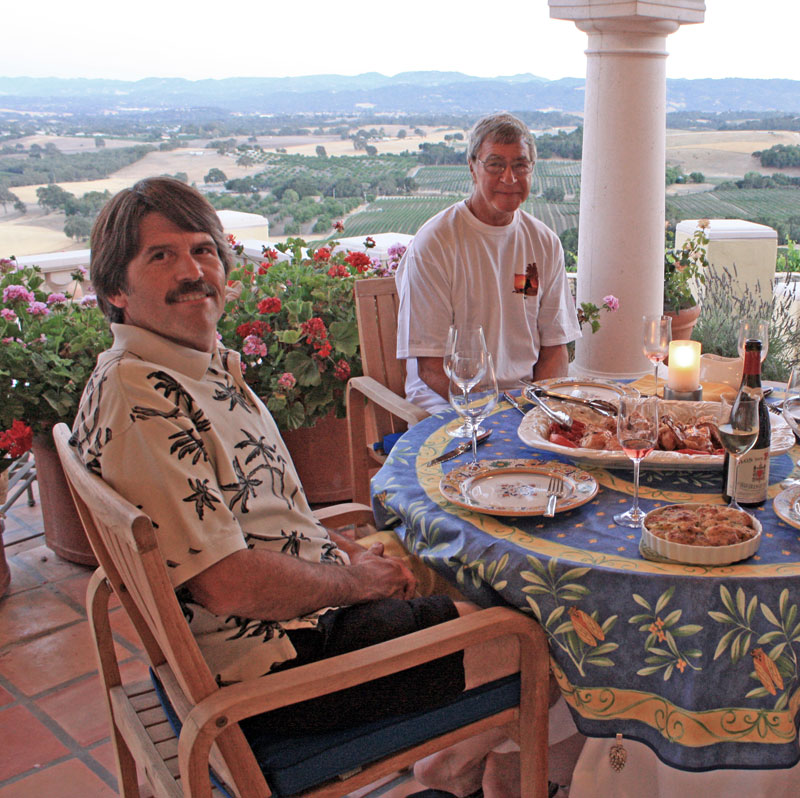
Carl Bowker’s, left, passionate interest in winemaking caught the attention of Erich Russell of Rabbit Ridge Winery. The two forged a friendship and have shared many social times together, including this 2009 Provence-inspired dinner at the Russell home with their wives, Pam and Joanne.
“I had been making wine for over 20 years,” Erich said, “and Carl seemed genuinely interested in being a winemaker. He first came around while I was building my winery in 2001 and decided to join us for crush in 2002. We got together often to talk about wine and in the process he learned to put on a wine clip and join two hoses together. At first it was obvious he was new to the process and I offered to do his jobs I gave him to do. It would go faster if I did it. But he learned how to use hoses, clamps and steel fittings from our time together in the early days at Rabbit Ridge.”
While Bowker was a green horn in 2002, it didn’t take him long to become an integral part of the harvest for Rabbit Ridge and Russell Family wines in 2004.
“While we were mostly too tired to have fun even though we worked together, I could see Carl was going to be good at winemaking,” Russell said. “Carl was not like many of the other new winemakers. He was neat, clean, hard working, anal about the process. The man wouldn’t leave each night until everything was just right in the winery.”
But it was during their time together that the Bowkers and Russells became friends. They shared dinners together and began talking about an ever-growing excitement for Syrah and especially Rhône varietals. Both couples signed up for a trip to France led by a small group of wine writers.
Erich and Joanne Russell, left, chose to vacation in France with Pam (right center) and Carl Bowker for a two-week trip to the Rhône region in 2004, visiting over 15 wineries.
“We had enjoyed them [Rhône varietals] in restaurants and felt we needed to see for ourselves what the French were doing,” Bowker said. “So the Rhône Valley trip was a great next step for us. We learned a lot on that trip. I got to taste first-hand the distinctly difference wine-style in the North Rhône, which is all Syrah. And I love the robust, rich and powerful wines from the North such as the Hermitage, Saint Joseph and Cronas areas. I also learned so much more about the blended wines in the South, where they incorporate Grenache, Mourvedre and numerous other varieties, and picked up the tools of blending their depth and character. I was inspired to make a California version of these Châteauneuf du Pape or Côte du Rhône style blends.”
Russell fondly remembers the Rhône trip with Bowker as it not only solidified their friendship but also helped keep him focused on Rabbit Ridge value-based wines.
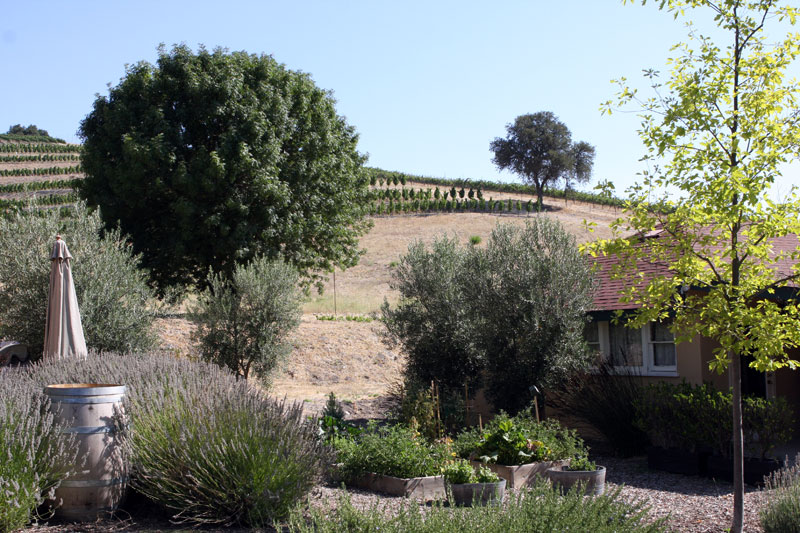
After his 2004 trip to the Rhône Valley, Bowker made the decision to rip out all of the existing vines on his Anderson Road property and plant Syrah clones. He also planted other varietals, including Grenache on this hill behind the tasting room.
“Carl, our wives and I have similar interests and personalities,” Russell said. “While we enjoy creating or eating fancy dinners out, we decided to do dinner like the locals. We had free night to get dinner on our own one night. Instead of paying for another expensive dinner in Avignon, in southern France, all four of us decided to buy cheap Rhone wine from a local wine store and get some cheese and salami from a market. After following a couple people carrying baguettes, we eventually found a bakery, bought a fresh baguette of our own. Our dinner that night was as good as any gourmet dinners on the trip. And we loved and drank inexpensive local Rhône wines.”
Not only did Bowker tour and taste while in France but he asked numerous questions about the vineyard planting methods, irrigation, soil-types, root stock varieties and clones, so that he could use this knowledge in his new Paso Robles vineyard. Together, with the two-year Napa Valley College viticulture and enology program, Bowker had the confidence to forge forward.
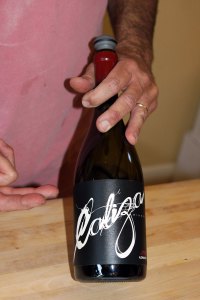
The Spanish word, “Caliza,” means a thin band of limestone. The catchy word describes the layers of soil under Bowker’s Syrah and Rhône varietals.
Bowker says that the 2004 French tour inspired him to make a “killer Syrah” and believes he “is now making that quality Syrah from fruit off his Anderson Road vineyard. The trip cemented the style of my Rhône varieties.”
His new-found inspiration morphed into a determination to join the growing movement of Paso Robles wineries planting Rhône varietals, creating for the Central Coast a Syrah-based regional identity parallel to Napa’s Cabernet focus. The trip to France solidified his Rhône focus. He then chose to have his soil tested by a soil scientist, hiring consultants by the end of the year.
Wine Spectator’s James Laube believes the Paso Robles area focus on Syrah and Grenache has strengthened the region. The epicenter of this blending has created a term used by California winemakers with many referring to the winemakers as Rhône Rangers.
After harvest in 2004, Bowker made a critical decision that would alter the direction of Caliza Winery for the following year.
“I made an incredibly hard financial decision, and in the spring of 2005,” Carl said, “we decided to remove the existing vineyard. The vines were ripped out, the land was tilled and a brand new irrigation system was installed. It was a hard decision because we spent most of our retirement funds, but we knew it was the right thing to do. We replanted Syrah and many other Rhône varieties, changed the location of the vines, installed the most current soil monitoring equipment, state of the art irrigation system, and incorporated sustainability farming practices.”
Bowker says the 2004 French tour inspired him to make a “killer Syrah” and believes he is now making that quality Syrah from fruit off his Anderson Road vineyard.
While other vineyard owners were beginning to consider changing out their vineyards in the Paso Robles region, Bowker’s decision was not without risk.
“I believe Carl works 10 times harder than he ever thought he’d have to work,” Russell said; “everyone has to in this business. He took a huge gamble in 2005 to tear out the vineyards. He had to go to a lot of extra work and remove the vines and irrigation. I’ll bet there were times he wished he was on the beaches of Maui.”
Hawley is a California State University, Fresno, with a degree in viticulture and enology. The Bowkers met him in Paso Robles on several occasions while he was a winemaker at Summerwood Winery and became huge fans of his winemaking style and ability.
“In one encounter we talked to him about helping guide us as we developed the Caliza brand,” Bowker said. “We were one of the first to sign him as a consultant. He worked with us for three years, helping with numerous important decisions: harvest timing, fermentation protocol and all aspects of the wine production. All the way, Scott was more of a trainer and mentor doing all that was necessary to help me completely understand the process than a paid consultant. In the end, he kind of worked himself out of a job as he mentored me so well.”
A very successful winemaker in his own right, Scott Hawley, now of Torrin Vineyard, became Bowker’s mentor and consultant in the early days of winemaking for the new Caliza brand. The first Caliza wines were made in 2006 from mostly purchased fruit as Bowker’s new vineyard was not yet producing. Grapes from that first vintage were sourced from neighboring Torrin Vineyard as well as the Russell Family Vineyard, just a short distance away. Bowker became confident Caliza Winery was going to be a major part of the Rhône movement like his Anderson Road area neighbors such as Booker Vineyard, Brian Benson Cellars, L’Aventure Winery and Torrin Vineyard.
As his skills mature, Bowker continues to focus on the details of winemaking but has learned to balance analytic chemistry in the lab and the creative ‘gut feelings’ of the best vintners.
“I was first introduced to Carl through a vineyard manager when he was buying his property,” Hawley said. “When I was in my consulting phase, I would look at property rather than being concerned with the people side of the business. I became familiar with the now Caliza property through someone else at first. I knew I wanted to work with that property and could see its potential.”
Shortly after meeting Bowker, Hawley said he knew this winemaking greenhorn was different than most Paso wine folks he had come into contact with.
“Carl was mild-mannered and super easy to get along with,” Hawley said. “He knew exactly what he wanted to achieve but was honest in that he didn’t know how to get there.”
While Bowker was inexperienced, without a track record in the wine business, Hawley said the newest Templeton Gap resident had the motivation, ambition, and focus to create something special.
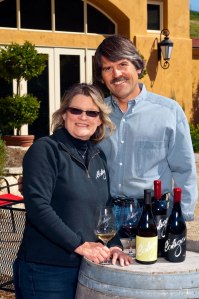
Caliza Winery is one of many wineries on Anderson Road making Rhône-style varietals. While co-owner Pam Bowker, left, can often be found in the tasting room she will also become president of the local Rhône Rangers chapter in 2013.
“I could tell right away Carl was different,” Hawley said. “As soon as I agreed to work with him, he became absorbed in winemaking. Carl was, and still is, a sponge. He incorporated and assimilated everything I could show or teach him. He was meticulous, writing down and taking in everything I said. In fact, I had to watch my steps with Carl. He would go back to his notes and more than once I needed to be careful with what I did or said. I had to watch my Ps and Qs.”
As far as Hawley could remember, Bowker had a penchant for details. Carl was so focused on the process, he took everything literal and often became the punchline of winemakers’ jokes.
Carl and Pam Bowker produce 6-8 Rhône varietals on the Caliza property, including the Tanzer International 91-point rated 2010 Azimuth.
“I wanted to be sure Carl understood a little about the importance of a clean environment in the winery,” Hawley said while chuckling. “But when I returned later, I found Carl, in classic fashion, decked out in a tie-back blue suit like he was working in a sterile lab complete with goggles on. I guess he was under the impression he needed zero contamination. But to his credit, he took the learning curve seriously and his attention to detail has paid off.”
The major strength of the Caliza Winery is that it’s almost completely self created. Most of Bowker’s wines are estate grown; he planted the vines himself and each year he helps pick, crush, create and bottles the wine. He is the whole picture. He knows what he wants when the year starts and is focused on gaining the unique characteristics of the vineyards.
Carl’s winery has a fine collection of six different Rhône-style clones, allowing him to handcraft his estate wines. Many are award-winning, including the 100 percent Rhône-style 2010 Syrah as well as the 2010 Azimuth which blends 40 percent Mourvedre, 30 percent Syrah and 30 percent Grenache.
“Carl is successful today–his wine sells,” Russell said. “He doesn’t need to pay a distributor to sell his wines; word of mouth shows how good Carl is.”
Caliza’s Syrahs and Rhône-style blends are award-wining, unique, big and intense. Bowker knows and experiences and lives out the whole picture, block, vineyard, and year with the final product. He is hands-on from beginning to end and there is a story behind each bottle of wine.
“Wine is made from the ground up,” Bowker says, “hand in hand, put together, made beautiful.”
Caliza Winery is located on 2570 Anderson Road, Paso Robles, CA 93446. The winery tasting room is open Thursday through Sunday, 11 a.m.- 4:40 p.m. or by appointment by calling 805.237.1480.
Bowker and his wife, Pam, are members of the Paso Robles Rhône Rangers regional chapter: a term used to describe those who produce Rhône-style wines in the United States. They also belong to the national Rhône Rangers: America’s leading non-profit organization dedicated to promoting American Rhône varietal wines. Caliza is a very active participant in the organization, both nationally and in the local Paso Robles chapter. In fact Pam will lead the Paso Robles chapter in 2013 as president.
The 2010 Caliza Azimuth
Carl has been on the Rhône Ranger panel for several seminars discussing Rhône wines at the national event held each year in San Francisco. Be sure to check out the 16th Annual Rhône Rangers San Francisco Tasting, March 22-23, 2013, at Fort Mason. Over 500 of the best American Rhône wines from more than 100 Rhône Rangers member wineries will be poured.
The Paso Robles regional chapter of the Rhône Rangers will next host the 2013 Paso Robles Rhône Rangers Experience at the Broken Earth Winery, Feb. 17, 2013. Over 40 wineries will explore with the public what makes Paso Robles so ideal for Rhône varietals. Tickets for the seminar and lunch are $85.
For more information on the Rhône Rangers, read the March 31, 2011, Wine Spectator article, “Talent Show”; it briefly outlines the Paso Robles’ new wave of wines from this growing network of California Rhône go-getters.








 TalesoftheCork blog